


Andes Soups: 3 Traditional Recipes and the Flavors of South America

A bowl of soup can tell the story of a mountain range. In the Andes, that story begins with thin air, cold nights, steep terraces, and ingredients tough enough to grow where many crops cannot.
The Andes stretch along the western edge of South America, crossing countries such as Colombia, Ecuador, Peru, Bolivia, Chile, and Argentina. Their high valleys and plateaus have shaped how people cook for centuries. Potatoes, corn, quinoa, fava beans, squash, herbs, fresh cheeses, and chiles all play a role in soups that are filling, practical, and deeply tied to place.
For home cooks, Andean soups offer something special. They are comforting without being bland. They are hearty without needing complicated methods. Best of all, they show how geography and cooking belong together. The Andes Mountains and South America's Most Beloved Soups are connected by climate, agriculture, family tradition, and the everyday need for food that warms the body and gathers people around the table.

The Andes shaped a soup culture built for altitude
Andean cooking is practical at heart. In high-altitude communities, temperatures can shift quickly. Days may be sunny and dry, while nights turn cold. A large pot of soup answers that climate well. It stretches ingredients, feeds several people, and welcomes whatever the season provides.
Soup also makes excellent use of Andean staples. Potatoes thicken broth. Quinoa adds body and protein. Corn gives sweetness. Fresh herbs brighten rich stews. Chiles bring warmth. Cheese, milk, or eggs may soften the edges and make a soup feel more complete.
Many Andean soups are not served as a light starter. They are the meal. A bowl might include tubers, grains, legumes, vegetables, meat, cheese, and herbs. In rural communities, soups often mark work rhythms too. They appear after farming, during festivals, on cold mornings, and at family gatherings.
The ingredients can carry meaning as well. Potatoes, native to the Andes, are more than a pantry staple. The region has long been home to an extraordinary range of potato varieties, from waxy yellow potatoes to floury purple, red, and white types. Quinoa, another ancient Andean crop, survives in tough growing conditions and has fed highland communities for generations.
Together, these ingredients create soups with a clear sense of place: earthy, savory, thick, warming, and often brightened with herbs or chile.
Recipe 1. Ecuadorian locro de papa is creamy potato comfort
Locro de papa is one of Ecuador’s best-loved potato soups. It is especially associated with the Andean highlands, where potatoes and fresh cheese are everyday ingredients. The soup is creamy, golden, and soothing, often served with avocado and aji, a fresh chile sauce.
Traditional versions use local potatoes, especially yellow potatoes that break down into the broth. For home kitchens in the United States, Yukon Gold potatoes work well because they turn creamy without tasting flat.
Ingredients
Serves 4 to 6
2 tablespoons neutral oil or butter
1 small yellow onion, finely chopped
3 garlic cloves, minced
1 teaspoon ground cumin
1 teaspoon achiote powder or paprika
2 pounds Yukon Gold potatoes, peeled and cut into 1-inch pieces
5 cups chicken broth or vegetable broth
1 cup whole milk
1 cup crumbled queso fresco, plus more for serving
Salt and black pepper
1 ripe avocado, sliced
Chopped cilantro or scallions, for serving
Aji sauce or hot sauce, for serving
Preparation
Warm the oil or butter in a large pot over medium heat. Add the onion and cook until soft, about 5 minutes.
Stir in the garlic, cumin, and achiote. Cook for 30 seconds, just until fragrant.
Add the potatoes and broth. Bring to a boil, then lower the heat and simmer until the potatoes are very tender, about 20 to 25 minutes.
Mash some of the potatoes directly in the pot with a potato masher. Leave a few chunks for texture.
Stir in the milk and queso fresco. Heat gently until the cheese softens and the soup turns creamy. Do not boil hard after adding the milk.
Season with salt and pepper. Serve with avocado, cilantro or scallions, extra cheese, and a spoonful of aji.
Flavor note: Locro de papa tastes rich, but it gets much of its body from potatoes rather than heavy cream. Cumin adds warmth, while queso fresco brings a gentle salty tang.
Recipe 2. Peruvian quinoa soup turns a highland grain into dinner
Quinoa soup is common across parts of Peru and Bolivia, with many local variations. Some versions include beef, chicken, or lamb. Others are vegetable-based and rely on quinoa, potatoes, squash, and herbs for depth.
This version keeps the method simple for home cooks while honoring the Andean habit of building a meal around grains, tubers, and vegetables. Rinsing the quinoa matters because it removes its natural coating, which can taste bitter.
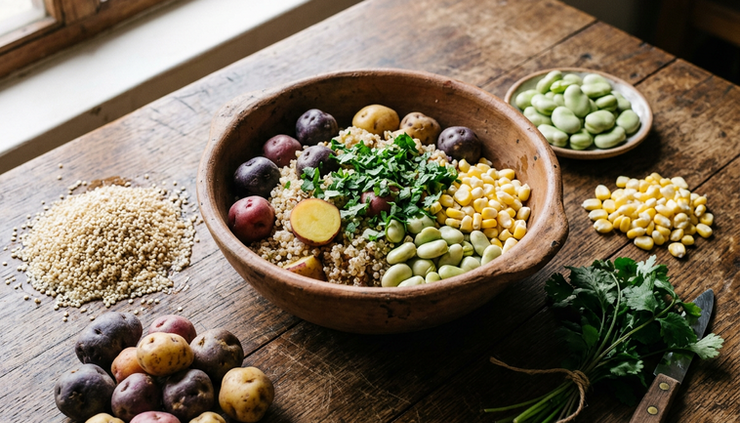
Ingredients
Serves 4 to 6
1 tablespoon neutral oil
1 small red or yellow onion, chopped
2 garlic cloves, minced
1 carrot, diced
1 teaspoon ground cumin
1/2 teaspoon dried oregano
1 cup quinoa, rinsed well
1 large potato, peeled and diced
1 cup diced winter squash or butternut squash
6 cups chicken broth or vegetable broth
1 cup corn kernels, fresh or frozen
1 cup cooked fava beans, lima beans, or peas
Salt and black pepper
Chopped cilantro or parsley
Lime wedges, for serving
Preparation
Heat the oil in a large pot over medium heat. Add the onion, garlic, and carrot. Cook until the onion softens, about 5 minutes.
Stir in the cumin and oregano. Cook briefly to wake up the spices.
Add the rinsed quinoa, potato, squash, and broth. Bring to a boil.
Lower the heat and simmer until the quinoa opens and the vegetables are tender, about 20 minutes.
Stir in the corn and fava beans or peas. Simmer for 5 more minutes.
Season with salt and pepper. Finish with cilantro or parsley and a squeeze of lime.
Flavor note: Quinoa gives the soup a light nuttiness and a pleasing pop. Squash adds sweetness, potatoes ground the broth, and lime adds a clean finish.
Recipe 3. Bolivian chairo is a hearty highland meal in a bowl
Chairo is closely associated with Bolivia, especially La Paz and the surrounding highlands. It is a substantial soup made with vegetables, meat, grains or legumes, and chuño, a traditional freeze-dried potato.
Chuño is one of the great food traditions of the high Andes. For generations, communities used freezing night temperatures and strong daytime sun to preserve potatoes. The result is light, shelf-stable, and deeply Andean. Chuño has a distinct earthy flavor and chewy texture. It can be hard to find in some U.S. grocery stores, but Latin American markets or online sellers may carry it.
If chuño is unavailable, use diced potato and a small handful of dried potato flakes to give the soup body. The flavor will be different, but the bowl will still be hearty and satisfying.
Ingredients
Serves 6
1 pound beef stew meat or lamb shoulder, cut into small pieces
8 cups water or beef broth
1 small onion, chopped
2 garlic cloves, minced
1 teaspoon ground cumin
1/2 teaspoon dried oregano
2 carrots, diced
2 medium potatoes, diced
1/2 cup peeled and soaked chuño, chopped, or 1 extra diced potato
1/2 cup cooked mote or hominy
1/2 cup cooked fava beans or peas
1 cup shredded cabbage
Salt and black pepper
Chopped mint or parsley, for serving
Preparation
Place the beef or lamb in a large pot with the water or broth. Bring to a simmer and skim off any foam.
Add the onion, garlic, cumin, and oregano. Simmer gently until the meat begins to soften, about 45 minutes to 1 hour.
Add the carrots, potatoes, and chuño. Cook until the vegetables are tender, about 20 minutes.
Stir in the mote or hominy, fava beans or peas, and cabbage. Simmer for 10 to 15 minutes more.
Season with salt and pepper. Serve hot with chopped mint or parsley.
Flavor note: Chairo is earthy and filling. Mint may sound surprising, but it adds a fresh lift to the meat, potatoes, and grains.
Andean ingredients give these soups their character
The flavor of Andean soup comes from more than one ingredient. It comes from the way many humble ingredients work together.
Potatoes
The Andes are the birthplace of the potato, and Andean cooking treats potatoes with the respect they deserve. Some melt into soup, while others hold their shape. In U.S. kitchens, Yukon Golds are a strong all-purpose choice.
Quinoa
Quinoa brings gentle nuttiness and texture. It thickens broth without making it heavy. Rinse it well before cooking to keep the flavor clean.
Corn and mote
Corn appears fresh, dried, toasted, or cooked as mote, a form of hominy. It adds sweetness and chew.
Fava beans and peas
These give color, protein, and a soft bite. Frozen lima beans or peas can stand in when fresh favas are not available.
Fresh cheese
Queso fresco and similar cheeses melt softly rather than turning stringy. They add salt and creaminess to soups like locro de papa.
Herbs and chiles
Cilantro, parsley, mint, scallions, and aji sauces bring brightness. In a cold mountain climate, that fresh edge matters.
For home cooks, the best approach is to respect the structure of the dish while using what is available. A soup can still feel Andean if it keeps the balance of tubers, grains, herbs, and warmth.
Soup as memory, hospitality, and daily strength
In Andean communities, soup is not only about nourishment. It is a way to care for family, welcome guests, and preserve memory.
A pot of locro can bring together potatoes from a local market, cheese from nearby dairies, and aji made the way a family prefers it. A quinoa soup can turn small amounts of vegetables into a complete meal. Chairo can reflect older preservation methods that made life possible at high altitude.
These soups also show how foodways travel and adapt. Families move from mountain towns to cities, then across borders. Recipes change along the way. A grandmother’s soup may become slightly different in Lima, Quito, La Paz, New York, Chicago, or Los Angeles. Yet the core remains recognizable: a hot bowl, Andean ingredients, and the comfort of food meant to sustain.
If making these soups sparks a desire to share more bowls with others, consider supporting AngelDust from Soup Angels, a project connected to the simple power of soup and care.
FAQ
Can I make these Andean soups vegetarian?
Yes. Locro de papa and quinoa soup are easy to make vegetarian with vegetable broth. For chairo, use vegetable broth and add extra beans, hominy, mushrooms, or squash for body.
What potato works best for locro de papa?
Yukon Gold potatoes are a good choice in U.S. kitchens because they become creamy while still offering flavor. Russets also work, but they break down more fully.
Where can I find chuño?
Look for chuño in Latin American markets, especially stores that carry Bolivian or Peruvian ingredients. It may also be available online. If you cannot find it, use extra potato.
Is quinoa soup traditionally Peruvian or Bolivian?
Quinoa soup appears in different forms across the Andean region, especially in Peru and Bolivia. Recipes vary by household, town, and season.
Can these soups be made ahead?
Yes. Locro and chairo often taste even better the next day. Reheat gently and add broth or water if they thicken too much. Quinoa soup also keeps well, though the quinoa will continue to absorb liquid.

A mountain range served by the spoonful
Andean soups are generous, resourceful, and full of local character. They make use of crops shaped by altitude and weather, then turn them into meals that warm and satisfy.
Start with locro de papa for creamy comfort, quinoa soup for a lighter but filling bowl, or chairo when the day calls for something especially hearty. Each recipe offers a way to taste the Andes from a home kitchen, one spoonful at a time.


Comments