
_edited.jpg)

How to Cook and Season Green Beans for Flavorful Soups
- Chef Gary W Irvin II
- Jul 30
- 9 min read

Green beans can make a soup taste fresh, sweet, and complete, but only if they are cooked with care. Add them too early and they turn dull, soft, and stringy. Add them too late and they taste squeaky and raw. Season them poorly and they fade into the broth instead of making it better.
The good news is simple: green beans are easy to use in soup once you know when to add them, how long to cook them, and which seasonings bring out their best flavor. This guide covers fresh, frozen, and canned beans, plus the herbs, spices, fats, and acids that make them shine.

Choose the right green beans for soup
Fresh green beans are the best choice when you want a clean snap and a bright vegetable flavor. Look for beans that feel firm, bend slightly, and snap when broken. They should have smooth skins without dark spots, wrinkles, or slimy patches.
Thin beans cook faster and feel more delicate in broth. Thicker beans can work well in rustic soups, especially bean soups, ham soups, chicken soups, and vegetable stews. Just cut them smaller so they cook evenly.
When buying Green Beans, plan on trimming both ends unless they are already prepped. Many modern varieties do not have tough strings, but if you find a fibrous seam along the side, pull it away before cooking.
Fresh green beans
Fresh beans work best when the soup has a short final simmer. They keep more texture and color than other types. Use them in:
Chicken vegetable soup
Minestrone
Tomato-based vegetable soup
Potato and green bean soup
Turkey or ham soup
Clear brothy soups with herbs
Frozen green beans
Frozen green beans are convenient and already blanched before freezing. That means they cook faster than fresh beans. Add them straight from the freezer near the end of cooking.
They are best in soups where texture matters less than ease, such as weeknight vegetable soup, chicken noodle soup, and slow cooker leftovers. Avoid simmering frozen beans for a long time, since they can become limp.
Canned green beans
Canned beans are fully cooked, soft, and often salty. Drain them first, then rinse if you want a milder flavor. Add them during the last few minutes, just long enough to warm through.
They will not taste as fresh as raw beans, but they work well in pantry soups, creamy casseroles turned into soup, and quick meals where convenience matters.
Prep green beans so they cook evenly
Good prep makes a bigger difference than many cooks expect. Uneven pieces lead to uneven texture. Some beans turn mushy while others stay firm.
Start by rinsing the beans under cool running water. Pat them dry if you plan to sauté them before adding broth. Wet beans steam instead of browning.
Trim the stem end with a knife or snap it off by hand. The tapered tail is edible, though many cooks trim both ends for a cleaner look.
Cut beans based on the soup style:
Soup style | Best cut | Why it works |
Brothy chicken or turkey soup | 1-inch pieces | Fits easily on a spoon |
Minestrone or vegetable soup | 1/2-inch pieces | Blends with beans, pasta, and diced vegetables |
Potato soup | 1 to 2-inch pieces | Keeps the beans noticeable |
Creamy soup | Small diagonal slices | Adds texture without taking over |
Rustic stew-like soup | Halved beans | Gives a hearty, homemade feel |
For the best spoonful, match the bean size to the other vegetables. If the carrots and potatoes are diced small, cut the green beans small too.

Cook green beans for soup in five steps
Cooking soups with green beans is mostly about timing. Green beans do not need hours in a pot. They need enough heat to become tender while keeping their sweet, grassy flavor.
1. Build the soup base first
Start with the ingredients that need the most time. Sauté onion, carrot, and celery in olive oil, butter, or another cooking fat until they soften. Add garlic near the end so it does not burn.
If your soup includes meat, dried beans, lentils, potatoes, or grains, cook those before adding green beans. The beans should not sit in the pot while tough ingredients slowly soften.
A good base might include:
Onion, carrot, and celery
Garlic or shallot
Chicken, turkey, ham, or sausage
Potatoes, white beans, or pasta
Broth, stock, or water with seasonings
2. Add fresh green beans near the end
Fresh green beans usually need 5 to 10 minutes in simmering soup. Thin beans may be ready in 4 to 6 minutes. Thicker beans may need closer to 10.
Add them when the broth is already seasoned and the main ingredients are almost done. Keep the soup at a gentle simmer, not a hard boil. A rolling boil can make the beans split, soften too fast, and lose their pleasant bite.
Taste a bean before serving. It should be tender but not limp. The center should no longer taste raw.
3. Add frozen green beans later
Frozen beans usually need 3 to 6 minutes. They cool the soup slightly when added, so bring the pot back to a simmer and then start checking texture.
If the beans are cut small, they may only need a few minutes. If they are whole or thick-cut, give them a little longer.
Do not thaw them first unless you need to cut them. Thawing can make them watery and soft before they even reach the pot.
4. Warm canned green beans briefly
Canned green beans only need 2 to 3 minutes in soup. Add them at the end and stir gently. Long cooking will not improve them. It usually makes them softer and more muted.
Since canned beans can add salt to the pot, taste the broth after adding them before you add more salt.
5. Finish with fresh flavor
Once the beans are tender, finish the soup with a small lift of flavor. Fresh herbs, lemon juice, vinegar, black pepper, olive oil, or grated Parmesan can make the bean flavor clearer.
Add acidic ingredients near the end. Lemon juice, vinegar, and tomatoes can brighten soup, but long cooking in an acidic broth may slow softening and can dull the color of green vegetables.
Use seasoning that matches the broth
Green beans have a mild sweetness and a fresh, grassy edge. They pair well with savory, salty, smoky, creamy, and acidic flavors. The best seasoning depends on the type of soup you are making.

Season with salt in layers
Salt is not just a finishing touch. It helps each ingredient taste more like itself. Add a small amount when sautéing aromatics, then season the broth once the liquid goes in. Taste again after adding green beans.
If you wait until the very end, the soup may taste salty on the surface while the vegetables taste flat. If you add too much early, the broth can become too salty as it simmers.
A practical rule is to season lightly as you go, then adjust at the end.
Add aromatics for depth
Green beans taste better when they have a savory base around them. These aromatics work especially well:
Garlic
Yellow onion
Shallot
Leek
Celery
Carrot
Fennel
Green onion
For a simple vegetable soup, sauté onion, carrot, and celery until soft, then add garlic for 30 seconds before adding broth. That one step gives the beans a fuller flavor later.
For a richer soup, add a spoonful of tomato paste to the aromatics and cook it briefly before adding liquid. It adds color, sweetness, and body.
Use herbs with purpose
Green beans pair with many herbs, but some fit certain soups better than others.
Herb | Best soup match | When to add it |
Thyme | Chicken, potato, white bean, turkey | Early or mid-cook |
Bay leaf | Brothy soups and bean soups | Early, then remove before serving |
Parsley | Almost any green bean soup | At the end |
Dill | Potato, chicken, creamy soups | At the end |
Basil | Tomato and minestrone-style soups | At the end |
Rosemary | White bean, sausage, potato | Use lightly early |
Oregano | Tomato, pasta, and bean soups | Mid-cook |
Dried herbs need time to soften and flavor the broth, so add them earlier. Fresh herbs taste brighter when added near the end.
Choose spices that support the soup
Green beans do not need heavy spicing, but the right spices can help them stand out.
Try these combinations:
Black pepper and thyme for chicken soup
Smoked paprika and garlic for ham or sausage soup
Red pepper flakes and oregano for tomato soup
Cumin and coriander for a warm vegetable soup
Nutmeg and white pepper for creamy green bean soup
Mustard powder and bay leaf for potato soup
Use paprika, cumin, and red pepper flakes in small amounts at first. Green beans are mild, so strong spices can cover their flavor.
Bring in fat for better flavor
A little fat rounds out green beans and carries the taste of herbs and aromatics through the broth.
Good options include:
Olive oil for vegetable, tomato, and minestrone soups
Butter for potato, chicken, and creamy soups
Bacon fat for smoky bean or ham soups
Chicken fat for classic chicken soup
Parmesan rind for Italian-style soups
If using bacon, sausage, or ham, cook it first, then sauté the vegetables in some of the rendered fat. Add the green beans later so they pick up the smoky flavor without overcooking.
Finish with acid at the end
Acid wakes up a soup that tastes flat. It is especially helpful when the soup contains potatoes, beans, pasta, cream, or meat.
Try a small splash of:
Lemon juice
White wine vinegar
Apple cider vinegar
Red wine vinegar
Pickle brine for a tangy potato soup
Add acid after the green beans are tender. Stir, taste, and add more only if needed. The goal is brightness, not sourness.
Match green beans to popular soup styles
Once you understand timing and seasoning, green beans can fit into many types of soup. The key is to match the cut, cooking time, and seasonings to the broth.
Chicken soup with green beans
Use fresh or frozen beans cut into 1-inch pieces. Add them after the chicken is cooked and the carrots are nearly tender.
Season with thyme, bay leaf, parsley, black pepper, and a small squeeze of lemon at the end. If noodles or rice are involved, add the green beans when those starches are almost done.
Vegetable soup with green beans
Green beans are a natural fit in vegetable soup because they add color and texture. Add them after firm vegetables like potatoes, carrots, and celery have had time to cook.
Use garlic, onion, tomatoes, oregano, thyme, and parsley. A little olive oil at the end makes the broth taste richer.
Minestrone with green beans
Cut the beans small, about 1/2 inch, so they blend with pasta, beans, and diced vegetables. Add them during the last 8 minutes or so, depending on the pasta shape.
Season with garlic, oregano, basil, Parmesan rind, and black pepper. Finish with grated Parmesan and olive oil.
Potato and green bean soup
Potatoes need more time than green beans, so simmer the potatoes first. Add the beans once the potatoes are almost tender.
Butter, dill, parsley, leek, black pepper, and a splash of vinegar work well here. For a creamy version, add milk, half-and-half, or cream after the vegetables are tender, then heat gently.
Ham or sausage soup with green beans
Smoky meats pair beautifully with green beans. Cook the meat and aromatics first, then add broth and any beans, lentils, or potatoes. Add green beans near the end.
Season with bay leaf, thyme, garlic, black pepper, and smoked paprika. Taste before salting, since cured meats can be salty.
Avoid the most common green bean soup mistakes
Green beans are forgiving, but a few habits can make them dull.
Adding them too early
This is the biggest mistake. Green beans should rarely cook for the full length of a soup recipe. Add them late so they stay tender and flavorful.
Boiling them hard
A gentle simmer is better than a strong boil. Hard boiling can damage the texture and make the beans look tired.
Forgetting to taste one bean
Recipe times are guides. Bean thickness, age, and cut size all affect cooking. Taste a piece before serving.
Using too little salt
Green beans need seasoning to stand out in broth. Salt the soup in layers, then adjust at the end after all ingredients are in the pot.
Skipping the finish
Fresh herbs, acid, or a drizzle of good olive oil can turn a plain soup into one that tastes complete.
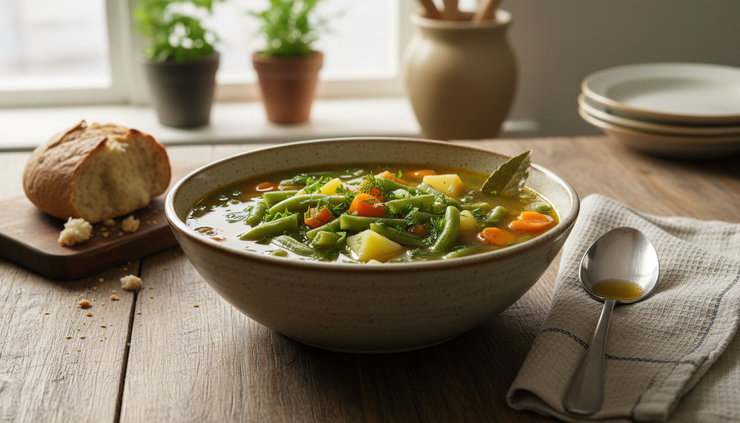
A simple green bean soup method to remember
Use this basic method for most soups:
Sauté the aromatics
Cook onion, carrot, celery, and garlic in olive oil or butter.
Simmer the slow ingredients
Add broth and cook meat, potatoes, dried beans, lentils, rice, or pasta as needed.
Add the green beans late
Simmer fresh beans for 5 to 10 minutes, frozen beans for 3 to 6 minutes, or canned beans for 2 to 3 minutes.
Taste and adjust
Add salt, pepper, herbs, and acid until the broth tastes balanced.
Serve right away
Green beans keep cooking in hot broth, so serve when they are tender and still pleasant to bite.
A good green bean soup tastes balanced. The beans should be tender, the broth should be seasoned all the way through, and the final spoonful should feel fresh rather than heavy. Once you learn the timing, green beans become one of the easiest vegetables to add to soup with confidence.


Comments