


How to Make Broad Bean Soup from Scratch with Flavorful Seasonings and Fresh Tips

Broad bean soup is the kind of dish that feels humble until the first spoonful. The beans turn creamy, the broth becomes savory and mellow, and the right herbs or spices can take it from simple to memorable.
Broad beans, also called fava beans, have a fresh, slightly nutty flavor that works well in both light spring soups and hearty cold-weather bowls. They are also filling, rich in plant-based protein and fiber, and easy to build into a satisfying meal with vegetables, olive oil, broth, and a few smart seasonings.
If you want to learn how to cook and season broad bean soups, start with the beans themselves. Fresh beans give the brightest flavor, but frozen broad beans are a great shortcut when fresh pods are out of season.

Broad bean soup starts with good beans
Fresh broad beans have a short season in many places, often showing up in spring and early summer. When they are good, they taste green, sweet, and slightly buttery. When they are old, they can taste starchy or bitter.
Look for pods that are:
Firm and plump
Bright green rather than dull or yellowing
Free from black spots, mold, or slimy patches
Heavy for their size
A few small blemishes on the outside are fine, especially if the beans inside look fresh. Avoid pods that feel limp, dry, or hollow.
Once shelled, the beans should look smooth and green. Larger beans often have a tough outer skin around each bean. This skin is edible, but it can be chewy and slightly bitter. For the smoothest soup, blanch and peel the beans before cooking them in the soup.
How many broad beans to buy
Broad bean pods contain less edible bean than their size suggests. As a rough guide, 1 pound of fresh broad bean pods usually gives about 1 cup of shelled beans. For a soup that serves 4, plan on about 2 to 3 pounds of pods, or use 2 to 3 cups of frozen shelled broad beans.
Frozen broad beans are usually already shelled. Some are peeled, while others still have the outer skin. Check the package. If the beans look pale green and smooth, they may already be peeled. If they look wrinkled or gray-green, blanching and peeling will improve the texture.
Prepare broad bean soup from scratch
This version is fresh, savory, and flexible. It makes a medium-thick soup that can be blended until smooth or left partly chunky.
Ingredients
For 4 servings:
2 to 3 cups shelled broad beans, fresh or frozen
2 tablespoons olive oil
1 medium yellow onion, chopped
1 medium carrot, chopped
1 celery stalk, chopped
2 garlic cloves, minced
1 medium potato, peeled and diced
4 cups vegetable or chicken broth
1 bay leaf
1 teaspoon kosher salt, plus more to taste
1/4 teaspoon black pepper
1 tablespoon lemon juice
2 tablespoons chopped fresh parsley, mint, or dill
Extra-virgin olive oil, for serving
Optional additions:
1/2 teaspoon ground cumin
Pinch of red pepper flakes
1/2 cup cream or coconut milk
Grated Parmesan cheese
Toasted bread or croutons
Step 1. Shell the beans
Open the pods along the seam and remove the beans. Discard the pods, or compost them if possible.
If using frozen broad beans, place them in a bowl while you prepare the other ingredients. They do not need to be fully thawed before blanching.
Step 2. Blanch and peel the beans
Bring a medium pot of water to a boil. Add the shelled beans and cook for 1 to 2 minutes. Drain them, then transfer them to a bowl of ice water or rinse under cold water.
Pinch each bean gently. The bright green inner bean should slip out of its pale outer skin.
This step takes a little time, but it makes a big difference. Peeled broad beans create a sweeter, smoother soup with a cleaner color.
Step 3. Build the flavor base
Warm the olive oil in a large pot over medium heat. Add the onion, carrot, and celery. Cook for 6 to 8 minutes, stirring now and then, until the vegetables soften.
Add the garlic and cook for about 30 seconds. Garlic burns quickly, so stir it just until fragrant.
This base, sometimes called a mirepoix, gives the soup sweetness and depth before the beans even go in.
Step 4. Add the potato and broth
Add the diced potato, broth, bay leaf, salt, and pepper. Bring the pot to a gentle boil, then reduce the heat and simmer for 10 to 12 minutes, until the potato is tender.
The potato helps thicken the soup without needing flour or heavy cream.
Step 5. Add the broad beans
Stir in the peeled broad beans. Simmer for 5 to 8 minutes, just until the beans are tender. Avoid cooking them too long, especially if they are young and fresh. Overcooked broad beans can lose their bright flavor.
Remove the bay leaf.
Step 6. Blend the soup
For a smooth soup, use an immersion blender directly in the pot. Blend until creamy.
For a rustic soup, blend only half of it and leave some vegetables and beans whole. This gives the bowl more texture.
If using a countertop blender, work in batches and do not fill the blender too high. Hot soup expands as it blends.
Step 7. Finish with acid and herbs
Stir in the lemon juice and fresh herbs. Taste and adjust the salt and pepper.
The lemon juice is small but powerful. It wakes up the beans and keeps the soup from tasting flat.
Step 8. Serve with toppings
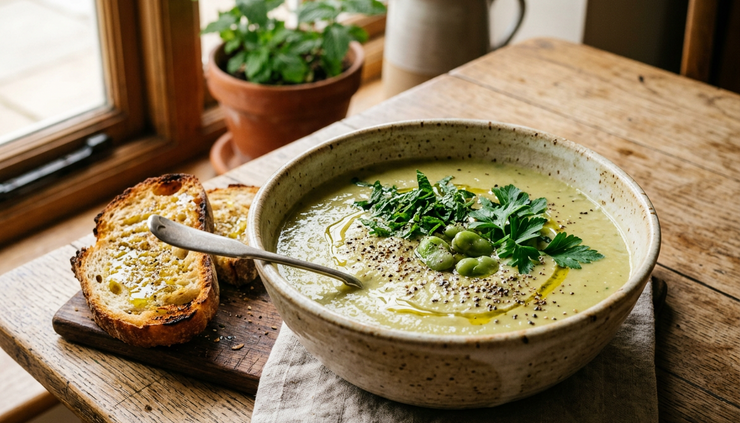
Ladle the soup into bowls. Finish with olive oil, more herbs, cracked black pepper, or grated cheese.
Serve with toasted sourdough, seeded crackers, warm pita, or a simple green salad.
Season broad bean soup with herbs and spices
Broad beans are mild, which makes them easy to season in different directions. The key is balance. Use enough seasoning to lift the soup, but not so much that it hides the fresh bean flavor.
Seasoning style | What to add | Why it works |
Fresh and green | Mint, parsley, dill, lemon zest | Brightens the soup and keeps it light |
Warm and earthy | Cumin, coriander, smoked paprika | Adds depth and a gentle savory note |
Mediterranean | Rosemary, thyme, garlic, olive oil | Makes the soup hearty and aromatic |
Spicy | Red pepper flakes, chili oil, cayenne | Adds heat without changing the base too much |
Creamy and mellow | Cream, coconut milk, Parmesan | Softens the flavor and gives a richer texture |
Tangy | Lemon juice, yogurt, vinegar | Cuts through starchiness and sharpens the finish |
Fresh herbs that work especially well
Mint is a classic match for broad beans. It gives the soup a clean, spring-like flavor. Add it at the end so it stays fresh.
Parsley is mild and versatile. It works in almost any version of the soup.
Dill adds a grassy, slightly lemony flavor. It pairs well with yogurt, lemon, and olive oil.
Thyme and rosemary are stronger. Add them early while the soup simmers, and use a light hand.
Spices that add depth
Cumin is one of the best spices for broad bean soup. It adds warmth without making the soup heavy. Coriander brings a citrusy note that works well with lemon. Smoked paprika gives a deeper, almost smoky flavor, especially good if you are making a heartier version with potato or carrots.
A pinch of red pepper flakes is enough for gentle heat. For more spice, drizzle chili oil over the finished bowl instead of adding too much heat to the whole pot.
Try variations for different tastes
Once the basic method feels familiar, broad bean soup becomes easy to adapt. Keep the beans and broth as the base, then shift the seasonings and toppings.
Make it light and springy
Use vegetable broth, fresh mint, parsley, lemon zest, and a spoonful of plain yogurt on top. Blend the soup until smooth and serve it warm, not piping hot.
This version is excellent with asparagus, peas, or a handful of baby spinach stirred in at the end.
Make it hearty and rustic
Leave the soup partly chunky. Add extra potato, diced carrots, or a handful of cooked barley. Season with thyme, garlic, black pepper, and a little smoked paprika.
For a smoky flavor, add a small amount of diced bacon or smoked turkey at the start, then cook the vegetables in the rendered fat. For a vegetarian version, use smoked paprika and a splash of olive oil instead.
Make it creamy
Blend the soup fully, then stir in cream, half-and-half, or coconut milk. Keep the heat low after adding dairy so the soup does not separate.
A creamy broad bean soup pairs well with Parmesan, chives, black pepper, and toasted bread.
Make it spicy
Season the soup with cumin, coriander, garlic, and red pepper flakes. Finish with lemon juice and chili oil.
For a fuller meal, top each bowl with roasted chickpeas or a spoonful of cooked rice.
Make it bright and tangy
Add lemon juice at the end, then top with plain Greek yogurt, dill, and olive oil. This style tastes fresh and rich at the same time.
A small splash of white wine vinegar can also work, but add it slowly. Too much vinegar can overpower the beans.
Store and reheat broad bean soup well
Broad bean soup stores nicely, which makes it useful for meal prep.
Let the soup cool, then refrigerate it in an airtight container for up to 3 to 4 days. Reheat it gently on the stove over medium-low heat, stirring often. If it thickens in the fridge, add a splash of broth or water.
You can also freeze broad bean soup for up to 2 to 3 months. Smooth blended soups freeze better than chunky ones. If you plan to add cream, freeze the soup before adding it, then stir in the cream after reheating.
For the best flavor, add fresh herbs, lemon juice, yogurt, or olive oil after reheating rather than before storing.
Frequently asked questions
Do broad beans need to be peeled for soup?
They do not have to be peeled, but peeling gives the soup a smoother texture and sweeter flavor. Larger beans especially benefit from peeling because their skins can be tough.
Can I make broad bean soup with dried broad beans?
Yes, but dried broad beans need soaking and longer cooking. Soak them overnight, then simmer until tender before turning them into soup. The flavor will be earthier and less green than fresh or frozen beans.
Why does my broad bean soup taste bitter?
The beans may be older, overcooked, or unpeeled. Add lemon juice, fresh herbs, olive oil, or a small amount of cream to balance bitterness. Next time, peel larger beans and avoid simmering them longer than needed.
What broth is best for broad bean soup?
Vegetable broth keeps the soup light and fresh. Chicken broth adds a savory, rounded flavor. Choose a low-sodium broth if possible so you can control the salt.
Can I serve broad bean soup cold?
Yes. A smooth, minty version with lemon and yogurt can be served chilled. Let it cool fully, then refrigerate it for several hours. Taste again before serving, since cold soups often need a little extra salt or lemon.
A fresh pot is easier than it looks
Broad bean soup rewards simple cooking. Start with fresh or good-quality frozen beans, build flavor with onion, carrot, celery, and garlic, then season with herbs, spices, and a bright finish of lemon.
Once the basic soup is in the pot, it can become light and green, creamy and cozy, smoky and rustic, or spicy and bold. Try the classic version first, then adjust the herbs, toppings, and texture until it tastes like your own favorite bowl.


Comments