


How to Make Parsnip and Pear Soup with Perfect Seasoning and Flavorful Add Ins

A good creamy soup should taste full and round, not flat, watery, or overly sweet. Parsnips and pears make that balance surprisingly easy. Parsnips bring an earthy, nutty sweetness. Pears add gentle fruitiness and a soft texture that blends beautifully. Together, they create a soup that feels cozy without being heavy.
This Parsnip and Pear Soup is simple enough for a weeknight but elegant enough for a holiday starter. The key is learning how to layer flavor from the start, then adjust the seasoning at the end so every spoonful tastes bright, savory, and satisfying.

Why parsnips and pears make such a good soup
Parsnips look like pale carrots, but their flavor is deeper and more complex. They taste sweet, earthy, slightly peppery, and a little nutty once cooked. Roasting brings out even more sweetness, but simmering them in broth gives the soup a clean, silky base.
Pears soften quickly and blend into the soup without overpowering it. They do not make the soup taste like dessert when used with onion, garlic, herbs, and salt. Instead, they round out the sharper edges of the parsnips and help create a plush texture.
This pairing works especially well because both ingredients have natural sweetness, but they express it differently:
Ingredient | What it adds | Best supporting flavors |
Parsnips | Earthy sweetness, body, nutty depth | Thyme, sage, garlic, leeks, cumin |
Pears | Soft fruitiness, smooth texture, brightness | Ginger, lemon, white pepper, cream |
Onion | Savory sweetness | Bay leaf, butter, olive oil |
Broth | Salt, depth, structure | Vegetable broth, chicken broth, miso |
Parsnips and pears also bring useful nutrients to the bowl. Parsnips provide fiber, vitamin C, folate, and potassium. Pears add more fiber, along with vitamin C and water-rich freshness. The fiber in both can help make the soup feel filling and satisfying. Keep in mind that food benefits are general, and no single recipe replaces medical or nutrition advice.
Gather the ingredients for a balanced bowl
This recipe makes about 4 to 6 servings.
Main ingredients
2 tablespoons unsalted butter or olive oil
1 medium yellow onion, chopped
2 garlic cloves, minced
1 1/2 pounds parsnips, peeled and chopped
2 ripe but firm pears, peeled, cored, and chopped
4 cups low-sodium vegetable broth or chicken broth
1 bay leaf
3 fresh thyme sprigs, or 1/2 teaspoon dried thyme
1/2 teaspoon kosher salt, plus more to taste
1/4 teaspoon ground white pepper or black pepper
1/3 cup heavy cream, half-and-half, or full-fat coconut milk
1 to 2 teaspoons fresh lemon juice or apple cider vinegar
Optional garnishes
Toasted walnuts or hazelnuts
Crispy sage leaves
Crumbled cooked bacon or pancetta
A drizzle of olive oil
A spoonful of Greek yogurt or crème fraîche
Chopped chives or parsley
A few thin pear slices
Toasted pumpkin seeds
Choose pears that smell fragrant but still feel firm. Very soft pears can make the soup too sweet and slightly grainy. Bartlett, Anjou, or Bosc pears all work well. Bosc pears hold a warm, honeyed flavor. Anjou pears taste mild and balanced. Bartlett pears blend easily and add more fruitiness.
For the parsnips, look for small to medium roots. Large parsnips can have woody cores. If yours are big, cut them lengthwise and remove any tough center before chopping.
Make the soup step by step
This recipe is forgiving, but the order matters. Each step helps build flavor before the soup ever reaches the blender.
1. Prep the vegetables evenly
Peel the parsnips and cut them into 1-inch pieces. Try to keep the pieces close in size so they cook at the same rate. Peel and core the pears, then chop them into similar pieces.
Chop the onion and mince the garlic. Keep the garlic separate because it cooks faster than the onion.
2. Soften the onion slowly
Set a large pot or Dutch oven over medium heat. Add the butter or olive oil. When the butter melts, add the onion and a small pinch of salt.
Cook for 6 to 8 minutes, stirring often, until the onion turns soft and translucent. Do not rush this step. Softened onion gives the soup a savory base and helps keep the final flavor from tasting too sweet.
If the onion starts to brown quickly, lower the heat. A little golden color is fine, but dark browning can make the soup taste bitter.
3. Add garlic and herbs
Stir in the garlic, thyme, bay leaf, salt, and pepper. Cook for about 30 seconds, just until the garlic smells fragrant.
This short cooking time wakes up the garlic and herbs without burning them. Burned garlic can take over the whole pot, so keep it moving.
4. Add parsnips, pears, and broth
Add the chopped parsnips and pears. Stir to coat them in the onion mixture. Pour in the broth and bring everything to a gentle boil.
Once the soup begins to boil, reduce the heat to a simmer. Cover the pot partially and cook for 20 to 25 minutes, until the parsnips are very tender.
A fork should slide into the parsnips with no resistance. If they still feel firm, simmer for another 5 minutes. Undercooked parsnips will not blend as smoothly.
5. Remove the bay leaf and blend
Take out the bay leaf and thyme stems. Use an immersion blender to blend the soup right in the pot until smooth.
If using a countertop blender, work in batches. Fill the blender only halfway, remove the center cap from the lid, and cover the opening with a folded kitchen towel. Hot soup expands as it blends, so give the steam a place to escape.
Blend longer than you think you need. A full minute or two can turn a good soup into a silky one.
6. Finish with cream and acid
Return the soup to low heat. Stir in the cream, half-and-half, or coconut milk. Add 1 teaspoon lemon juice or apple cider vinegar.
Taste before adding more. The acid should not make the soup sour. It should make the flavors feel clearer and more awake.
If the soup is too thick, add a splash of broth or water. If it is too thin, simmer uncovered for a few minutes.
Season the soup so it tastes bright and savory
The best way to cook and season this soup is to add salt in stages, then fine-tune at the end. Parsnips and pears both have sweetness, so seasoning keeps the soup firmly in savory territory.
Start with low-sodium broth if possible. This gives more control. Add a little salt when cooking the onion, then add more with the broth. Once the soup is blended, taste again. Blending can soften the impact of salt, so the final adjustment matters.
Use this guide if the soup tastes unfinished:
If the soup tastes | Add this | Why it works |
Flat | A pinch of salt | Salt brings the flavors forward |
Too sweet | Lemon juice or vinegar | Acid balances sweetness |
Too earthy | Cream or coconut milk | Fat softens strong root vegetable notes |
Too mild | White pepper, ginger, or cumin | Warm spice adds depth |
Too heavy | More broth and fresh herbs | Liquid and herbs lighten the bowl |
White pepper is lovely here because it adds warmth without dark flecks. Black pepper works too, especially if a rustic look does not bother you. Freshly grated nutmeg also pairs well with parsnips, but use a light hand. A tiny pinch is enough.
For a more savory soup, add one of these:
A teaspoon of white miso stirred in after blending
A Parmesan rind simmered with the broth, then removed before blending
A splash of dry white wine added after the onion softens
A small leek cooked with the onion
A pinch of smoked paprika for gentle warmth
For a brighter soup, try:
Lemon zest
Chopped parsley
Fresh chives
A spoonful of plain yogurt
A few drops of sherry vinegar
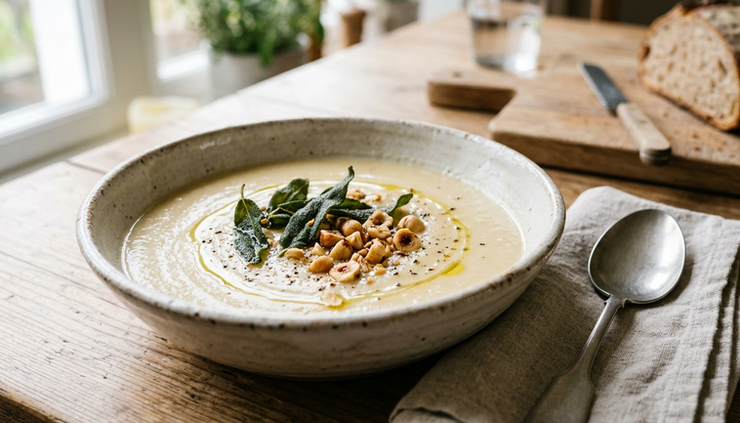
Add flavor with herbs, spices, and toppings
Once the basic recipe is in place, it is easy to make the soup your own. Parsnips and pears welcome warm spices, fresh herbs, creamy toppings, and crunchy garnishes.
Warm spice ideas
Ginger gives the soup a clean, warming lift. Add 1 teaspoon freshly grated ginger with the garlic.
Curry powder can turn the soup into a fragrant, golden bowl. Start with 1 teaspoon and add more only after tasting.
Ground cumin brings a toasted, earthy note. Use 1/2 teaspoon for gentle depth.
Coriander tastes citrusy and floral. It pairs especially well with pear and lemon.
Cayenne or chili flakes add heat. Start with a tiny pinch so the spice does not drown out the pear.
Herb ideas
Thyme is the classic choice because it tastes woodsy and gentle. Sage makes the soup feel richer and more autumnal. Rosemary can work, but use a small amount because it has a strong piney flavor.
Fresh parsley, chives, or dill are better at the end. They add color and freshness after the soup has been blended.
Creamy additions
Heavy cream gives the smoothest, richest finish. Half-and-half keeps it lighter. Coconut milk makes the soup dairy-free and adds a mellow sweetness. Greek yogurt creates tang, but stir it in off the heat so it does not curdle.
Crunchy toppings
Creamy soup needs contrast. Toasted nuts, seeds, croutons, and crispy sage all help. A spoonful of something crunchy makes the bowl feel more complete.
Try these combinations:
Toasted walnuts, sage, and black pepper
Pumpkin seeds, cumin, and cilantro
Crispy bacon, chives, and crème fraîche
Pear slices, hazelnuts, and lemon zest
Coconut milk, ginger, and toasted almonds
The goal is not to add everything. Pick one creamy element, one crunchy element, and one fresh or aromatic finish.
FAQ
Can I make parsnip and pear soup ahead of time?
Yes. This soup keeps well in the refrigerator for 3 to 4 days. Let it cool, store it in an airtight container, and reheat it gently on the stove. Add a splash of broth if it thickens.
Can I freeze this soup?
Yes, but freeze it before adding cream for the best texture. Thaw it overnight in the refrigerator, reheat it, then stir in cream or coconut milk before serving.
What can I use instead of pears?
Apples work well, especially Honeycrisp, Fuji, or Golden Delicious. Use the same amount and adjust the acid at the end because apples can taste more tart than pears.
Why does my soup taste too sweet?
The pears may be very ripe, or the parsnips may be especially sweet. Add salt a pinch at a time, then add lemon juice or apple cider vinegar. A little white pepper, cumin, or miso can also bring the soup back into balance.
Can I make this soup vegan?
Yes. Use olive oil instead of butter, vegetable broth instead of chicken broth, and coconut milk or cashew cream instead of dairy cream.
Make the recipe your own
Parsnip and pear soup rewards tasting as you go. Start with good produce, soften the onion slowly, simmer until the parsnips are tender, and blend until the texture turns silky. Then treat the final seasoning as part of the recipe, not an afterthought.
Salt gives the soup shape. Acid keeps it bright. Herbs and spices add personality. Once the base tastes balanced, the add ins can take it anywhere, from cozy and creamy with sage to lively and fragrant with ginger and coriander.
Make it once as written, then change one thing next time. Try a new herb, a different pear, a toasted nut topping, or a swirl of yogurt. That small experiment may become the version you come back to all season.



Comments