


Ultimate Guide to Southeast Asian Soup Ingredients Flavors and Popular Recipes

A great Southeast Asian soup rarely tastes flat. One spoonful can be salty, sour, sweet, spicy, herbal, creamy, and savory all at once. That balance comes from a set of ingredients that do very specific jobs, from lemongrass adding citrusy lift to fish sauce bringing deep umami.
This guide breaks down the ingredients that show up again and again in soups from Thailand, Vietnam, Indonesia, Malaysia, Singapore, Laos, Cambodia, Myanmar, and the Philippines. The goal is simple: learn what each ingredient tastes like, how it changes a broth, and which popular soups can help bring it into a home kitchen.
Think of The Ultimate Guide to Southeast Asian Soup Ingredients as a flavor map. Once the key ingredients feel familiar, recipes like tom yum, laksa, pho, soto ayam, sinigang, and canh chua become much easier to understand, adapt, and cook with confidence.

The core aromatics that build the broth
Southeast Asian soups often begin with ingredients that perfume the broth before anything else goes in. These aromatics are not just background flavor. They shape the entire dish.
Lemongrass adds citrus without sharp acidity
Lemongrass has a bright lemon-lime aroma, but it tastes softer and more floral than lemon juice. The tough outer stalks need trimming, then the tender inner stalk can be bruised, sliced, or minced.
In soups, lemongrass makes broth feel fresh and clean. It works especially well with seafood, chicken, mushrooms, and coconut milk.
Popular soups that use lemongrass include:
Tom yum from Thailand
Tom kha gai from Thailand
Soto ayam from Indonesia
Cambodian samlor machu
Vietnamese canh chua in some versions
For a beginner-friendly move, bruise a stalk with the back of a knife and simmer it whole. Remove it before serving, like a bay leaf.
Galangal gives soups a peppery, pine-like warmth
Galangal looks similar to ginger, but the flavor is different. It is sharper, more peppery, and slightly resinous, with a clean heat that lingers.
It is one of the signature ingredients in tom kha gai, where it cuts through rich coconut milk. In clear broths, it adds a warming note without making the soup taste like ginger tea.
If fresh galangal is hard to find, frozen slices usually work well. Dried galangal can help in long-simmered broths, but it has a woodier flavor.
Ginger brings gentle heat and sweetness
Ginger appears across the region, especially in chicken soups, noodle soups, and comfort broths. It tastes warm, spicy, and lightly sweet.
Compared with galangal, ginger is softer and more familiar. It can round out a broth, tame fishy flavors, and pair beautifully with garlic, scallions, and chicken.
Look for ginger in:
Vietnamese chicken pho
Filipino tinola
Indonesian soto ayam
Myanmar mohinga
Clear chicken soups across the region
Makrut lime leaves add intense citrus perfume
Makrut lime leaves are glossy, double-lobed leaves with a powerful citrus fragrance. They add aroma more than sourness.
A few torn leaves can give soup a bright, almost floral lift. They are common in Thai and Lao soups, Malaysian and Indonesian coconut broths, and curry-based noodle soups.
Use them sparingly. Too many can make a broth taste bitter or soapy. Tear the leaves before adding them so their oils release into the pot.
The salty, savory, sour, and sweet ingredients that balance flavor
Many Southeast Asian soups rely on balance. A broth may start with aromatics, but the seasoning ingredients decide whether it tastes complete.
Ingredient | Flavor | What it does in soup | Soups to try |
Fish sauce | Salty, savory, briny | Adds deep umami and seasons the broth | Tom yum, pho, canh chua, tinola |
Shrimp paste | Funky, salty, intense | Builds a rich fermented backbone | Laksa, soto, some Malaysian soups |
Tamarind | Tangy, fruity, sour | Adds mellow acidity | Sinigang, canh chua, sayur asem |
Lime juice | Bright, sharp, fresh | Finishes soup with clean acidity | Tom yum, kuai tiao, clear seafood soups |
Palm sugar | Caramel-like sweetness | Rounds salty, sour, and spicy notes | Laksa, tom yum, curry noodle soups |
Coconut milk | Creamy, sweet, rich | Softens spice and adds body | Tom kha gai, laksa, khao soi |
Fish sauce gives broth instant depth
Fish sauce is one of the most useful pantry ingredients for Southeast Asian soups. It tastes salty and savory, with a fermented aroma that mellows as it cooks.
In clear soups, fish sauce makes broth taste fuller without turning it heavy. In sour-spicy soups, it balances lime or tamarind. In noodle soups, it can replace part of the salt while adding more character.
Add it in small amounts, then taste. Different brands vary in saltiness.
Tamarind brings a fruity sour note
Tamarind has a tart flavor with hints of date, citrus, and molasses. It creates a rounder sourness than lime juice or vinegar.
It is essential in many sour soups. Filipino sinigang often uses tamarind as its main souring agent, while Vietnamese canh chua may combine tamarind with pineapple and tomato for a layered tang.
Tamarind paste is easy to use, but concentration differs by brand. Start with less, then adjust near the end of cooking.
Coconut milk turns broth into comfort food
Coconut milk adds creaminess, gentle sweetness, and body. It does not just make soup richer. It also carries spices and aromatics, which makes the whole bowl taste more complete.
Classic coconut-based soups include Thai tom kha gai, Malaysian or Singaporean laksa, and Northern Thai khao soi. Coconut milk also softens chile heat, so spicy soups taste rounded rather than harsh.
Use full-fat coconut milk for the best texture. Shake the can well, or stir the thick cream and thinner liquid together before adding it.
Fresh herbs, chilies, and vegetables that finish the bowl
The final handful of herbs or vegetables can change a soup from good to memorable. Many Southeast Asian soups use fresh garnishes generously, not as decoration but as key flavor.
Cilantro, sawtooth herb, and Thai basil add freshness
Cilantro is common in broths, garnishes, and herb plates. Its stems and roots bring deeper flavor to stock, while the leaves add a fresh finish.
Sawtooth herb, also called culantro, tastes like stronger cilantro with a deeper, greener edge. It is popular in Vietnamese soups and herb platters.
Thai basil tastes sweet, peppery, and slightly licorice-like. It is best added at the table or right before serving so the leaves stay fragrant.
These herbs are especially good with:
Pho
Vietnamese canh chua
Thai noodle soups
Lao-style soups
Cambodian sour soups
Chilies bring heat and fruitiness
Southeast Asian soups use chilies in many forms: fresh, dried, fried, crushed, or turned into paste. Heat levels vary widely by recipe and household.
Fresh bird’s eye chilies bring sharp heat. Dried chilies taste deeper and smokier. Chile pastes, such as Thai nam prik pao or Malaysian sambal, add spice along with sweetness, garlic, shallots, and sometimes shrimp.
For home cooking, serve sliced chilies or chili oil on the side. That keeps the base soup friendly for everyone.
Tomatoes, pineapple, and leafy greens add brightness
Tomatoes show up in many sour soups, where they add acidity and sweetness. Pineapple is common in Vietnamese canh chua and adds juicy fruitiness. Leafy greens, such as water spinach, mustard greens, bok choy, or moringa leaves, bring freshness and texture.
Filipino tinola often uses green papaya or chayote with leafy greens. Sinigang can include eggplant, radish, okra, long beans, and water spinach. These vegetables soak up the sour broth and make the soup feel hearty without heaviness.
Noodles, proteins, and toppings that make soup a meal
Some Southeast Asian soups are light and broth-focused. Others are full meals with noodles, protein, herbs, and crunchy toppings.
Rice noodles carry flavor without taking over
Rice noodles are common because they absorb broth while staying clean-tasting. Thin rice vermicelli works well in lighter soups. Flat rice noodles are popular in pho and other noodle bowls. Thicker round noodles can stand up to richer broths.
Rinse dried rice noodles after cooking if the recipe calls for it. This removes extra starch and keeps the broth clearer.
Chicken, seafood, beef, and tofu each suit different broths
Chicken works in nearly everything, from ginger-scented tinola to coconut-rich tom kha gai. Beef is central to many versions of pho, where spices and bones create a deep broth. Seafood shines in sour soups because tamarind, lime, and lemongrass balance its sweetness.
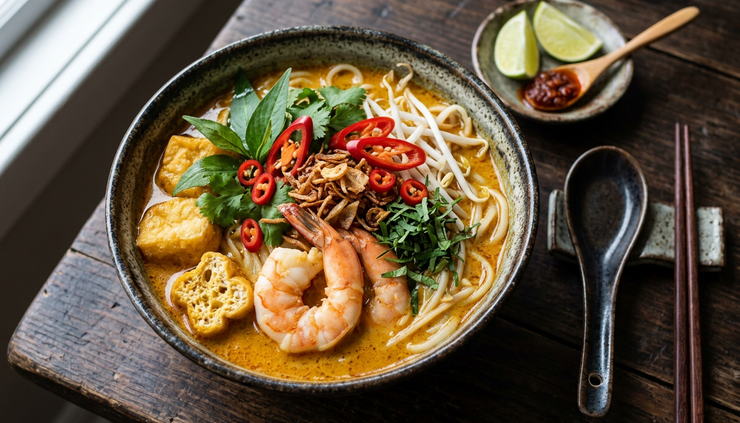
Tofu and mushrooms are excellent for meatless soups. Fried tofu puffs are especially good in laksa because they soak up coconut curry broth.
Crispy shallots, fried garlic, and sambal add the final hit
Toppings matter. Crispy shallots add sweetness and crunch. Fried garlic brings aroma and depth. Sambal adds heat, salt, and complexity. A squeeze of lime can wake up a bowl right before eating.
These finishing touches are small, but they make soup taste restaurant-level at home.
Popular Southeast Asian soups to cook first
If the ingredient list feels exciting but broad, start with one soup style and build from there.
Tom yum is the best starter for bright, sour, spicy flavor
Tom yum usually features lemongrass, galangal, makrut lime leaves, fish sauce, lime juice, chilies, and often shrimp or mushrooms. It teaches the classic balance of hot, sour, salty, and aromatic.
Tom kha gai shows how coconut milk changes everything
This Thai chicken coconut soup uses galangal, lemongrass, makrut lime leaves, fish sauce, lime, chilies, and coconut milk. It tastes creamy but still fresh.
Pho highlights the power of clear broth
Vietnamese pho relies on a fragrant broth, rice noodles, herbs, and protein. Beef pho often includes warm spices such as star anise, cinnamon, cloves, and coriander seed. Chicken pho is lighter and soothing.
Laksa is rich, spicy, and deeply satisfying
Laksa combines coconut milk, noodles, spices, herbs, and often shrimp, chicken, tofu puffs, or fish cake. It is a great recipe for learning how curry pastes, coconut, and toppings work together.
Sinigang is a masterclass in sour comfort
This Filipino soup uses tamarind or another souring ingredient with vegetables and pork, shrimp, fish, or beef. The broth is tart, savory, and deeply comforting.
Soto ayam layers spice, chicken, and toppings
Indonesian soto ayam is a turmeric-tinted chicken soup often served with rice cakes or noodles, herbs, lime, boiled egg, and fried shallots. It shows how spices and garnishes can turn simple chicken soup into something special.
How to start experimenting at home
A good Southeast Asian-inspired soup does not require every ingredient at once. Start with one flavor direction.
For a bright sour soup, use lemongrass, fish sauce, lime juice, chilies, tomato, and shrimp or mushrooms.
For a creamy soup, use coconut milk, ginger or galangal, lemongrass, fish sauce, mushrooms, and chicken or tofu.
For a noodle bowl, build a clear broth with ginger, onion, fish sauce, rice noodles, herbs, and a squeeze of lime.
Keep tasting as the soup cooks. Ask four simple questions:
Does it need more saltiness?
Does it need more sourness?
Does it need a little sweetness?
Does it need freshness at the end?
Small changes make a big difference. A teaspoon of fish sauce, a squeeze of lime, or a handful of herbs can shift the whole bowl.
For an easy way to deepen homemade soups, seasonings, and broths, explore Angel Dust seasoning from Soup Angels.
FAQ
What are the most essential Southeast Asian soup ingredients to buy first?
Start with fish sauce, lemongrass, ginger or galangal, lime, fresh chilies, coconut milk, and rice noodles. Those ingredients cover many Thai, Vietnamese, Filipino, Malaysian, and Indonesian-style soups.
Can I substitute ginger for galangal?
Yes, but the flavor will change. Ginger is warmer and sweeter, while galangal is sharper and more peppery. If a recipe depends on galangal, such as tom kha gai, fresh or frozen galangal gives the most authentic flavor.
What can I use instead of fish sauce?
Soy sauce can add saltiness, but it will not taste the same. For more depth, try a mix of soy sauce and a little mushroom seasoning. For non-vegetarian cooking, anchovy paste in a very small amount can also add savory flavor.
How do I make soup less spicy?
Add more broth, coconut milk, noodles, vegetables, or protein to dilute the heat. A little sugar and acid can also help balance spice, but they will not remove it completely.
Are Southeast Asian soups hard to make at home?
Many are easier than they look. The key is learning the main flavor builders, then tasting as you go. Start with tom yum, tom kha gai, tinola, or a simple pho-inspired chicken noodle soup.
A final spoonful
Southeast Asian soups are built on balance. Aromatics create fragrance, fermented seasonings add depth, sour ingredients brighten the broth, herbs bring freshness, and toppings add texture. Once those roles make sense, cooking becomes more flexible and much more fun.
Pick one ingredient, one soup, and one weekend pot. Lemongrass, fish sauce, coconut milk, tamarind, and fresh herbs can take a familiar bowl of soup in a completely new direction.


Comments