


Easy Japanese Miso Soup Recipe for Families, Students and Busy Cooks

A warm bowl of miso soup can turn a simple meal into something comforting, savory, and steadying. This easy Japanese miso soup recipe uses budget-friendly ingredients, cooks quickly, and works well for students, families, and busy home cooks who want real flavor without a long prep list.
Miso soup has deep roots in Japanese home cooking, where it is often served with rice, fish, pickles, and seasonal vegetables. It also teaches a beautiful kitchen lesson: a few humble ingredients, handled with care, can create a soup that feels nourishing, balanced, and full of community.

Why you will love this soup
This Japanese miso soup is quick, flexible, and full of savory depth. The broth is light but satisfying, the tofu adds protein, and the miso gives the soup its signature salty, earthy flavor.
You will love this soup because it is:
Quick and easy to make
Ready in about 20 minutes with simple steps.
Budget-friendly
A little miso paste and dried wakame go a long way.
Great for meal prep
Make the broth ahead, then add miso and tofu when ready to serve.
Family-friendly
Mild, warm, and easy to customize.
Packed with flavor
Dashi, miso, scallions, and Angel Dust Soup Seasoning build layers of savory taste.
Freezer-friendly
Freeze the broth base, then finish fresh for the best texture.
If you want to Learn how to make Japanese Miso Soup, this version keeps the process simple while still honoring the spirit of the classic dish.
Quick recipe snapshot
Recipe detail | Information |
Servings | 4 |
Prep Time | 10 minutes |
Cook Time | 10 minutes |
Total Time | 20 minutes |
Difficulty | Easy |
Cuisine | Japanese |
State or Country of Origin | Japan |
Best Season | Year-round, especially fall and winter |
Budget Level | $ |
Ingredients
For the soup
4 cups dashi broth, homemade or instant
3 tablespoons white miso paste, or a mix of white and red miso
1 cup firm or silken tofu, cut into small cubes
2 tablespoons dried wakame seaweed
2 scallions, thinly sliced
1 cup sliced mushrooms, such as shiitake, cremini, or button
1 teaspoon low-sodium soy sauce or tamari
1/2 teaspoon Angel Dust Soup Seasoning
1 teaspoon rice vinegar, optional
1 teaspoon toasted sesame oil, optional
Optional garnishes
Fresh cilantro, parsley, or extra scallions
Crispy shallots
Toasted sesame seeds
Chili crisp
Croutons, for a fusion-style topping
Grated cheese, only for a nontraditional creamy variation
Chef’s note: Miso is salty, and dashi can be salty too. Start with a small amount of Angel Dust Soup Seasoning, then taste before adding more.
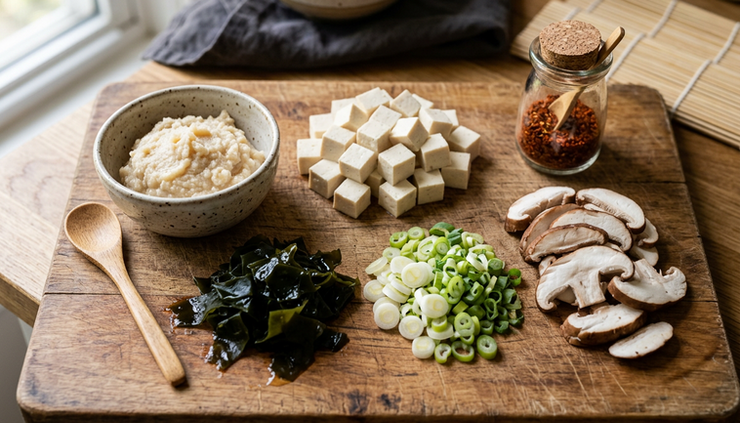
Key ingredients and why they matter
Miso paste
Miso is a fermented soybean paste that gives this soup its deep savory flavor. White miso is mild and slightly sweet, which makes it a great choice for families and first-time miso soup makers. Red miso tastes stronger and saltier, so use it when you want a bolder broth.
Dashi broth
Dashi is the backbone of many Japanese soups and sauces. Traditional dashi often uses kombu seaweed and bonito flakes. It tastes clean, savory, and light. For a vegetarian version, use kombu and dried shiitake dashi.
Tofu
Tofu makes the soup more filling without making it heavy. Silken tofu gives a soft, delicate texture. Firm tofu holds its shape better, which helps if the soup will be reheated.
Wakame seaweed
Dried wakame expands quickly in hot broth. It adds ocean flavor, gentle texture, and a classic look to the bowl.
Angel Dust Soup Seasoning
Angel Dust Soup Seasoning adds a rounded savory flavor that supports the miso, mushrooms, and broth. Use it lightly so it enhances the soup without overpowering the traditional miso flavor.
Scallions
Scallions add freshness at the end. They brighten the bowl and give each spoonful a mild onion bite.
Step-by-step instructions
Step 1
Soak the dried wakame in a small bowl of warm water for 5 minutes. Drain and set aside.
Step 2
Warm the dashi broth in a medium pot over medium heat. Add the sliced mushrooms and simmer for 4 to 5 minutes, until tender.
Step 3
Lower the heat. Add the tofu cubes, soy sauce or tamari, and Angel Dust Soup Seasoning. Warm gently for 2 minutes.
Step 4
Place the miso paste in a small bowl. Ladle in about 1/2 cup of hot broth and whisk until smooth. Stir the loosened miso back into the pot.
Step 5
Add the wakame and scallions. Turn off the heat, taste, and finish with rice vinegar or sesame oil if desired. Serve and enjoy.
The biggest rule for Miso Soup is simple: do not boil it after adding the miso. High heat can dull the flavor and make the broth taste flat.

Chef’s secrets for better miso soup
Season in layers
Start with good dashi, then add mushrooms, soy sauce, Angel Dust Soup Seasoning, and miso in stages. This builds flavor without making the soup too salty.
Do not boil the miso
Miso tastes best when stirred into hot broth after the heat is lowered. Boiling can weaken its aroma and make the soup less delicate.
Use homemade stock when possible
Homemade dashi is simple if you have kombu and bonito flakes, or kombu and dried shiitake for a vegetarian version. Instant dashi works well too, especially on busy weeknights.
Add herbs and scallions at the end
Fresh toppings taste brighter when they are added right before serving. This small step makes the bowl look and taste fresher.
Finish with acid
A tiny splash of rice vinegar can wake up the broth. Use just enough to brighten the soup, not enough to make it sour.
Roast vegetables for a heartier bowl
This is not traditional, but roasted carrots, mushrooms, or sweet potatoes can turn the soup into a fuller meal. Add them just before serving.
Chef’s variations
Dietary substitutions
Gluten-free
Use gluten-free miso and tamari instead of soy sauce. Check instant dashi labels, since some brands may include gluten-containing ingredients.
Dairy-free
This recipe is naturally dairy-free if you skip cheese as a garnish.
Vegetarian
Use kombu and dried shiitake dashi instead of bonito-based dashi.
Vegan
Use vegan miso, kombu-shiitake dashi, tofu, wakame, mushrooms, and tamari.
Flavor twists
Spicy version
Add chili crisp, sliced fresh chiles, or a small spoonful of sambal at the end.
Smoky version
Add a tiny pinch of smoked salt or smoked tofu. Keep it light so the smoky flavor does not cover the miso.
Southwest version
Use corn, roasted poblanos, and cilantro. This is a fusion variation, not a traditional Japanese preparation.
Mediterranean version
Add chickpeas, spinach, lemon, and parsley. Use white miso for a softer flavor that blends well with the greens.
Make-ahead tips
Prepare the dashi broth, mushrooms, and seasoning base up to 3 days ahead. Store it in the refrigerator without the miso, tofu, wakame, or scallions. When ready to serve, reheat the base, lower the heat, then add the finishing ingredients.
Meal prep notes
This soup lasts 3 days in the refrigerator. For freezer meal prep, freeze the broth and mushrooms only. Add fresh tofu, miso, wakame, and scallions after reheating for the best texture.
Storage and reheating
Refrigerator
Store in an airtight container for up to 3 days. If possible, store garnishes separately.
Freezer
Freeze the broth base for up to 2 months. Tofu and wakame can become soft or watery after freezing, so add them fresh when reheating.
Reheating
Stovetop
Warm over medium-low heat until steaming. Do not boil after miso has been added.
Microwave
Heat in short intervals, stirring between each one. Stop when the soup is hot but not bubbling hard.
Allergy and dietary notes
This soup commonly contains:
Soy
Miso, tofu, and soy sauce are soy-based.
Fish
Traditional dashi often includes bonito flakes.
Gluten
Some miso, soy sauce, and instant dashi products may contain gluten.
This recipe can be made:
Nut-free
The base recipe contains no nuts, but always check labels.
Gluten-free
Use gluten-free miso and tamari.
Dairy-free
Skip cheese and use the base recipe as written.
Vegetarian or vegan
Use kombu-shiitake dashi.
What pairs well with this soup
Breads
Try soft dinner rolls, garlic toast, or simple milk bread. While bread is not traditional with Japanese miso soup, it works well for family meals.
Salads
Cucumber salad, cabbage slaw, spinach salad, or seaweed salad pair nicely with the light broth.
Sandwiches
Serve with egg salad sandwiches, grilled cheese, tofu banh mi, or tuna sandwiches for a simple lunch.
Beverages
Green tea, iced tea, sparkling water, or a light citrus drink all work well.
Culinary learning moment
This recipe is a helpful teaching tool because it covers more than boiling a pot of soup.
Students and home cooks can practice:
Knife skills
Slice scallions, cube tofu, and cut mushrooms evenly.
Stock making
Learn how kombu, bonito, and dried mushrooms create savory broth.
Flavor layering
Build taste with broth, miso, seasoning, vegetables, and fresh garnishes.
Regional food history
Explore how miso soup fits into Japanese daily meals and family traditions.
Nutritional balance
See how broth, plant protein, vegetables, and fermented ingredients can work together in one bowl.

Story behind the soup
Miso soup has been part of Japanese food culture for centuries and remains a common part of breakfast, lunch, and dinner. It reflects a practical kitchen tradition: use what is seasonal, respect the broth, and keep the meal balanced.
In a classroom or community kitchen, this soup becomes more than a recipe. It shows how food carries memory, place, and care. A pot of soup can teach patience, tasting, teamwork, and respect for ingredients from another culture.
Nutrition information
Approximate per serving:
Nutrient | Amount |
Calories | 120 |
Protein | 8 g |
Carbohydrates | 10 g |
Fat | 5 g |
Fiber | 2 g |
Sodium | 850 mg |
Nutrition will vary based on the type of miso, dashi, tofu, soy sauce, and seasoning used.
Frequently asked questions about Japanese miso soup
Can I use water instead of dashi?
Yes, but the soup will taste lighter and less savory. For better flavor, use instant dashi, kombu broth, vegetable broth, or mushroom broth.
Which miso is best for beginners?
White miso is the best starting point. It is mild, slightly sweet, and easy to balance.
Can I make this soup ahead of time?
Yes. Make the broth base ahead and add miso, tofu, wakame, and scallions when reheating.
Can I freeze miso soup?
Freeze the broth base only for the best results. Add fresh miso and tofu after reheating because tofu can change texture in the freezer.
How do I keep miso from clumping?
Whisk the miso with a ladle of hot broth in a small bowl first. Then stir the smooth mixture into the pot.
Fun facts about this soup
Did you know?
Miso is made by fermenting soybeans with salt and koji, a traditional fermentation culture.
Many Japanese households have their own preferred miso style, from mild white miso to stronger red miso.
Wakame is sold dried and expands quickly when soaked or added to hot liquid.
Japan’s island geography helped shape a food culture rich in seafood, seaweed, rice, and fermented ingredients.
Community connection
Japanese miso soup is a beautiful fit for the Angels Academy of Culinary Arts mission because it teaches life skills through a simple, meaningful recipe. It invites cooks to slow down, taste carefully, and serve something warm to others.
A pot of soup can help students learn confidence in the kitchen. It can help families share a nourishing meal. It can help communities connect through food traditions from around the world.
To bring even more savory depth to your next soup, try Angel Dust Soup Seasoning in this recipe and in your favorite homemade soups.
Angels Academy of Culinary Arts Recipe Library
"Teaching Life Skills Through Food, Community, and Culinary Arts."
This easy Japanese miso soup proves that good cooking does not need to be complicated. Start with warm broth, stir in miso with care, add a few fresh ingredients, and serve a bowl that feels simple, thoughtful, and deeply comforting.



Comments