


Global Vegan Soups from Dal to Fasolada a Flavorful Journey Around the World

A good soup can tell the story of a place in one bowl. Lentils simmered with turmeric in India, day-old bread softened into Tuscan broth, beans cooked with olive oil on a Greek stove, each one carries history, comfort, and practical kitchen wisdom.
Traditional vegan soups are especially rewarding for home cooks because they rely on pantry staples. Beans, lentils, vegetables, herbs, spices, and good broth do most of the work. They are affordable, flexible, and deeply satisfying without needing meat, dairy, or complicated techniques.
This guide explores six beloved soups with plant-based roots or easy vegan traditions: Indian dal, Italian ribollita, Moroccan harira, Ethiopian shorba, Greek fasolada, and Mexican black bean soup. Each one offers a different way to build flavor, from toasted spices to slow-simmered legumes.

Why traditional vegan soups belong in a home kitchen
Many of the world’s most comforting soups grew from everyday cooking. They were built around what cooks had on hand: dried beans, stale bread, seasonal greens, root vegetables, spices, and water or broth. That makes them practical even now.
The best part is that these soups use simple methods:
Simmering legumes until creamy and tender
Layering aromatics like onion, garlic, ginger, celery, and herbs
Blooming spices in oil to release aroma
Using leftovers such as bread, greens, or cooked beans
Finishing with acid like lemon juice, vinegar, or tomatoes for balance
For anyone curious about Vegan Soups from Around the World, these six bowls are a delicious place to start. They do not require rare equipment or restaurant-level skill. A sturdy pot, a sharp knife, and a little patience are enough.
Six traditional vegan soups that bring global flavor to the table
Indian dal is comfort built from lentils and spices
Dal is both an ingredient and a dish. In India, the word refers to split pulses such as lentils, peas, and beans, as well as the thick, soupy preparations made from them. Dal has been part of South Asian cooking for centuries, tied to regional food traditions, home cooking, temple meals, and vegetarian diets.
There is no single version. A North Indian dal may use split chickpeas or black gram with warming spices. A South Indian version might feature toor dal with curry leaves, mustard seeds, and tamarind. A simple weeknight dal often starts with red lentils because they cook quickly and break down into a silky texture.
Key ingredients often include:
Red lentils, yellow split peas, mung dal, or toor dal
Turmeric, cumin, coriander, mustard seeds, or garam masala
Onion, garlic, ginger, tomato, and chiles
Fresh cilantro and lemon or lime juice
Neutral oil or coconut oil for tempering
The classic method is straightforward. Rinse the lentils well, then simmer them with water, turmeric, and salt until soft. In a separate small pan, cook spices and aromatics in oil. This spice-infused oil, often called a tadka or tempering, gets stirred into the dal near the end. That final step gives the soup its signature fragrance.
At home, dal is forgiving. Make it thin like soup or thick enough to spoon over rice. Add spinach, cauliflower, squash, or carrots. Finish with lemon juice to brighten the earthy lentils.
Italian ribollita turns humble leftovers into a Tuscan classic
Ribollita comes from Tuscany, where resourceful cooks made hearty meals from vegetables, beans, and leftover bread. The name means “reboiled,” a clue to its history. Traditionally, a vegetable and bean soup was cooked, then reheated with stale bread until thick and stew-like.
This dish belongs to the tradition of cucina povera, often translated as “poor cooking,” though the food itself is rich in flavor. It reflects a style of cooking that wastes little and honors simple ingredients.
Key ingredients often include:
Cannellini beans
Tuscan kale, lacinato kale, cabbage, or chard
Carrots, celery, onion, garlic, and tomato
Stale country bread
Olive oil, rosemary, thyme, or bay leaf
To make ribollita, start with a soffritto of onion, carrot, and celery cooked slowly in olive oil. Add garlic, tomatoes, greens, beans, and broth. Some cooks mash part of the beans or blend a scoop of the soup to make the broth thicker.
The bread comes in near the end or when reheating. It soaks up the broth and turns the soup into something spoonable and rustic. A generous drizzle of olive oil before serving is not optional in spirit, even if the soup itself is simple.
Ribollita is ideal for using tired greens and bread that has gone firm. It also tastes better the next day, which explains why reboiling became part of the tradition.
Moroccan harira is fragrant with legumes, tomatoes, and warm spices
Harira is one of Morocco’s best-known soups, especially associated with Ramadan, when it is often served to break the fast. Many family recipes include meat, but plant-based versions also fit naturally because the backbone of the soup is legumes, tomatoes, herbs, and spices.
Harira’s texture sets it apart. It is often silky but still full of chickpeas, lentils, and herbs. Some versions use flour or a flour-water mixture to thicken the broth, while others rely on the legumes and tomatoes.
Key ingredients often include:
Chickpeas and lentils
Tomatoes or tomato paste
Onion, celery, cilantro, and parsley
Ginger, turmeric, cinnamon, black pepper, and sometimes saffron
Lemon wedges for serving
The cooking method starts by softening onion and celery, then adding spices so they warm in the oil. Tomatoes, chickpeas, lentils, and broth follow. The soup simmers until the legumes are tender and the flavors come together.
Fresh herbs are essential. Cilantro and parsley give harira its green, aromatic lift. A squeeze of lemon at the table cuts through the richness and makes the spices taste brighter.
For a vegan home version, use vegetable broth and skip any egg or meat additions. If you like a thicker soup, blend a small portion or whisk in a little flour slurry near the end.
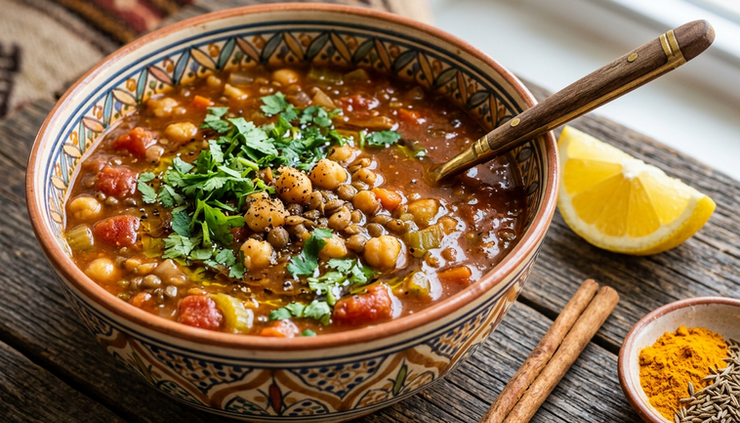
Ethiopian shorba shows the power of spice and slow simmering
Shorba is a broad word for soup used across several food cultures, and Ethiopian versions often reflect the country’s love of legumes, vegetables, and fragrant spice blends. In Ethiopian and Eritrean cooking, plant-based meals also have a strong place because of Orthodox Christian fasting traditions, when many cooks avoid animal products.
A vegan Ethiopian-style shorba often features lentils, split peas, vegetables, and berbere, the famous spice blend that may include chiles, garlic, ginger, fenugreek, coriander, and other spices. The result is warming, rich, and deeply aromatic.
Key ingredients often include:
Red lentils, brown lentils, or yellow split peas
Onion, garlic, ginger, carrots, and tomatoes
Berbere spice blend
Vegetable broth or water
Oil, fresh herbs, and lemon juice
The method begins with onion cooked slowly until sweet. Garlic and ginger go in next, followed by berbere. Cooking the spice briefly in oil helps develop its flavor. Lentils or split peas are then added with tomatoes and broth.
As the soup simmers, the legumes soften and thicken the broth. Some cooks leave it textured, while others mash or blend part of it. Serve with injera if available, or with flatbread, rice, or crusty bread.
Berbere can vary in heat, so start with less if the blend is new to your kitchen. The goal is warmth and depth, not just fire.
Greek fasolada is a white bean soup with ancient roots
Fasolada is often called one of Greece’s classic national dishes. It is a white bean soup made with olive oil, vegetables, and tomato. Its roots are old, tied to the Mediterranean habit of turning dried beans into nourishing meals.
The beauty of fasolada is restraint. It does not need many spices. The flavor comes from beans cooked until creamy, good olive oil, vegetables, herbs, and a bright tomato base.
Key ingredients often include:
Dried white beans such as navy beans or cannellini
Onion, carrot, celery, and garlic
Tomatoes or tomato paste
Olive oil
Bay leaf, oregano, parsley, and lemon
Traditionally, dried beans are soaked, then simmered until tender. The vegetables cook with the beans or are sautéed first for extra flavor. Tomato is added after the beans begin to soften, since acidic ingredients can slow the softening of dried beans if added too early.
Fasolada should be brothy but hearty. Some beans may break down and thicken the soup naturally. Finish with olive oil and fresh parsley. A squeeze of lemon at the table gives it a clean, fresh edge.
Serve it with olives, bread, and a simple salad for a meal that feels complete without any fuss.
Mexican black bean soup is earthy, smoky, and satisfying
Black beans have a long history in Mexico and across the Americas. They were cultivated in Mesoamerica long before European contact and remain central to many regional dishes. Mexican black bean soup builds on that heritage with aromatics, chiles, herbs, and sometimes a smoky finish.
This soup can be silky, chunky, or somewhere in between. Some versions are simple and brothy. Others are blended into a thick, almost creamy bowl.
Key ingredients often include:
Dried or canned black beans
Onion, garlic, jalapeño, or dried chiles
Cumin, oregano, and bay leaf
Tomatoes, vegetable broth, or bean cooking liquid
Lime juice, cilantro, avocado, or radish for serving
For the deepest flavor, start with dried beans. Soak them if desired, then simmer with onion, garlic, and bay leaf until tender. For a faster version, canned black beans work well. Just rinse them, then simmer with the aromatics and spices.
A useful method is to blend half the soup and return it to the pot. This creates a creamy base while keeping some whole beans for texture. Finish with lime juice, fresh cilantro, and a little diced onion or avocado.
If you like smoky flavor, add smoked paprika, chipotle, or a dried chile. Keep the heat gentle enough that the beans remain the star.
How to cook these soups with confidence
These soups come from different places, but they share several practical patterns. Once you understand them, you can cook more freely.
Soup | Main base | Flavor builders | Best finish |
Indian dal | Lentils or split pulses | Turmeric, cumin, ginger, garlic, tadka | Lemon, cilantro, chile oil |
Italian ribollita | White beans, greens, bread | Olive oil, tomato, rosemary, soffritto | Olive oil, black pepper |
Moroccan harira | Chickpeas and lentils | Ginger, turmeric, cinnamon, tomatoes, herbs | Lemon, parsley, cilantro |
Ethiopian shorba | Lentils or split peas | Berbere, garlic, ginger, onion | Lemon, fresh herbs |
Greek fasolada | White beans | Olive oil, tomato, bay leaf, oregano | Lemon, parsley, olive oil |
Mexican black bean soup | Black beans | Garlic, cumin, oregano, chiles | Lime, cilantro, avocado |
A few tips make a big difference:
Salt in layers
Add some salt early, then adjust near the end. Beans and lentils can taste flat without enough seasoning.
Use acid at the finish
Lemon, lime, vinegar, or tomato sharpens the soup and balances earthy legumes.
Control thickness
Blend a small portion, mash some beans against the pot, or add more broth.
Let leftovers rest
Bean and lentil soups often taste fuller the next day.
Choose toppings with texture
Try toasted bread, crisp radish, chopped herbs, chile oil, or a spoonful of vegan yogurt.

Make these global soups your own
Traditional recipes matter, but home cooking has always adapted to the kitchen at hand. If a recipe calls for a specific bean, use the closest one you have. If fresh tomatoes are out of season, use canned. If a spice blend is new, add it gradually and taste as you go.
Here are a few easy ways to build a soup night around these dishes:
Serve dal with basmati rice, flatbread, or roasted cauliflower.
Pair ribollita with a green salad and extra olive oil.
Offer harira with dates, olives, and lemon wedges.
Spoon Ethiopian shorba with injera, pita, or rice.
Serve fasolada with crusty bread and marinated vegetables.
Top black bean soup with lime, cilantro, avocado, and toasted pepitas.
These soups also freeze well, especially dal, shorba, fasolada, and black bean soup. Ribollita can freeze too, though the bread will soften further. For best texture, freeze the soup before adding bread, then stir in fresh or stale bread when reheating.
FAQ
Are all of these soups traditionally vegan?
Some are naturally vegan in many versions, such as dal, fasolada, and many black bean soups. Others, like harira, may include meat in some households but are easy to make vegan because legumes, vegetables, herbs, and spices form the base.
Can I use canned beans instead of dried beans?
Yes. Canned beans save time and work well in ribollita, fasolada, harira, and black bean soup. Rinse them first, then simmer long enough for the flavors to blend. Dried beans often give a richer broth, but they are not required.
What is the easiest soup to start with?
Red lentil dal is a great first choice. Red lentils cook quickly, need no soaking, and break down into a creamy texture in about the time it takes to cook rice.
How do I make vegan soup taste richer?
Start with aromatics cooked in oil, use enough salt, and finish with acid. Spices bloomed in oil, good olive oil, tomato paste, blended beans, or a spoonful of tahini can also add body and depth.
Can these soups be made ahead?
Yes. Most bean and lentil soups improve after a night in the refrigerator. Store them in airtight containers, then reheat gently with a splash of water or broth if they thicken.

A bowl is a simple way to travel
Cooking these soups at home is a gentle way to explore global flavors without leaving the kitchen. Start with one pot that matches your mood: dal for creamy comfort, ribollita for rustic heartiness, harira for spice and brightness, shorba for warmth, fasolada for Mediterranean simplicity, or black bean soup for smoky depth.
Pick one soup this week, gather the beans, lentils, vegetables, and spices, and let the pot do its quiet work. The reward is more than dinner. It is a taste of how cooks around the world have turned humble ingredients into food worth returning to again and again.


Comments