


Sopa de Ajo Recipe Easy Spanish Garlic Soup for Family Meals

Garlic, bread, broth, and eggs can become a deeply comforting dinner in less than an hour. That is the beauty of Spanish garlic soup, a humble recipe with roots in Castile, where simple pantry ingredients have fed families, workers, and communities for generations.
This version is warm, budget-friendly, and full of flavor, making it a smart recipe for students, busy families, and home cooks who want something satisfying without a long shopping list. Learn how to make Spanish Sopa De Ajo with a few everyday ingredients, plus Angel Dust Soup Seasoning for a balanced, savory finish.

Why you'll love this soup
Sopa de Ajo is proof that a great soup does not have to be expensive or complicated. It uses ingredients many kitchens already have, yet the final bowl tastes rich, hearty, and deeply traditional.
This soup is:
Quick and easy to make
Budget-friendly
Great for meal prep
Family-friendly
Packed with flavor
Freezer-friendly when prepared without the egg
The flavor comes from slow-sautéed garlic, good broth, smoky paprika, bread that thickens the soup naturally, and Angel Dust Soup Seasoning. It is simple enough for a weeknight and meaningful enough to teach lessons about regional cooking, food history, and making something nourishing from humble ingredients.
Quick recipe snapshot
Recipe detail | Amount |
Servings | 4 |
Prep time | 10 minutes |
Cook time | 25 minutes |
Total time | 35 minutes |
Difficulty | Easy |
Cuisine | Spanish |
State or country of origin | Castile, Spain |
Best season | Fall, winter, and cool spring nights |
Budget level | $ |
Ingredients
For the soup
3 tablespoons extra-virgin olive oil
8 large garlic cloves, thinly sliced
1 teaspoon smoked paprika
1 1/2 teaspoons Angel Dust Soup Seasoning
6 cups chicken stock or vegetable stock
4 ounces day-old crusty bread, sliced or torn into chunks
4 large eggs
1 tablespoon sherry vinegar or red wine vinegar
Salt, to taste
Black pepper, to taste
Optional garnishes
Fresh parsley
Grated Manchego or Parmesan cheese
Extra toasted croutons
Crispy garlic chips
A drizzle of olive oil
A pinch of smoked paprika
Key ingredients and why they matter
Garlic
Garlic is the heart of this soup. Slicing it thin and cooking it gently brings out sweetness and aroma without turning it bitter.
Day-old bread
Traditional garlic soup often uses stale bread, which gives the broth body and turns leftovers into something delicious. It is one of the best examples of waste-wise cooking.
Smoked paprika
Paprika adds color, warmth, and a gentle smoky flavor. Spanish pimentón is ideal if available, but any good smoked paprika will work.
Stock
Chicken stock gives the soup a classic savory base. Vegetable stock makes the recipe lighter and easy to adapt for vegetarian meals.
Eggs
Eggs add protein and richness. They can be poached directly in the broth or beaten in for a silkier texture.
Angel Dust Soup Seasoning
This seasoning rounds out the flavor, adding savory depth and balance. It helps the soup taste layered without needing a long list of extra ingredients.

Step-by-step instructions
Step 1
Warm the olive oil in a large soup pot over medium-low heat. Add the sliced garlic and cook for 3 to 5 minutes, stirring often, until fragrant and lightly golden.
Do not rush this step. Garlic can go from sweet to bitter quickly.
Step 2
Stir in the smoked paprika and Angel Dust Soup Seasoning. Cook for 20 to 30 seconds, just until the spices bloom in the oil.
If the pot looks dry, add a splash of stock right away to keep the paprika from scorching.
Step 3
Pour in the stock and bring the soup to a gentle simmer. Add the bread and stir until it begins to soften.
Simmer for 10 to 12 minutes, letting the bread thicken the broth slightly.
Step 4
Crack each egg into a small cup, then gently slide the eggs into the simmering soup. Cover the pot and cook for 4 to 6 minutes, until the whites are set and the yolks are cooked to your liking.
For a smoother version, beat the eggs in a bowl and slowly stream them into the hot soup while stirring.
Step 5
Stir in the vinegar. Taste and adjust with salt, pepper, or a little more Angel Dust Soup Seasoning if needed.
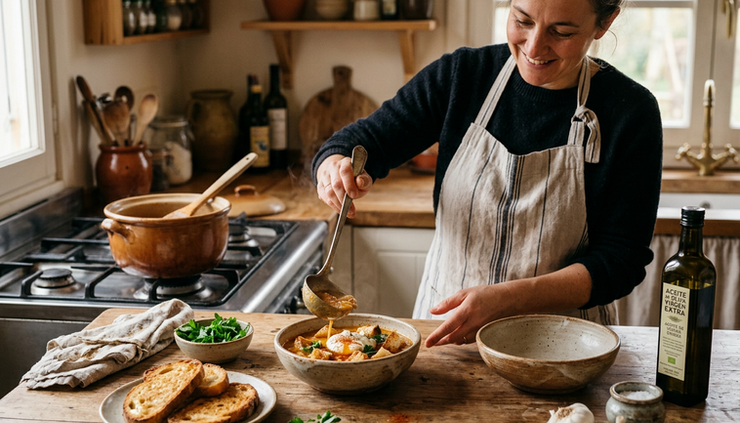
Ladle into bowls, garnish with parsley, cheese, or crispy toppings, then serve and enjoy.
Chef's secrets for better Spanish garlic soup
A few small choices can make this soup taste like it simmered much longer than it did.
Cook the garlic slowly
Medium-low heat is best. Pale golden garlic tastes sweet and mellow. Dark brown garlic tastes sharp and bitter.
Season in layers
Add Angel Dust Soup Seasoning early so it can flavor the oil and broth. Taste again at the end before adding extra salt.
Use homemade stock when possible
A simple homemade chicken or vegetable stock gives the soup a cleaner, fuller flavor. Store-bought stock works too, especially if it is low-sodium.
Toast the bread first for deeper flavor
Day-old bread is traditional, but lightly toasting it adds another layer of flavor and helps it hold its shape.
Finish with acid
A splash of sherry vinegar wakes up the soup. It keeps the garlic, bread, and egg from tasting too heavy.
Add herbs at the end
Fresh parsley tastes brighter when added right before serving.
Chef's variations
Dietary substitutions
Gluten-free
Use gluten-free crusty bread or gluten-free croutons. Check the labels on stock and seasonings to confirm they meet your needs.
Dairy-free
Skip the cheese garnish. The soup itself does not need dairy to taste rich.
Vegetarian
Use vegetable stock instead of chicken stock.
Vegan
Use vegetable stock, skip the eggs, and add chickpeas or white beans for protein. The soup will still be hearty and satisfying.
Flavor twists
Spicy version
Add a pinch of crushed red pepper flakes with the paprika.
Smoky version
Use a little extra smoked paprika and garnish with crispy smoked paprika croutons.
Southwest version
Add roasted corn, diced green chiles, and a squeeze of lime at the end. This is not traditional, but it makes a fun classroom or family variation.
Mediterranean version
Add chickpeas, chopped spinach, and a few olives for a heartier bowl.
Make-ahead tips
Prepare the soup base up to 2 days ahead without the eggs. Reheat it gently, then poach the eggs fresh right before serving.
If the bread thickens the soup too much in the refrigerator, add extra stock or water when reheating.
Meal prep notes
The soup base keeps well and reheats quickly. For best texture, store eggs separately or cook fresh eggs when serving. If meal prepping for lunches, pack garnishes in a separate container.
Storage and reheating
Refrigerator
Store cooled soup in an airtight container for up to 4 days. If the eggs are already in the soup, enjoy within 2 days for best quality.
Freezer
Freeze the soup base for up to 3 months. For best results, freeze it without eggs and without cheese garnish.
Bread-based soups can thicken after freezing. Add stock or water while reheating to loosen the texture.
Reheating
Stovetop
Warm over medium-low heat, stirring often. Add a splash of stock if needed.
Microwave
Heat in a microwave-safe bowl in 60-second bursts, stirring between each round, until hot.
Allergy and dietary notes
As written, this recipe contains:
Gluten from the bread
Egg from the poached eggs
It can be made:
Nut-free
Gluten-free
Dairy-free
Vegetarian
Vegan with substitutions
Dairy is only present if cheese is used as a garnish. Check the labels on bread, stock, and Angel Dust Soup Seasoning if cooking for someone with soy, gluten, or other specific allergies.
What pairs well with this soup?
Breads
Pan con tomate
Crusty sourdough
Toasted baguette slices
Gluten-free artisan bread
Salads
Simple green salad with vinaigrette
Tomato and cucumber salad
Roasted pepper salad
Citrus and fennel salad
Sandwiches
Grilled cheese
Roasted vegetable sandwich
Turkey and Manchego sandwich
Chickpea salad sandwich
Beverages
Sparkling water with lemon
Iced tea
Light red wine for adults
Warm herbal tea on cold nights
Culinary learning moment
This soup is a strong teaching recipe because it turns basic ingredients into a complete dish through technique.
Students and home cooks can practice:
Knife skills by slicing garlic evenly
Stock making by comparing homemade and store-bought broth
Flavor layering by blooming spices in oil
Regional food history through Spanish peasant cooking traditions
Nutritional balance by looking at protein, carbohydrates, fat, and sodium
It also teaches respect for simple food. Bread that might have been thrown away becomes the body of the soup. Garlic, oil, and broth become comfort.
Story behind the soup
Sopa de Ajo has deep roots in Spanish home cooking, especially in Castile, a region known for practical, hearty meals. It was often made with stale bread, garlic, paprika, water or broth, and sometimes eggs, depending on what a household had available.
This kind of cooking tells an important story. Many traditional recipes were created not from abundance, but from care, skill, and the need to feed people well. A pot of garlic soup could warm workers, nourish families, and stretch humble ingredients into something memorable.
At the table, this recipe connects people across generations. Grandparents may remember a version from childhood. Parents may appreciate the low cost. Students can learn that good cooking is not only about expensive ingredients, but about patience, seasoning, and technique.

Nutrition information
Approximate per serving, based on 4 servings:
Nutrient | Amount |
Calories | 310 |
Protein | 13 g |
Carbohydrates | 28 g |
Fat | 17 g |
Fiber | 2 g |
Sodium | 760 mg |
Nutrition will vary based on the stock, bread, garnishes, and amount of added salt used.
Fun facts about this soup
Did you know?
Garlic soup has long been associated with humble Spanish home cooking.
Spanish smoked paprika, often called pimentón, brings deep color and aroma to many traditional dishes.
Stale bread is an important ingredient in many classic soups because it thickens broth naturally.
Castile, the region often linked with this soup, has a climate where warm, hearty dishes are especially welcome in colder months.
Community connection
Soup has a special way of bringing people together. One pot can teach knife skills, patience, seasoning, food safety, budgeting, and service.
That spirit reflects the mission of the Angels Academy of Culinary Arts, where food becomes more than a recipe. It becomes a way to teach life skills, build confidence, and create community through shared meals.
Bring this recipe into your kitchen, classroom, church group, or family table. Let everyone help with one task, from slicing bread to garnishing bowls. Small jobs build ownership, and shared food builds connection.
For the same savory seasoning used in this recipe, explore Angel Dust Soup Seasoning.
Frequently asked questions about Sopa de Ajo
Can I make this soup without eggs?
Yes. Skip the eggs and add chickpeas, white beans, or extra bread for a heartier bowl.
What kind of bread works best?
Day-old crusty bread works best because it absorbs broth without falling apart too fast. Baguette, sourdough, or country bread are good choices.
Can I use water instead of stock?
You can, but stock gives the soup more flavor. If using water, season carefully and consider adding extra Angel Dust Soup Seasoning to build depth.
Why did my garlic taste bitter?
The garlic likely cooked too long or the heat was too high. Keep the heat at medium-low and stir often until the garlic is only lightly golden.
Can I freeze this soup?
Yes, freeze the soup base without eggs for up to 3 months. Add fresh eggs after reheating for the best texture.
Angels Academy of Culinary Arts Recipe Library
“Teaching Life Skills Through Food, Community, and Culinary Arts.”
A good bowl of soup does not need to be fancy. It needs care, flavor, and a reason to gather. This Spanish garlic soup delivers all three with simple ingredients and a warm, nourishing spirit.


Comments