
_edited.jpg)

25 Weight Loss Soups That Keep You Full and Satisfied

A thin, watery soup can leave you hungry an hour later. A well-built soup can do the opposite. It can feel cozy, taste rich, and still support a lighter eating pattern.
The trick is not bland broth or tiny portions. The trick is protein, fiber, volume, and flavor. When a soup has beans, lentils, lean meat, tofu, vegetables, whole grains, or a creamy texture from blended produce, it has staying power.
This guide to 25 Weight Loss Soups That Actually Keep You Full is made for real kitchens. No fussy steps. No diet-food sadness. Just satisfying bowls that can work for lunch, dinner, meal prep, or a freezer stash.
This article is for general informational purposes only. Weight loss needs vary from person to person, especially with medical conditions or dietary needs, so use these ideas as cooking inspiration rather than personal medical advice.
What makes a soup filling without making it heavy
A filling soup does not need cream, lots of oil, or a giant pile of noodles. It needs a few smart building blocks.
Filling element | Good soup choices | Why it helps |
Protein | Chicken, turkey, shrimp, tofu, Greek yogurt, beans, lentils | Helps a bowl feel like a meal |
Fiber | Beans, vegetables, barley, farro, split peas | Slows digestion and adds bulk |
Water-rich volume | Broth, tomatoes, zucchini, cabbage, greens | Fills the bowl without making it dense |
Healthy fat | Olive oil, avocado, seeds, a little cheese | Adds flavor and satisfaction |
Big flavor | Garlic, herbs, chiles, citrus, vinegar, spices | Keeps lighter soups from tasting flat |
A good weight loss soup usually has at least one protein source and two or more vegetables. If the soup is mostly broth and noodles, add more vegetables or protein. If it is mostly cream, cut some richness with broth, cauliflower, beans, or blended vegetables.
The best soups also reheat well. That matters because a pot of soup can cover several meals with little extra effort.
25 weight loss soups that keep you full
These soups are not ranked. They are organized to give a mix of brothy, chunky, creamy, vegetarian, and protein-rich options. Use them as recipes, or as starting points for your own version.
1. Chicken vegetable soup with white beans
This is the classic “light but satisfying” soup. Start with chicken breast or thighs, carrots, celery, onion, zucchini, and low-sodium broth. Add white beans near the end so they stay creamy but do not fall apart.
The beans make the soup more filling than a plain chicken vegetable soup. They also add a mild, cozy texture.
Make it better: Finish with lemon juice and parsley. The fresh flavor makes the whole pot taste brighter.
2. Turkey chili soup
Turkey chili becomes more spoonable when you add extra tomatoes and broth. Use lean ground turkey, kidney beans or black beans, diced tomatoes, onions, peppers, chili powder, cumin, and smoked paprika.
It has the comfort of chili with the lighter feel of soup. The turkey and beans give it real staying power.
Make it better: Add a spoonful of plain Greek yogurt instead of sour cream.
3. Lentil vegetable soup
Lentils are one of the easiest ways to make a soup hearty without much fuss. They cook faster than dried beans and do not need soaking.
Use brown or green lentils with carrots, celery, onions, tomatoes, spinach, and garlic. Add a bay leaf if you have one.
Make it better: Stir in a splash of red wine vinegar at the end. Lentils love acidity.
4. Cabbage soup with chicken sausage
Cabbage soup has a reputation for being too plain, but it does not have to be. Slice cabbage thinly and simmer it with tomatoes, broth, onion, garlic, carrots, and a small amount of sliced chicken sausage.
The sausage adds strong flavor, so a little goes a long way. Cabbage gives the soup volume and gentle sweetness.
Make it better: Use smoked paprika and black pepper for depth.
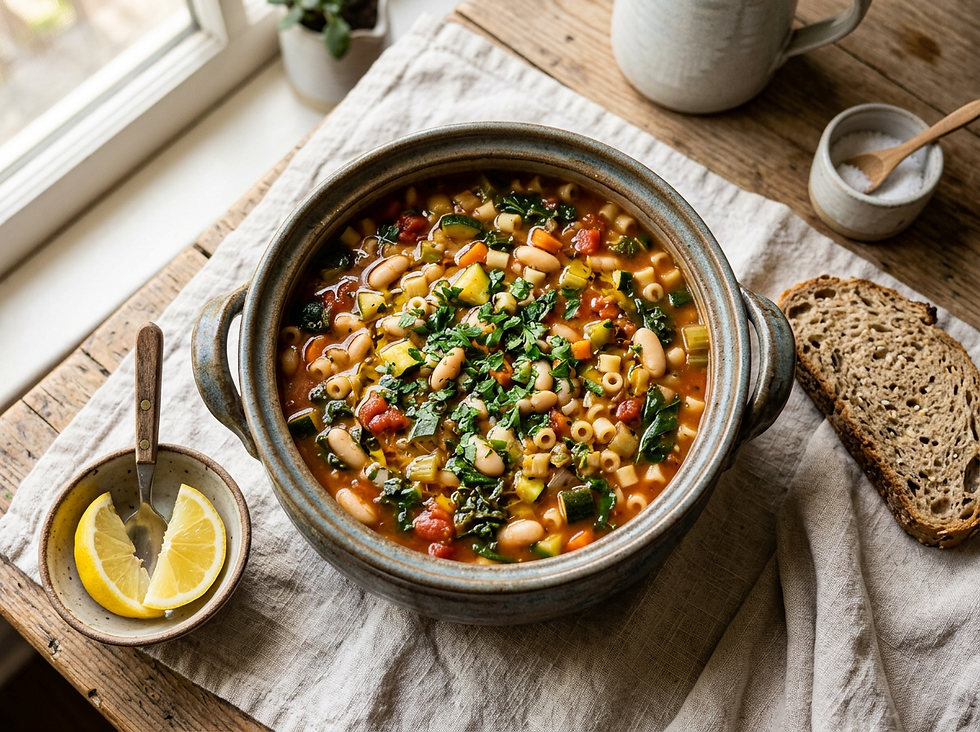
5. Minestrone with extra beans
Traditional minestrone is already a smart soup because it uses vegetables, tomatoes, beans, and herbs. To make it more filling, go heavier on beans and lighter on pasta.
Use cannellini beans, green beans, carrots, celery, zucchini, tomatoes, and a handful of small pasta if you want it. Keep the pasta modest so the soup stays balanced.
Make it better: Add a Parmesan rind while it simmers, then remove it before serving.

6. Black bean soup
Black bean soup is thick, simple, and filling. Simmer black beans with onions, garlic, cumin, chili powder, diced tomatoes, and broth. Blend part of the pot, then stir it back in.
That single step gives the soup a creamy texture without cream.
Make it better: Top with chopped cilantro, lime juice, and a few diced avocado pieces.
7. Greek lemon chicken soup
This soup is inspired by avgolemono, the Greek lemon chicken soup made with eggs, lemon, broth, chicken, and rice. The egg gives the broth body, while the lemon keeps it fresh.
Use cooked shredded chicken, broth, a small amount of rice, lemon juice, and beaten egg tempered with hot broth before stirring it in.
Make it better: Add spinach or chopped kale for more volume.
8. Split pea soup with smoked turkey
Split peas break down as they cook, creating a naturally thick soup. Use smoked turkey instead of ham for a leaner but still savory version.
Add carrots, celery, onions, garlic, thyme, and broth. The soup becomes creamy on its own.
Make it better: Cook it longer if you want a smoother texture. Add extra broth if it gets too thick.
9. Tomato soup with red lentils
Tomato soup can be light, but it often needs protein to feel complete. Red lentils solve that problem. They cook down quickly and blend right into the tomatoes.
Use canned crushed tomatoes, red lentils, onion, garlic, broth, basil, and a little olive oil. Blend until smooth.
Make it better: Serve with a side salad or a slice of whole-grain toast if it is your main meal.
10. Chicken tortilla soup
Chicken tortilla soup has bold flavor without needing a heavy base. Simmer chicken, tomatoes, broth, onion, garlic, peppers, cumin, chili powder, corn, and black beans.
Go easy on tortilla strips and cheese if the goal is a lighter bowl. Use them as garnish, not the main event.
Make it better: Add shredded cabbage on top for crunch.
11. Vegetable beef soup with barley
A small amount of lean beef can flavor a whole pot. Add barley, carrots, celery, tomatoes, green beans, mushrooms, and broth.
Barley gives the soup a chewy texture and helps it feel more complete. It also holds up well in the fridge.
Make it better: Brown the beef first for better flavor, then build the soup in the same pot.
12. White chicken chili soup
White chicken chili can be thick and creamy without a lot of added fat. Use white beans, shredded chicken, green chiles, cumin, oregano, broth, and a small amount of Greek yogurt stirred in at the end.
Blend one cup of the beans with broth, then add it back to the pot. This makes the soup creamy while keeping it bean-based.
Make it better: Add lime juice and chopped green onions before serving.
13. Mushroom barley soup
Mushrooms bring savory flavor, while barley adds chew and body. This soup feels earthy and warming, especially on cold days.
Use cremini mushrooms, onion, celery, carrots, garlic, thyme, barley, and broth. A small splash of soy sauce or tamari can deepen the flavor.
Make it better: Cook the mushrooms until they release their moisture and brown a little before adding broth.
14. Shrimp and vegetable soup
Shrimp cooks fast, so this is a good weeknight soup. Use broth, tomatoes, zucchini, spinach, bell peppers, garlic, and shrimp. Add the shrimp near the end so it stays tender.
This soup is light but protein-rich, which makes it useful when dinner needs to happen quickly.
Make it better: Season with lemon, red pepper flakes, and parsley.
15. Chickpea spinach soup
Chickpeas make a great pantry soup. Simmer them with tomatoes, broth, onion, garlic, carrots, cumin, paprika, and spinach.
Mash some chickpeas against the side of the pot to thicken the broth. This keeps the soup rustic and hearty.
Make it better: Add a spoonful of pesto or a squeeze of lemon at the end.
16. Broccoli cheddar soup with cauliflower
Broccoli cheddar can be very heavy, but it can also be balanced. Use broccoli, cauliflower, onion, garlic, broth, and a modest amount of sharp cheddar.
Blend the cauliflower into the soup to create a creamy base. Sharp cheddar gives more flavor, so you can use less.
Make it better: Save some broccoli florets to stir in after blending for texture.
17. Turkey meatball soup
Small turkey meatballs make soup feel fun and filling. Mix ground turkey with garlic, parsley, egg, breadcrumbs, salt, and pepper. Simmer the meatballs in broth with tomatoes, spinach, carrots, and zucchini.
This soup works well for meal prep because the meatballs reheat nicely.
Make it better: Use a small cookie scoop to portion the meatballs quickly.

18. Carrot ginger soup with white beans
Carrot ginger soup can be smooth and bright, but it needs protein if it will stand alone. White beans blend in easily and make the texture creamy.
Cook carrots, onion, garlic, ginger, broth, and white beans until tender. Blend until smooth.
Make it better: Add orange zest or lime juice to wake it up.
19. Chicken and wild rice soup
Wild rice makes soup nutty and satisfying. Pair it with chicken, mushrooms, carrots, celery, onions, garlic, thyme, and broth.
For a creamier version, blend a small amount of cooked cauliflower or white beans into the broth instead of adding heavy cream.
Make it better: Cook wild rice separately if you plan to freeze the soup. Stir it in when reheating.
20. Tuscan kale and bean soup
This soup is simple, affordable, and full of texture. Use cannellini beans, kale, tomatoes, onion, garlic, rosemary, and broth.
Mash some beans to thicken the soup, then leave the rest whole. The kale softens but still gives structure.
Make it better: Add crushed red pepper and a little lemon juice.
21. Zucchini turkey soup
Zucchini adds volume without making soup feel heavy. Brown lean ground turkey with onions and garlic, then add broth, tomatoes, zucchini, Italian seasoning, and spinach.
This is a flexible soup that can use up extra vegetables from the fridge.
Make it better: Add chopped fresh basil if you have it.
22. Cauliflower taco soup
This soup has the flavor of taco night in a lighter bowl. Use cauliflower florets, ground turkey or black beans, tomatoes, broth, peppers, onions, cumin, chili powder, and oregano.
The cauliflower soaks up flavor and gives the soup a chunky texture.
Make it better: Top with shredded lettuce, salsa, and a small amount of crushed tortilla chips.
23. Butternut squash soup with lentils
Butternut squash soup tastes naturally sweet and creamy. Red lentils make it more filling and help thicken it as it cooks.
Use squash, red lentils, onion, garlic, broth, cumin, and a pinch of cinnamon if you like warm spices.
Make it better: Add plain Greek yogurt or pumpkin seeds on top for extra protein or crunch.
24. Egg drop vegetable soup
Egg drop soup is quick, warm, and easy to bulk up. Start with broth, ginger, garlic, mushrooms, cabbage, and spinach. Slowly drizzle beaten eggs into simmering broth while stirring.
The eggs form silky ribbons and add protein. The vegetables make the bowl more substantial.
Make it better: Add tofu cubes if you want even more protein.
25. Salmon chowder with corn and potatoes
Chowder can fit into a lighter meal plan when it uses broth, vegetables, and a modest amount of milk instead of a heavy cream base.
Use salmon, corn, potatoes, celery, onion, broth, low-fat milk, thyme, and black pepper. Keep the potato amount reasonable and add extra celery or cauliflower for more volume.
Make it better: Stir in the salmon near the end so it stays tender.
How to turn almost any soup into a better weight loss meal
Many Weight Loss Soups fail because they focus only on being low calorie. That can backfire. If a soup does not satisfy, snacking later becomes much more tempting.
Use this simple formula when you build a pot from whatever is in the kitchen.
Start with a real protein
Choose one:
Chicken
Turkey
Lean beef
Shrimp
Salmon
Eggs
Tofu
Beans
Lentils
Greek yogurt stirred in at the end
Protein makes soup feel like dinner. If the recipe does not include much, add some.
Add at least two vegetables
One vegetable is fine. Two or more is better. This adds color, texture, and volume.
Good choices include:
Carrots
Celery
Onion
Cabbage
Zucchini
Spinach
Kale
Mushrooms
Cauliflower
Bell peppers
Tomatoes
Frozen vegetables work well in soup. They are already washed and chopped, and they can go straight into the pot.
Use starch with intention
Potatoes, rice, noodles, pasta, corn, and grains are not off-limits. They can make soup comforting and satisfying.
The key is balance. If the soup has pasta, add beans or chicken and extra vegetables. If it has potatoes, add cabbage, kale, cauliflower, or mushrooms. Make the starch part of the bowl, not the whole bowl.
Finish with acid and herbs
A bland soup often needs brightness, not more salt. Try one of these near the end:
Lemon juice
Lime juice
Red wine vinegar
Apple cider vinegar
Fresh parsley
Fresh cilantro
Basil
Dill
A small splash can make a pot taste fresh again, especially after reheating.
Meal prep tips for soups that stay good all week
Soup is one of the best foods for batch cooking, but a few small choices make a big difference.
Cool it quickly. Divide a large pot into smaller containers so it cools faster before going into the fridge.
Store grains separately when possible. Rice, pasta, and noodles keep absorbing broth. If you want the best texture, store them apart and add them when reheating.
Freeze in useful portions. Single-serving containers are perfect for lunches. Larger containers work for family dinners.
Label the container. Write the soup name and date. Soup can look surprisingly similar once frozen.
Refresh before serving. Reheated soup often needs a splash of broth, a squeeze of lemon, or a sprinkle of herbs.

Common mistakes that make soup less satisfying
A soup can have healthy ingredients and still leave you hungry. These are the usual reasons.
The soup is mostly broth
Broth is helpful, but it cannot carry the meal alone. Add beans, chicken, tofu, lentils, eggs, turkey, or fish.
The vegetables are too soft
Texture matters. Add quick-cooking vegetables near the end, or save some toppings for crunch. Cabbage, green onions, shredded carrots, herbs, and a few baked tortilla strips can help.
The flavor is flat
Low-calorie food still needs seasoning. Garlic, onion, spices, herbs, citrus, vinegar, and pepper make lighter soups feel complete.
The portion is too small
Soup can be lower in calorie density, which means a satisfying serving may be larger than expected. A small cup may work as a starter, but a meal-size bowl needs enough protein, vegetables, and fiber.
FAQ
Can soup really help with weight loss?
Soup can support weight loss when it helps create satisfying meals with plenty of protein, fiber, and vegetables. It is not magic, but it can make lighter eating feel easier because it adds volume and warmth.
What is the most filling soup ingredient?
Beans and lentils are two of the best choices because they bring both protein and fiber. Chicken, turkey, tofu, eggs, and fish are also strong options.
Are creamy soups bad for weight loss?
Not always. A creamy soup made with heavy cream and lots of cheese can be calorie-dense, but a soup blended with cauliflower, squash, white beans, or Greek yogurt can feel creamy and still be lighter.
Should I avoid noodles, rice, or potatoes in soup?
No. Use them in balanced amounts. Pair them with protein and vegetables so the soup stays filling instead of becoming mostly starch.
How long does homemade soup last in the fridge?
Many homemade soups keep well for about 3 to 4 days in the refrigerator when stored in airtight containers. If you will not eat it soon, freeze it.
A satisfying bowl is the goal
The best weight loss soup is not the thinnest soup. It is the one that tastes good, fills the bowl, and keeps hunger quiet long enough to feel useful.
Start with broth and vegetables, then build in protein and fiber. Add bright flavor at the end. Keep portions realistic. With that basic approach, soup becomes more than a light starter. It becomes a steady, repeatable meal.
If you want an easy way to add savory depth to homemade soup, try AngelDust from Soup Angels and use it to bring more flavor to a simple pot of broth, beans, vegetables, or chicken.


Comments