
_edited.jpg)

5 Easy High Fiber Soup Recipes for Digestive and Heart Health

A good soup can do more than warm the kitchen. With the right mix of beans, vegetables, whole grains, and herbs, it can help support regular digestion, steady fullness, and heart-friendly eating habits without making dinner complicated.
Fiber is one of those everyday nutrients that quietly does a lot. Soluble fiber, found in foods like beans, lentils, barley, and oats, can help support healthy cholesterol levels as part of a balanced diet. Insoluble fiber, found in vegetables, whole grains, and legumes, helps keep digestion moving. Put both into a pot of soup, and the result is comforting, filling, and practical.
This guide to High-Fiber Soups for Digestive and Heart Health includes five easy recipes, simple nutrition notes, and real-life ways to make fiber a natural part of your weekly meals.
Nutrition information is approximate and meant for general guidance. For personal medical advice, check with a registered dietitian or health care professional.

Why high-fiber soups are so good for everyday wellness
Soup makes fiber easier to eat because it brings several fiber-rich foods together in one bowl. A salad may have greens and vegetables, but soup can include lentils, beans, barley, carrots, tomatoes, kale, and squash all at once.
High-fiber soups are especially useful because they are:
Filling
Fiber absorbs water and slows digestion, which can help meals feel more satisfying.
Budget-friendly
Dried lentils, split peas, canned beans, barley, carrots, and cabbage are affordable pantry staples.
Easy to batch cook
Most fiber-rich soups taste even better the next day.
Gentle to customize
You can blend soups for a smoother texture, add extra broth for a lighter meal, or build in more vegetables without changing the whole recipe.
For heart wellness, soups also make it easier to cook with less saturated fat. Flavor can come from garlic, onions, herbs, spices, tomatoes, mushrooms, citrus, and a small amount of olive oil instead of heavy cream or processed meats.
The best soup ingredients for digestion and heart health
A heart-friendly, digestion-friendly soup usually starts with a few dependable ingredients.
Beans and lentils
Black beans, chickpeas, kidney beans, cannellini beans, lentils, and split peas are fiber all-stars. They also bring plant-based protein, which helps make soup feel like a full meal.
Barley and other whole grains
Pearled barley is easy to find and cooks right in the pot. Hulled barley has more fiber but takes longer. Brown rice, farro, and quinoa can also add texture and staying power.
Vegetables with both fiber and flavor
Carrots, celery, onions, tomatoes, sweet potatoes, kale, cabbage, mushrooms, zucchini, and winter squash all work well in soup. Many also add potassium, antioxidants, or natural sweetness.
Prebiotic-rich foods
Garlic, onions, leeks, asparagus, and legumes contain fibers that help feed beneficial gut bacteria. If these foods bother your stomach, start with small amounts and increase slowly.
Heart-friendly fats
A drizzle of olive oil can help carry flavor and make vegetable-based soups taste richer. Nuts and seeds can also be toppings, but keep portions modest if you are watching calories.

Five easy high-fiber soup recipes to make this week
Each recipe below serves about 4. The nutrition estimates are per serving and will vary based on brands, broth, toppings, and portion size. Use low-sodium broth when possible, then season to taste.
1. Lentil vegetable tomato soup
This is the weeknight soup that asks very little and gives a lot back. Lentils cook quickly, do not need soaking, and create a hearty texture without cream.
Ingredients
1 tablespoon olive oil
1 yellow onion, diced
2 carrots, diced
2 celery stalks, diced
3 garlic cloves, minced
1 cup dry brown or green lentils, rinsed
1 can diced tomatoes, 14.5 ounces
5 cups low-sodium vegetable broth
1 teaspoon Italian seasoning
2 cups chopped spinach or kale
1 tablespoon lemon juice
Black pepper and salt to taste
How to make it
Warm olive oil in a large pot over medium heat.
Add onion, carrots, and celery. Cook for 5 minutes.
Stir in garlic, lentils, tomatoes, broth, and Italian seasoning.
Simmer for 25 to 30 minutes, until lentils are tender.
Stir in greens and lemon juice. Cook 2 more minutes.
Approximate nutrition per serving | Amount |
Calories | 285 |
Fiber | 14 g |
Protein | 17 g |
Carbohydrates | 44 g |
Fat | 6 g |
Sodium | 430 mg |
Why it works
Lentils provide soluble and insoluble fiber, while tomatoes and leafy greens add volume, minerals, and bright flavor.
2. Black bean and sweet potato soup
This soup tastes slightly smoky, a little sweet, and deeply satisfying. It is one of the easiest High Fiber Soups to make with pantry staples.
Ingredients
1 tablespoon olive oil
1 onion, diced
1 red bell pepper, diced
2 garlic cloves, minced
1 medium sweet potato, peeled and diced
2 cans black beans, drained and rinsed
1 can fire-roasted diced tomatoes, 14.5 ounces
4 cups low-sodium vegetable broth
1 teaspoon cumin
1 teaspoon smoked paprika
Juice of 1 lime
Optional topping, chopped cilantro or plain Greek yogurt
How to make it
Sauté onion and bell pepper in olive oil for 5 minutes.
Add garlic, sweet potato, beans, tomatoes, broth, cumin, and smoked paprika.
Simmer for 20 minutes, until the sweet potato is tender.
Mash a few beans against the side of the pot to thicken.
Finish with lime juice.
Approximate nutrition per serving | Amount |
Calories | 335 |
Fiber | 15 g |
Protein | 16 g |
Carbohydrates | 58 g |
Fat | 6 g |
Sodium | 480 mg |
Why it works
Black beans bring fiber and plant protein. Sweet potatoes add fiber, potassium, and natural sweetness, which balances smoky spices beautifully.
3. Mushroom barley bean soup
Barley gives this soup a chewy, comforting texture. Mushrooms add savory depth, so the soup tastes slow-cooked even when it is simple.
Ingredients
1 tablespoon olive oil
8 ounces mushrooms, sliced
1 onion, diced
2 carrots, diced
2 garlic cloves, minced
3/4 cup pearled barley, rinsed
1 can cannellini beans, drained and rinsed
6 cups low-sodium vegetable broth
1 teaspoon dried thyme
1 bay leaf
1 tablespoon balsamic vinegar
Black pepper to taste
How to make it
Cook mushrooms in olive oil until browned, about 6 minutes.
Add onion and carrots. Cook 4 minutes.
Stir in garlic, barley, beans, broth, thyme, and bay leaf.
Simmer for 35 to 40 minutes, until barley is tender.
Remove bay leaf and stir in balsamic vinegar.
Approximate nutrition per serving | Amount |
Calories | 310 |
Fiber | 11 g |
Protein | 13 g |
Carbohydrates | 56 g |
Fat | 5 g |
Sodium | 440 mg |
Why it works
Barley contains beta-glucan, a soluble fiber often associated with heart-friendly eating patterns. Beans add even more fiber and creaminess.
4. Classic split pea and carrot soup
Split pea soup is naturally creamy when blended or simmered until thick. This version skips ham and lets carrots, onions, garlic, and herbs build the flavor.
Ingredients
1 tablespoon olive oil
1 onion, diced
3 carrots, sliced
2 celery stalks, diced
3 garlic cloves, minced
1 1/2 cups dry split peas, rinsed
6 cups low-sodium vegetable broth
1 teaspoon dried thyme
1 bay leaf
1 teaspoon apple cider vinegar
Black pepper to taste
How to make it
Sauté onion, carrots, and celery in olive oil for 6 minutes.
Add garlic and cook 30 seconds.
Stir in split peas, broth, thyme, and bay leaf.
Simmer for 45 minutes, stirring now and then.
Remove bay leaf. Blend part of the soup if you like it smoother.
Stir in apple cider vinegar to brighten the flavor.
Approximate nutrition per serving | Amount |
Calories | 340 |
Fiber | 17 g |
Protein | 19 g |
Carbohydrates | 57 g |
Fat | 5 g |
Sodium | 450 mg |
Why it works
Split peas are rich in fiber and plant protein. The thick texture also makes the soup feel hearty without butter, cream, or cheese.
5. Chickpea kale minestrone
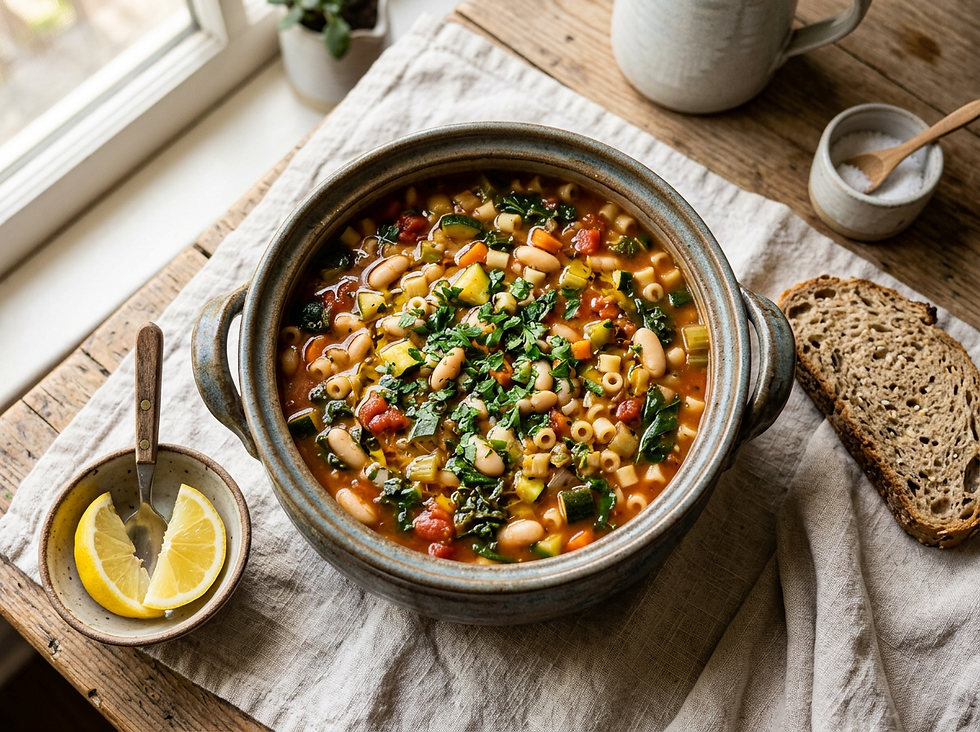
Think of this as a flexible vegetable soup with extra staying power. Chickpeas, kale, zucchini, tomatoes, and whole wheat pasta make it colorful and filling.
Ingredients
1 tablespoon olive oil
1 onion, diced
2 carrots, diced
2 celery stalks, diced
2 garlic cloves, minced
1 zucchini, diced
1 can chickpeas, drained and rinsed
1 can diced tomatoes, 14.5 ounces
5 cups low-sodium vegetable broth
1/2 cup small whole wheat pasta
2 cups chopped kale
1 teaspoon dried oregano
1 tablespoon lemon juice
How to make it
Sauté onion, carrots, and celery in olive oil for 5 minutes.
Add garlic and zucchini. Cook 2 minutes.
Stir in chickpeas, tomatoes, broth, pasta, and oregano.
Simmer for 10 to 12 minutes, until pasta is tender.
Add kale and cook 2 minutes.
Finish with lemon juice.
Approximate nutrition per serving | Amount |
Calories | 320 |
Fiber | 12 g |
Protein | 14 g |
Carbohydrates | 53 g |
Fat | 7 g |
Sodium | 460 mg |
Why it works
Chickpeas add creamy bite and fiber. Kale brings texture, color, and nutrients. Whole wheat pasta raises the fiber compared with regular pasta.
Easy ways to add more fiber to soup
The simplest path is to build a few habits into soups you already make.
Add one can of beans
White beans disappear nicely into chicken vegetable soup, tomato soup, and minestrone.
Use lentils instead of some ground meat
In chili or taco soup, swap half the meat for lentils to add fiber while keeping a hearty texture.
Choose whole grains
Barley, brown rice, farro, and whole wheat pasta make soup more satisfying.
Keep the skins on vegetables
Scrub carrots, potatoes, and sweet potatoes well. The skins add texture and fiber.
Blend beans into the broth
Blend 1 cup of white beans with broth, then stir it back into the pot. The soup becomes creamy without heavy cream.
Top with crunch
Toasted pumpkin seeds, sunflower seeds, or roasted chickpeas add texture and extra fiber.
Start slowly if your diet is currently low in fiber. A sudden jump can cause gas or bloating. Add fiber over several days or weeks, and drink water throughout the day.
What home cooks notice when fiber becomes a habit
The biggest change many people describe is not dramatic. It is steadier energy, fewer snack cravings, and meals that feel more complete.
A home cook named Lisa, who started making lentil soup every Sunday, described the shift this way in a community cooking class: “I stopped staring into the pantry an hour after lunch. A bowl of lentil soup actually carried me through the afternoon.”
Another common story comes from families trying to eat more heart-friendly meals without making separate dinners. One parent shared that black bean sweet potato soup became a regular weeknight meal because “everyone could add their own toppings, and nobody missed the takeout.”
These are everyday wins. Soup does not need to be perfect to be helpful. If a pot of minestrone gets more beans, greens, and whole grains into the week, it has done its job.
FAQ
How much fiber should a soup have to count as high fiber?
A soup with about 5 grams of fiber or more per serving is a strong choice. Many bean, lentil, and split pea soups can offer 10 grams or more per serving.
Are canned beans healthy in soup?
Yes. Canned beans are convenient and nutritious. Rinse and drain them to remove some of the sodium, or choose low-sodium versions when available.
Can high-fiber soup help with cholesterol?
Soluble fiber from foods like beans, lentils, barley, and peas can support healthy cholesterol levels as part of an overall heart-friendly diet. Soup is an easy way to eat those foods often.
What if beans make me feel bloated?
Start with smaller portions, rinse canned beans well, and try lentils or split peas, which some people find easier to digest. Increase fiber slowly and drink enough water.
Can these soups be frozen?
Yes. Lentil, bean, barley, and split pea soups freeze well. Soups with pasta may thicken after freezing, so add a splash of broth when reheating.
A warm bowl is a smart place to start
High-fiber cooking does not have to mean big changes or complicated recipes. A pot of soup can turn simple pantry staples into meals that support digestion, heart-friendly habits, and a more satisfying way to eat.
Pick one recipe this week and make enough for leftovers. If you want to add a flavorful finishing touch to your next pot, try AngelDust soup seasoning from Soup Angels. A little extra seasoning can make those beans, grains, and vegetables even easier to love.


Comments