


Cooking Oysters for Soup: Global Recipes, Cleaning, Shucking and Seasoning Tips

Oysters can turn a simple pot of soup into something briny, silky, and memorable, but they ask for a little care. Cook them too long and they toughen. Season them too heavily and their clean ocean flavor disappears. Handle them well, and they bring depth that tastes far more complex than the effort required.
This guide covers the practical side first: how to clean, shuck, store, and cook oysters safely for soup. Then it moves into flavor, with seasoning ideas and soup recipes inspired by the US, Europe, and Asia. Learn how to cook and season oysters for soups from around the globe and the US from the comfort of your home kitchen.
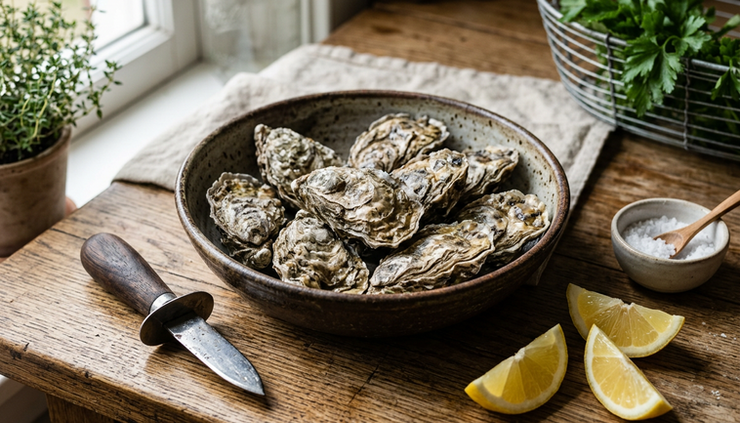
Start with clean, fresh oysters
Good oyster soup begins before the pot hits the stove. Fresh oysters should smell like the sea, not fishy or sour. The shells should be tightly closed, or they should close when tapped. If an oyster stays open, discard it.
Keep oysters cold until you cook them. Store them cupped-side down in a bowl or tray, covered with a damp towel. Do not store live oysters in fresh water or in an airtight container. They need to breathe.
How to clean oysters for soup
Most oysters arrive with some mud, grit, or shell dust on the outside. Cleaning them keeps grit out of the liquor, which is the flavorful liquid inside the shell.
Rinse under cold running water
Use cold water only. Warm water can stress or kill live oysters.
Scrub the shells
Use a stiff brush to scrub the hinge, ridges, and rough outer shell.
Check each oyster
Discard any with cracked shells, bad odors, or shells that do not close when tapped.
Keep them cold
Return cleaned oysters to the refrigerator until ready to shuck.
For soup, do not skip the oyster liquor. It is one of the best ingredients in the pot. Strain it through a fine mesh sieve or cheesecloth to remove bits of shell.
How to shuck oysters without losing the liquor
Shucking takes practice, but soup is forgiving. The oyster does not need to look perfect, since it will be cooked in broth.
Use an oyster knife, not a paring knife. A kitchen towel or cut-resistant glove helps protect your hand.
Place the oyster cupped-side down on a folded towel.
Hold it firmly with the hinge facing out.
Insert the tip of the oyster knife into the hinge.
Twist gently until the shell pops.
Slide the knife along the top shell to cut the muscle.
Lift off the top shell.
Slide the knife under the oyster to release it from the bottom shell.
Pour the oyster and liquor into a bowl.
If a shell breaks or grit falls in, strain the liquor before using it.
When to add oysters to soup
Oysters cook fast. Add them near the end, usually in the last 2 to 5 minutes. They are done when the edges curl and the flesh looks plump and opaque.
For creamy soups, keep the heat gentle after adding oysters. Boiling can make cream split and oysters tough. For broth-based soups, a light simmer is enough.
The best oyster soup tastes rich without feeling heavy. Let the oyster liquor season the broth before reaching for more salt.
Build flavor with seasoning that supports the oyster
Oysters bring natural salinity, minerality, and sweetness. The goal is not to cover that up. Use seasoning to frame the flavor.
Classic oyster-friendly seasonings
These ingredients work across many styles of soup:
Butter
Adds roundness and helps carry aromatics.
Celery and onion
A simple base for American oyster stew and chowders.
Garlic
Best in small amounts, especially in brothy or Asian-inspired soups.
Lemon
Brightens creamy soups and cuts richness.
Black pepper
Warm and clean, especially with milk, cream, or potatoes.
Cayenne or hot sauce
Adds heat without taking over.
Parsley, chives, or scallions
Bring freshness at the end.
Bay leaf and thyme
Good for chowders, veloutés, and seafood stews.
Seasoning profiles that work well
Flavor profile | Best ingredients | Good soup style |
Creamy and comforting | Butter, milk, cream, celery, white pepper | American oyster stew |
Bright and herbal | Lemon, parsley, chives, thyme | French-style cream soup |
Spicy and smoky | Cayenne, paprika, andouille, hot sauce | Gulf Coast oyster soup |
Clean and aromatic | Ginger, scallion, white pepper, rice wine | Chinese-inspired broth |
Savory and deep | Miso, kombu, mushrooms, soy sauce | Japanese-style soup |
Fresh and spicy | Chili, lime, cilantro, coconut milk | Thai-inspired soup |
Briny and rustic | Potatoes, leeks, bacon, parsley | Irish or New England-style soup |
Salt carefully. Oyster liquor and seafood stock may already be salty. Taste the broth before adding more.
Try oyster soups from the US and around the world
Oyster Soups can be creamy, spicy, brothy, or deeply savory. The recipes below are written as flexible home-kitchen versions, not strict restaurant formulas. Use them as starting points and adjust the seasoning as you go.
Make a classic American oyster stew
This is one of the simplest and most beloved oyster soups in the US. It is often served around the holidays, but it deserves a place at the table all winter.
Ingredients
1 pint shucked oysters with liquor
3 tablespoons butter
1 small onion, finely chopped
1 celery stalk, finely chopped
2 cups whole milk
1 cup half-and-half or cream
Salt and black pepper
Pinch of cayenne
Chopped parsley or chives
Method
Melt butter in a saucepan over medium-low heat. Add onion and celery and cook until soft, not browned. Stir in the strained oyster liquor, milk, and half-and-half. Warm gently.
Add the oysters and cook just until the edges curl. Season with pepper, cayenne, and salt only if needed. Finish with parsley or chives.
Flavor tip
A splash of dry sherry adds warmth and depth. Add it before the dairy and let it cook for a minute.
Cook a Gulf Coast oyster and okra soup
This soup borrows from Louisiana flavors without requiring a full gumbo process. It is bold, savory, and great with rice.
Ingredients
1 pint shucked oysters with liquor
2 tablespoons oil or butter
1 small onion, chopped
1 bell pepper, chopped
1 celery stalk, chopped
2 garlic cloves, minced
1 cup sliced okra
1 teaspoon smoked paprika
Pinch of cayenne
3 cups seafood or chicken stock
Hot sauce
Scallions
Method
Cook onion, bell pepper, and celery until soft. Add garlic, okra, paprika, and cayenne. Stir for a minute. Add stock and strained oyster liquor, then simmer until the okra is tender.
Add oysters at the end. Cook gently until plump. Season with hot sauce and scatter scallions on top.
Flavor tip
If using sausage, brown a little andouille first, then cook the vegetables in the drippings.
Simmer a French-style oyster velouté
A velouté is smooth, refined, and ideal when you want oyster flavor in a gentle cream soup.
Ingredients
1 pint shucked oysters with liquor
2 tablespoons butter
1 leek, white and light green parts sliced
1 small potato, peeled and diced
2 cups fish stock or light chicken stock
1 cup cream
White pepper
Lemon juice
Chives
Method
Cook leek in butter until soft. Add potato, stock, and strained oyster liquor. Simmer until the potato is tender. Blend until smooth, then return to low heat.
Add cream and warm through. Add oysters and cook gently. Season with white pepper and a few drops of lemon juice. Finish with chives.
Flavor tip
Use white pepper instead of black pepper for a softer, cleaner heat.
Prepare Korean gul guk
Korean oyster soup, often called gul guk, is light, clean, and savory. It often includes radish, garlic, tofu, scallions, and sometimes egg.
Ingredients
12 to 16 shucked oysters
4 cups anchovy-kelp broth or light seafood stock
1 cup thinly sliced Korean radish or daikon
1 garlic clove, minced
1 tablespoon soup soy sauce or light soy sauce
Tofu cubes
Scallions
Optional beaten egg
Sesame oil for finishing
Method
Simmer radish in broth until tender. Add garlic and soy sauce. Add tofu and oysters near the end. If using egg, drizzle it in slowly while the broth simmers gently.
Finish with scallions and a few drops of sesame oil.
Flavor tip
Keep the broth delicate. The radish sweetness and oyster brine should stay clear.
Make Chinese ginger scallion oyster soup
This soup is fast, fragrant, and excellent when you want something light.
Ingredients
1 pint shucked oysters
4 cups chicken or seafood stock
4 slices fresh ginger
2 scallions, cut into lengths
1 tablespoon rice wine or dry sherry
White pepper
Soy sauce to taste
Cilantro or extra scallions
Method
Simmer stock with ginger and scallion for several minutes. Add rice wine, a small amount of soy sauce, and white pepper.
Add oysters and cook just until plump. Remove ginger slices before serving, if desired. Finish with herbs.
Flavor tip
A tiny pinch of sugar can balance the salt and ginger.
Stir in miso for a Japanese-inspired oyster soup
Miso and oysters are a natural match because both bring savory depth.
Ingredients
12 to 16 shucked oysters
4 cups dashi or light seafood broth
1 cup mushrooms
1 cup tofu cubes
2 to 3 tablespoons miso
Scallions
Optional spinach or wakame
Method
Simmer mushrooms in dashi until tender. Add tofu and greens. Lower the heat.
Whisk miso with a ladle of warm broth in a small bowl, then stir it back into the pot. Add oysters and cook gently. Do not boil after adding miso.
Flavor tip
White miso tastes mild and sweet. Red miso tastes deeper and saltier.
Try a Thai-inspired coconut oyster soup
This version is creamy without dairy and balances brine, spice, acidity, and sweetness.
Ingredients
1 pint shucked oysters
1 can coconut milk
2 cups seafood or chicken stock
3 slices galangal or ginger
1 stalk lemongrass, bruised
1 small chili, sliced
Fish sauce
Lime juice
Cilantro
Method
Simmer stock with ginger or galangal, lemongrass, and chili. Add coconut milk and warm gently. Season with fish sauce.
Add oysters at the end. Once cooked, turn off the heat and add lime juice. Finish with cilantro.
Flavor tip
Add lime off the heat so the soup stays fresh and bright.

Perfect the texture and balance
Oyster soup is simple, so small adjustments matter.
Avoid rubbery oysters
The most common mistake is overcooking. Oysters only need a few minutes in hot soup. If the soup is boiling hard, lower the heat before adding them.
For a party or holiday meal, prepare the soup base ahead. Reheat it gently, then add the oysters right before serving.
Use oyster liquor wisely
Oyster liquor tastes salty, sweet, and intensely oceanic. Strain it, then add it to the broth early enough to blend with the soup base.
If the liquor tastes very salty, use less added salt. If it tastes especially strong, balance it with cream, potato, rice, coconut milk, or a squeeze of citrus.
Match the thickener to the soup
For a creamy American stew, dairy provides body. For chowder, potatoes add texture. For French-style soup, blending potato or leek creates smoothness. For Asian-style broths, skip heavy thickeners and let the broth stay clean.
Finish with freshness
Many oyster soups taste best with a final bright note. Try one of these right before serving:
Lemon juice
Lime juice
Chopped parsley
Chives
Scallions
Cilantro
Freshly cracked pepper
A few drops of chili oil
A small pat of butter
Taste after each addition. Oysters have subtle sweetness, and too much acid or heat can flatten the flavor.
Experiment with confidence
Once the technique feels comfortable, oyster soup becomes a flexible template. Start with a broth, choose aromatics, add a creamy or brothy base, then finish with oysters at the end.
Here are simple combinations to try:
Base | Aromatics | Finish |
Milk and cream | Celery, onion, bay leaf | Butter, parsley, black pepper |
Seafood stock | Garlic, paprika, bell pepper | Hot sauce, scallions |
Dashi | Mushrooms, tofu, greens | Miso, scallions |
Coconut milk | Ginger, lemongrass, chili | Lime, cilantro |
Chicken broth | Ginger, scallion, rice wine | White pepper, sesame oil |
Keep notes as you cook. Write down the oyster variety, broth, seasoning, cooking time, and what you would change next time. That habit makes it easier to repeat a great pot.
For a ready-made seasoning boost, try adding a small pinch of Angel Dust seasoning for soups and savory dishes to the broth, then taste before adding more salt.
Frequently asked questions
Can I use jarred oysters for soup?
Yes. Jarred oysters are convenient and work well in many soups. Check the date, smell them before using, and add the liquid if it tastes fresh. They still cook quickly, so add them near the end.
Should I rinse shucked oysters?
Usually, no. Rinsing can wash away flavor. If you see shell bits, lift the oysters out gently and strain the liquor instead.
Can I freeze oyster soup?
Brothy oyster soups freeze better than creamy ones. Dairy-based soups can separate after thawing. If planning ahead, freeze the soup base without oysters, then add fresh oysters when reheating.
How do I know oysters are cooked?
They should look plump and opaque, with curled edges. The broth should be hot and gently simmering. Avoid cooking them until they shrink tightly.
What herbs go best with oyster soup?
Parsley, chives, thyme, scallions, cilantro, and dill can all work. Match the herb to the soup style. Parsley and chives suit creamy stews, while cilantro works better with coconut, chili, and lime.

Bring it all together
The key to great oyster soup is restraint. Clean the oysters well, save the liquor, season the broth in layers, and add the oysters at the very end. From American oyster stew to Korean gul guk, French velouté, miso soup, and Thai-style coconut broth, the same rule holds true: let the oyster taste like itself.
Start with one recipe, then adjust. Add a little more heat, change the herbs, swap cream for coconut milk, or try a new broth. The best version is the one that tastes balanced in your own kitchen.


Comments