


Florida Soups You Can Cook and Season at Home

Florida soup tastes different because Florida itself cooks from several directions at once. A pot might lean coastal with shrimp and grouper, turn sharp with datil pepper, borrow depth from Cuban sofrito, or simmer gently with Southern vegetables and smoked meat. The best part is that none of it requires restaurant equipment or hard-to-find techniques.
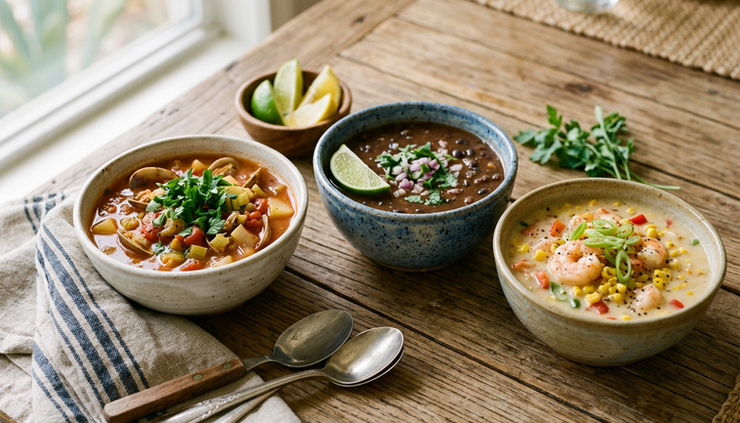
With a few smart ingredients and a feel for seasoning, home cooks can make deeply flavored Florida-style soups in a weeknight kitchen. Think tomato-rich Minorcan clam chowder, Key West conch chowder, Cuban black bean soup, and sunny seafood soups built around what looks good at the market.
This guide will help you learn how to cook and season Soups from Florida in the comfort of your own home, with practical methods you can use across many recipes.

Florida soups start with place, pantry, and heat
Florida Soups are not one single style. They reflect coastal seafood, Caribbean seasoning, Cuban and Latin influence, Southern cooking, and the old cooking traditions of places like St. Augustine and the Keys.
A few ingredients show up often:
Seafood Shrimp, crab, clams, grouper, snapper, conch, and smoked fish all fit the Florida table.
Tomatoes Many Florida chowders use a tomato base rather than a creamy one, especially Minorcan-style clam chowder and conch chowder.
Citrus Lime, lemon, and orange brighten rich broths and seafood.
Peppers Bell peppers bring body. Hot peppers add personality. Datil peppers, closely tied to St. Augustine, bring sweet heat.
Aromatics Onion, celery, garlic, scallions, and bell pepper form the backbone of many pots.
Beans and rice Cuban black bean soup, garbanzo-based soups, and rice-finished broths are all easy to make at home.
The main idea is balance. Florida-style soup often has brightness, gentle heat, savory depth, and clean seafood flavor in the same bowl.
Build flavor before adding liquid
A thin soup usually starts with rushed aromatics. Give the first layer time.
Start with a little oil or butter, then cook onion, celery, and bell pepper until softened. Add garlic only for the last minute so it does not burn. If using tomato paste, stir it into the vegetables and let it darken slightly. That quick step gives the broth a deeper flavor.
For seafood soups, add stock after the vegetables have softened. For bean soups, add soaked or canned beans after the aromatics and spices have had time to bloom.
Season in stages
Do not wait until the end to season the whole pot. Add salt lightly at the beginning, adjust in the middle, then fine-tune at the end.
This matters because seafood, smoked meats, canned tomatoes, canned beans, and store-bought stock can all bring different salt levels. A soup that tastes flat may not need more spice. It may need a pinch of salt and a squeeze of lime.
Cook four Florida-style soups with confidence
These soups are not meant to be strict museum pieces. They are home-kitchen versions inspired by the flavors and cooking patterns found across Florida.
Make Minorcan-style clam chowder with tomato and datil pepper
Minorcan clam chowder is linked with St. Augustine and is known for its tomato base and datil pepper heat. Unlike New England clam chowder, it is not creamy. Unlike Manhattan clam chowder, it has its own local pepper character.
What to use
Chopped clams, fresh or canned
Clam juice or seafood stock
Canned crushed tomatoes
Onion, celery, bell pepper, and garlic
Diced potatoes
Bacon or salt pork, optional
Bay leaf
Datil pepper sauce or a small amount of minced hot pepper
Parsley
Lemon or lime
How to cook it
Render chopped bacon in a soup pot if using it. Add onion, celery, and bell pepper. Cook until soft, then stir in garlic. Add crushed tomatoes, clam juice, potatoes, bay leaf, and a small amount of datil pepper sauce.
Simmer until the potatoes are tender. Add clams near the end so they stay tender. If using canned clams, add the clam liquid with the broth and the chopped clams in the final few minutes.
How to season it
Datil pepper can be sweet, fruity, and fiery. Start small. Let the soup simmer, taste, then add more heat. Finish with parsley and citrus. The acid wakes up the tomatoes and makes the clams taste fresher.
If the soup tastes too sharp, add a small pinch of sugar or simmer it longer. If it tastes dull, add salt, citrus, or both.
Make Key West-style conch chowder with a tomato base
Conch chowder is closely associated with the Keys and the Caribbean. Fresh conch is not always easy to find nationwide, so many home cooks use frozen conch where available. Chopped shrimp or firm white fish can also give a similar coastal feel, though the texture will be different.
What to use
Cleaned conch, chopped small, or a mix of shrimp and firm white fish
Onion, celery, bell pepper, and garlic
Crushed tomatoes or diced tomatoes
Seafood stock
Potatoes or a small amount of rice
Thyme
Bay leaf
Hot sauce
Lime juice
How to cook it
Conch can be tough, so chop it finely and simmer it until tender. If using shrimp or fish instead, add them near the end because they cook quickly.
Cook the aromatics first, then add tomatoes, stock, potatoes, thyme, and bay leaf. Simmer until the vegetables are tender. Add seafood according to its cooking time. Finish with lime.
How to season it
Conch chowder should taste bright, savory, and a little peppery. Use thyme with a light hand. Too much can cover the seafood. Add hot sauce in small rounds and taste as you go.
A small splash of Worcestershire sauce can add depth, especially if the broth tastes thin. Lime at the end is not optional if the soup tastes heavy. It brings the pot back into balance.

Make Cuban black bean soup with sofrito and citrus
Cuban black bean soup is one of the most comforting soups to cook at home. It is humble, filling, and full of slow-built flavor. The key is sofrito, a cooked mixture of aromatics that seasons the beans from the inside out.
What to use
Dried black beans or canned black beans
Onion, green bell pepper, and garlic
Olive oil
Bay leaf
Cumin
Oregano
Vegetable broth, chicken broth, or bean cooking liquid
Orange or lime juice
Vinegar
Optional smoked ham hock, bacon, or smoked paprika
How to cook it
For dried beans, soak them overnight or use a quick-soak method. Simmer with bay leaf until tender. In a separate pan, cook onion and bell pepper in olive oil until soft, then add garlic, cumin, and oregano.
Stir the sofrito into the beans. Simmer until the soup thickens. Mash some of the beans against the side of the pot or blend a small portion and stir it back in.
For canned beans, rinse some but not all of the beans. The liquid from one can can help create body. Simmer with broth, sofrito, and seasonings until the flavors come together.
How to season it
Black bean soup needs salt, earthiness, smoke, and acid. Cumin adds warmth. Oregano adds a savory herbal note. Vinegar or citrus at the end lifts the beans.
If the soup tastes flat, add a teaspoon of vinegar or lime juice before adding more salt. If it tastes too acidic, simmer it a little longer and add a drizzle of olive oil.
Serve it with white rice, chopped onion, cilantro, or a spoonful of sour cream.
Make a simple Gulf-style shrimp and corn soup
This is an easy weeknight soup that uses Florida-friendly flavors without demanding a long simmer. Shrimp, corn, tomatoes, and peppers make it sweet, savory, and colorful.
What to use
Peeled shrimp
Corn kernels, fresh or frozen
Onion, celery, bell pepper, and garlic
Diced tomatoes
Seafood or chicken stock
Paprika
Bay leaf
Scallions
Lemon or lime
How to cook it
Sauté onion, celery, and bell pepper until soft. Add garlic, paprika, tomatoes, stock, corn, and bay leaf. Simmer for about 15 to 20 minutes.
Add shrimp at the end and cook just until pink and firm. Remove the bay leaf. Finish with citrus and scallions.
How to season it
Paprika gives warmth and color. A pinch of cayenne works if you like heat. Citrus keeps the sweet corn and shrimp from tasting heavy.
The most common mistake is overcooking the shrimp. Once shrimp curl and turn opaque, they are done. Pull the pot from the heat and let the broth finish them gently.
Season like a Florida cook
A great soup does not need a crowded spice cabinet. It needs timing and restraint.
Use heat for flavor, not just fire
Hot sauce, datil pepper, cayenne, Scotch bonnet, and jalapeño can all work in Florida-inspired soups. The goal is not to burn out the broth. The goal is to add warmth that makes the next spoonful more interesting.
Add heat early when you want it to blend into the soup. Add it late when you want a sharper kick. For family cooking, keep the base mild and serve hot sauce at the table.
Add citrus at the end
Lime, lemon, and sour orange flavors belong in many Florida kitchens. Add them after the soup is done simmering. Long cooking can flatten citrus and make it taste bitter.
Try this simple finishing rule:
Seafood soup gets lemon or lime.
Black bean soup gets lime, orange, vinegar, or a mix.
Tomato chowder gets lemon if it feels too rich.
Spicy soup gets citrus to soften the heat.
Respect seafood timing
Seafood cooks fast. Add clams, shrimp, fish, crab, or scallops near the end unless the recipe calls for a long simmer, as with chopped conch.
For fish soups, choose firm fillets such as grouper, snapper, cod, or mahi-mahi. Cut them into large pieces so they do not fall apart. Add them to gently simmering broth and avoid hard boiling.
Taste for salt after the main ingredients go in
Canned tomatoes, stock, clam juice, bacon, ham, and hot sauce can all add salt. Wait until those ingredients have simmered before making the final adjustment.
A good final taste asks three questions:
Does it need salt?
Does it need acid?
Does it need heat?
Answer in that order. Salt sharpens flavor, acid brightens it, and heat adds character.
Stock, shortcuts, and swaps that work
Homemade stock is lovely, but weeknight soup should still be possible without it.
For seafood soup, bottled clam juice mixed with water can make a useful base. Seafood stock from the grocery store also works. If the flavor is strong, dilute it slightly and build back with aromatics.
For bean soup, the bean cooking liquid is gold. It adds body and flavor. If using canned beans, keep some of the liquid unless it tastes metallic or overly salty.
For vegetable-forward soups, start with a mild vegetable broth. Avoid broths that taste too sweet or heavily seasoned, since they can fight the peppers, tomatoes, and citrus.
Good swaps include:
If you do not have | Use this instead |
Datil pepper sauce | Mild hot sauce plus a tiny pinch of sugar |
Fresh conch | Shrimp, firm white fish, or canned clams |
Fresh tomatoes | Canned crushed or diced tomatoes |
Homemade seafood stock | Clam juice diluted with water |
Sour orange | Orange juice plus lime juice |
Soup is flexible, but texture matters. Add tender seafood late. Give beans time. Let potatoes simmer until fully soft. Cook aromatics until they smell sweet, not raw.
How to serve and store Florida soups
The right garnish can make a simple bowl feel complete.
For tomato seafood chowders, try parsley, scallions, oyster crackers, lime wedges, or a drizzle of olive oil. For black bean soup, use rice, chopped onion, cilantro, sour cream, avocado, or hot sauce. For shrimp and corn soup, add scallions and a squeeze of lemon.
Most soups taste even better the next day, but seafood needs care. Cool leftovers quickly, store them in airtight containers, and refrigerate. Reheat gently over low heat. Boiling seafood leftovers can make shrimp rubbery and fish dry.
If freezing, bean soups usually hold up best. Tomato-based seafood broths can freeze well before the seafood is added. For the best texture, freeze the broth, then add fresh seafood when reheating.
Before the final simmer, taste your seasoning blend. If you want a ready-made way to bring savory depth to your pot, try Angel Dust seasoning from Soup Angels and use it lightly at first, then adjust to taste.
FAQ
What makes a soup taste Floridian?
Florida-style soup often combines seafood, tomatoes, peppers, citrus, beans, rice, and warm spices. Local influences include Southern cooking, Cuban flavors, Caribbean ingredients, and coastal seafood traditions.
Can I make Florida seafood soup without fresh seafood?
Yes. Frozen shrimp, canned clams, bottled clam juice, and firm frozen fish can all work well. Thaw seafood safely in the refrigerator and add it near the end of cooking.
What can I use if I cannot find datil peppers?
Use a mild hot sauce with a small pinch of sugar, or use a fruity hot sauce that is not too smoky. Start with a small amount because heat levels vary.
Should Florida chowder be creamy?
Some can be, but many Florida-style chowders are tomato-based, especially Minorcan clam chowder and conch chowder. The tomato base keeps the soup bright and lets seafood flavor stand out.
How do I fix soup that tastes flat?
Add salt first if it tastes dull. Add citrus or vinegar if it tastes heavy. Add a little hot sauce if it needs warmth. Make one change at a time and taste after each one.
Bring Florida flavor to your next pot of soup
Florida soups are easy to love because they are practical. They use familiar ingredients, welcome substitutions, and reward careful seasoning. Start with good aromatics, build the broth slowly, add seafood at the right time, and finish with citrus.
Once those habits feel natural, the recipes become flexible. A tomato clam chowder can turn spicier. A black bean soup can get smokier. A shrimp soup can become a fish soup with one market swap. Keep tasting, keep adjusting, and let the bowl tell you what it needs next.


Comments