


Michigan Soup Secrets: Cooking, Seasoning, and Sharing Two Local Favorites

A Michigan soup pot tells you where you are before the first spoonful. It might smell like smoked ham and white beans from the Thumb, lake fish and potatoes from the shoreline, or sweet corn cut from the cob in late summer. The flavors are practical, local, and deeply comforting.
Michigan cooking has always been shaped by water, weather, farms, and migration. The Great Lakes brought whitefish, perch, and walleye to dinner tables. Farm country gave the state beans, potatoes, squash, dairy, corn, apples, maple syrup, and cherries. Indigenous foodways, Finnish pasties in the Upper Peninsula, Polish and German cooking in old neighborhood kitchens, and Detroit’s diner culture all left their mark.
Soup fits that story perfectly. It stretches a few good ingredients, warms cold hands after shoveling snow, and welcomes whatever is freshest at the market. If you want to Learn how to cook and season soups from Michigan, start with these two local favorites: Michigan navy bean soup with smoked ham and Great Lakes whitefish chowder.

Michigan soup starts with local ingredients
The best Michigan Soups do not need fancy technique. They need ingredients that taste like themselves.
When shopping, think in seasons and regions. Michigan’s growing season can feel short, but it is generous. Farmers markets, co-ops, roadside stands, and small groceries often carry what works best for soup.
Look for these local ingredients when available:
Navy beans
Michigan is known for bean growing, especially in the Thumb region. Look for dry beans that are uniform in size and not cracked. Fresher dry beans cook more evenly and turn creamy without falling apart.
Potatoes
Choose firm potatoes with smooth skins and no green patches. Yukon Golds make chowder creamy. Russets break down more and help thicken broth.
Carrots, celery, and onions
This trio builds the base for both soups below. Buy carrots that snap cleanly, celery with firm ribs, and onions that feel heavy for their size.
Great Lakes fish
Whitefish is mild, slightly sweet, and excellent in chowder. If whitefish is not available, use lake trout, walleye, or another firm, mild fish. Ask your fishmonger when it was caught or delivered.
Dairy
Whole milk, half-and-half, or cream rounds out chowder. Michigan has a strong dairy tradition, so choose local dairy when you can.
Herbs
Dill, parsley, thyme, and bay leaf all work well with Michigan flavors. Fresh herbs brighten the finished bowl, while dried herbs build flavor during cooking.
A family-style soup memory many Michigan cooks will recognize starts with a pot on the back burner and a window fogged from the cold. Someone comes in from raking leaves, ice fishing, or hauling groceries through a January wind, and soup becomes more than dinner. It becomes the reason everyone stays in the kitchen a little longer.
Make Michigan navy bean soup with smoked ham
This soup is humble in the best way. The beans turn creamy, the ham adds smoke and salt, and the vegetables soften into the broth. It is the kind of pot that tastes even better the next day.
Ingredients
Serves 6 to 8.
1 pound dry navy beans, rinsed and picked over
1 smoked ham hock or 2 cups diced smoked ham
1 tablespoon butter or neutral oil
1 medium yellow onion, diced
2 carrots, diced
2 celery ribs, diced
3 garlic cloves, minced
8 cups low-sodium chicken stock or water
1 bay leaf
1 teaspoon dried thyme
1/2 teaspoon black pepper
1 tablespoon apple cider vinegar
Salt, to taste
Chopped parsley, for serving
Step-by-step instructions
Soak the beans
Place the beans in a large bowl and cover them with several inches of cold water. Soak overnight, then drain.
For a quicker method, cover the beans with water in a pot, bring to a boil for 2 minutes, turn off the heat, cover, and let them sit for 1 hour. Drain before cooking.
Build the flavor base
Warm the butter or oil in a large Dutch oven over medium heat. Add the onion, carrots, and celery. Cook for 6 to 8 minutes, stirring often, until the vegetables soften and smell sweet.
Add garlic and herbs
Stir in the garlic, bay leaf, thyme, and black pepper. Cook for about 1 minute. Garlic burns quickly, so keep it moving.
Simmer the beans
Add the drained beans, ham hock, and stock or water. Bring to a boil, then lower the heat to a gentle simmer. Cover the pot partway and cook for 1 1/2 to 2 hours, or until the beans are tender.
Shred the ham
Remove the ham hock. When it is cool enough to handle, pull off the meat and return it to the pot. Discard the bone, skin, and tough bits.
Thicken the soup
For a creamier texture, mash 1 to 2 cups of beans against the side of the pot with a spoon. You can also blend a small portion and stir it back in.
Season at the end
Add the apple cider vinegar. Taste, then add salt as needed. Ham can be salty, so wait until the beans are tender before adding much salt.
Serve simply
Spoon into bowls and finish with parsley. Cornbread, rye toast, or a thick slice of buttered bread all belong nearby.
How to season navy bean soup
Smoked ham does a lot of the work, but seasoning turns this from plain to memorable.
Try these flavor moves:
Add bay leaf and thyme early for a classic savory base.
Add black pepper generously, especially if the ham is mild.
Stir in apple cider vinegar at the end to wake up the beans.
Use smoked paprika if you want deeper smoky flavor without adding more meat.
Finish with parsley for freshness.
If the soup tastes flat, it usually needs one of three things: salt, acid, or time. Add salt in small pinches. Add vinegar a teaspoon at a time. If the beans taste cooked but the broth tastes separate, simmer uncovered for 10 to 15 minutes so the flavors can settle together.
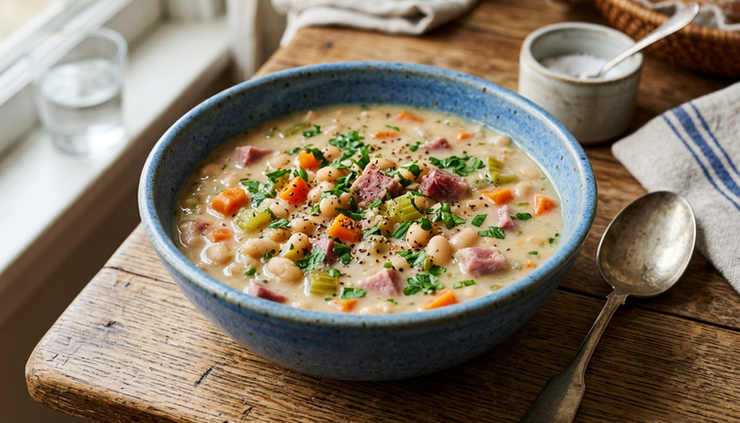
Make Great Lakes whitefish chowder
Whitefish chowder tastes like a shoreline supper. It is creamy but not heavy, with tender potatoes, sweet fish, and dill. This recipe keeps the seasoning gentle so the fish stays the main event.
Ingredients
Serves 4 to 6.
1 1/2 pounds Great Lakes whitefish fillets, skin removed
2 tablespoons butter
1 medium onion, finely diced
2 celery ribs, diced
2 medium Yukon Gold potatoes, diced
1 small carrot, diced
2 garlic cloves, minced
4 cups fish stock, chicken stock, or vegetable stock
1 cup whole milk
1 cup half-and-half
1 bay leaf
1/2 teaspoon dried thyme
1/2 teaspoon kosher salt, plus more to taste
1/4 teaspoon black pepper
1 tablespoon chopped fresh dill
1 tablespoon chopped fresh parsley
1 teaspoon lemon zest
1 tablespoon lemon juice
Step-by-step instructions
Check the fish
Pat the whitefish dry and check for small pin bones. Cut the fish into large chunks. Keep them big enough that they will not disappear into the chowder.
Cook the vegetables
Melt the butter in a heavy pot over medium heat. Add the onion, celery, carrot, and potatoes. Cook for 6 to 8 minutes, stirring often. The onion should soften, but it should not brown much.
Add garlic and dry herbs
Stir in the garlic, bay leaf, thyme, salt, and pepper. Cook for 30 seconds to 1 minute.
Simmer the potatoes
Add the stock and bring to a gentle simmer. Cook for 12 to 15 minutes, until the potatoes are just tender when pierced with a fork.
Add the dairy gently
Lower the heat. Stir in the milk and half-and-half. Keep the chowder below a boil because high heat can make dairy separate.
Poach the whitefish
Add the fish chunks. Simmer gently for 5 to 7 minutes, until the fish flakes easily. Stir carefully so the pieces stay mostly intact.
Finish with fresh flavor
Remove the bay leaf. Stir in the dill, parsley, lemon zest, and lemon juice. Taste and adjust salt and pepper.
Rest before serving
Turn off the heat and let the chowder sit for 5 minutes. This short rest helps the fish, dairy, potato, and herbs come together.
How to season whitefish chowder
Whitefish has a clean, mild flavor. Heavy seasoning can cover it up, so aim for balance.
Use these pairings:
Dill and parsley for a fresh, lake-country finish.
Lemon zest and juice to brighten the dairy.
Thyme and bay leaf to give the broth depth.
Black pepper for warmth.
A small pinch of cayenne if you like gentle heat.
Avoid boiling after adding the dairy and fish. A quiet simmer protects the texture. If the chowder tastes too rich, add lemon. If it tastes too sharp, add a splash of half-and-half. If it tastes thin, mash a few potatoes against the pot and stir.
Small seasoning habits that make soup taste better
Good soup seasoning happens in layers. The first layer starts when vegetables hit fat in the pot. The last layer happens right before serving.
Here are the habits that make the biggest difference.
Season late when using salty meats
Ham, bacon, smoked fish, and sausage can be unpredictable. Add a little salt early if needed, but hold most of it until the soup is almost done.
Use acid at the end
A spoonful of vinegar or lemon juice can make beans taste creamier and fish taste sweeter. Add it after simmering, not at the beginning.
Toast dried herbs briefly
Dried thyme, paprika, and pepper bloom in warm fat. Give them 30 seconds with the vegetables before adding liquid.
Finish with fresh herbs
Parsley, dill, chives, and scallions bring color and lift. They are especially helpful in creamy soups.
Let soup rest
Ten minutes off the heat can improve almost any soup. Beans absorb seasoning. Chowder thickens slightly. The broth stops tasting like separate parts.
One of my favorite Michigan soup stories is the potluck table after a cold-weather community event. The soups never match, and that is part of the charm. One slow cooker holds bean soup. Another has chowder. Someone brings venison stew. Someone else brings bread still warm under foil. Nobody needs to announce the theme. The theme is winter, generosity, and making enough for whoever shows up.
Serve and share the Michigan way
Michigan soup feels right with unfussy sides. Serve navy bean soup with cornbread, rye bread, or a simple cabbage slaw. Serve whitefish chowder with oyster crackers, sourdough, or a crisp apple salad.
If you want to add a Michigan touch, try:
A drizzle of maple syrup in cornbread batter
Local cheddar grated over bean soup
Pickled vegetables on the side
Apple cider with dinner
Cherry crisp for dessert
For a thoughtful pantry boost, try adding a finishing seasoning that supports soup-centered giving. You can bring home AngelDust soup seasoning from Soup Angels and use it to add savory depth to your next pot.
FAQ
Can I make these soups ahead of time?
Yes. Navy bean soup is excellent the next day. Whitefish chowder is best the day it is made, but leftovers can be reheated gently over low heat.
Can I freeze Michigan navy bean soup?
Yes. Let it cool, then freeze it in airtight containers for up to 3 months. Add a splash of stock or water when reheating if it thickens too much.
Can I freeze whitefish chowder?
You can, but the texture may change because of the dairy and potatoes. For best results, refrigerate it and eat it within 2 days.
What can I use instead of whitefish?
Use another mild, firm fish such as walleye, lake trout, cod, or haddock. Adjust cooking time based on thickness.
How do I fix soup that tastes bland?
Add salt in small amounts, then add acid such as lemon juice or vinegar. If it still tastes dull, simmer a little longer and finish with fresh herbs.
A soup pot worth repeating
Michigan soup cooking is not about complicated steps. It is about choosing good local ingredients, seasoning with care, and letting the pot do its quiet work. Navy bean soup brings the farm table into the kitchen. Whitefish chowder brings the lakeshore.
Make one on a cold night, share it with someone nearby, and save enough for lunch the next day. That is the real Michigan soup secret.


Comments