


Pork Shoulder Soup Around the World Flavorful Recipes Seasoning Tips and Perfect Pairings

Pork shoulder turns humble soup into a meal that tastes like it simmered in a family kitchen all afternoon. It has enough fat to stay juicy, enough collagen to enrich broth, and enough flavor to stand up to bold spices, chiles, herbs, fermented sauces, and smoky seasonings.
That is why pork shoulder works in so many soup traditions. In the American South, it can become a smoky bean soup. In Mexico, it softens into pozole. In Korea, it pairs with kimchi and gochugaru. In the Philippines, it gives body to sour, tamarind-bright sinigang.
This is a practical guide for home cooks who want to Learn to cook and season Pork Shoulder Soups from the us and Around the world without treating every recipe like a complicated project. Once the basic method clicks, the flavors can travel anywhere.

Pork shoulder makes soup richer without much fuss
Pork shoulder comes from a hardworking part of the pig, which means it has connective tissue and marbling. That sounds technical, but in the pot it means one thing: time turns it tender.
For soup, pork shoulder is usually better than lean pork loin. Loin can turn dry and chalky when simmered too long. Shoulder becomes silky and shreddable.
Two cuts work especially well:
Cut | Best use | What to expect |
Boneless pork shoulder | Quick trimming and easy cubing | Meaty broth with less fuss |
Bone-in pork shoulder or picnic shoulder | Long simmered soups | Deeper flavor and a richer texture |
Cut the pork into 1 1/2 to 2-inch pieces for most soups. Smaller pieces cook faster but can dry out. Bigger pieces take longer, but they shred beautifully.
A good pork shoulder soup often follows this simple pattern:
Season the pork early with salt and spices.
Brown it if the recipe benefits from roasted flavor.
Build the base with aromatics such as onion, garlic, ginger, celery, or chiles.
Simmer gently until the pork yields to a fork.
Finish with brightness from vinegar, citrus, herbs, fermented sauces, or souring agents.
That last step matters. Pork shoulder is rich, so a splash of acid at the end keeps the soup lively.
American pork shoulder soups lean smoky, savory, and comforting
In the U.S., pork shoulder often shows up with beans, greens, corn, potatoes, and smoke. It fits well with regional pantry staples, from Appalachian soup beans to Southern greens and Midwestern vegetable soups.
Smoky pork shoulder and white bean soup
This soup tastes like a long weekend meal, but it is simple enough for a cold weeknight if the pork is cut into chunks.
Seasoning style
The flavor comes from smoked paprika, black pepper, thyme, bay leaf, and a little vinegar at the end. If using smoked pork shoulder, go lighter on the salt until the broth has simmered.
Basic method
Season 2 pounds of cubed pork shoulder with kosher salt, black pepper, smoked paprika, and dried thyme.
Brown the pork in a heavy pot with a little oil.
Add chopped onion, celery, carrots, and garlic.
Stir in soaked white beans or canned drained beans.
Add chicken stock or water with bay leaves.
Simmer gently until the pork is tender and the beans are creamy.
Finish with apple cider vinegar and chopped parsley.
Pair it with
Cornbread is the natural match. A crisp cabbage slaw also works because it cuts the richness. For a simple dinner, serve the soup with skillet cornbread and pickled onions.
Pork shoulder, greens, and potato soup
This one is flexible. Use collards, kale, turnip greens, or mustard greens. The greens bring a pleasant bitterness that balances the pork.
For seasoning, use garlic, crushed red pepper, bay leaf, and a splash of hot sauce at the table. The trick is to add greens in stages. Tough collards can simmer with the pork for a while. Tender kale should go in closer to the end.
Side idea
Serve with buttermilk biscuits or toasted sourdough. If the soup is spicy, a spoonful of sour cream on the side cools it down.
Global pork shoulder soups show how seasoning changes everything
Pork Shoulder Soups can taste completely different depending on how the seasoning is built. One pot may be smoky and earthy. Another may be sour, spicy, fermented, or herb-heavy.
The pork is the anchor. The seasonings tell the story.
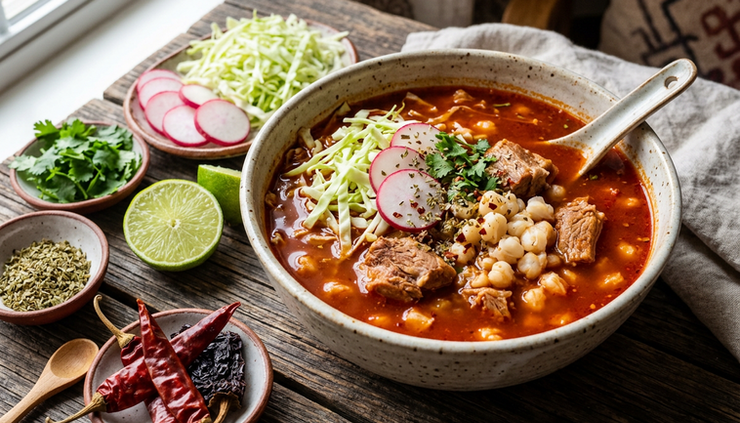
Mexican pozole rojo with pork shoulder
Pozole rojo is one of the great pork soups. Hominy gives the broth a chewy, corn-rich body, while dried red chiles bring color and depth.
Seasoning technique
Toast dried chiles briefly, then soak and blend them into a sauce. Guajillo chiles bring bright fruitiness. Ancho chiles add raisin-like depth. Garlic, oregano, cumin, and onion round it out.
Basic method
Simmer cubed pork shoulder with onion, garlic, bay leaf, and salt until tender.
Skim the broth as needed.
Toast dried guajillo and ancho chiles, then soak them in hot water.
Blend the chiles with garlic, onion, Mexican oregano, and some soaking liquid.
Strain the chile sauce into the pot.
Add hominy and simmer until the flavors blend.
Serve with
Shredded cabbage, sliced radishes, lime wedges, diced onion, and tostadas. The garnishes are not decoration. They add crunch, sharpness, and freshness.
Korean kimchi jjigae inspired pork shoulder soup
Kimchi jjigae is often made with pork belly, but pork shoulder works very well. It gives meatiness without as much fat.
Seasoning technique
The key is layering fermented flavor. Use mature kimchi, kimchi juice, gochugaru, garlic, and a little soy sauce or fish sauce. The kimchi should be sour enough to season the broth, not just float in it.
Basic method
Brown thin slices or small cubes of pork shoulder.
Add chopped kimchi and cook until it darkens slightly.
Stir in garlic, gochugaru, and a spoonful of gochujang if you like a deeper chile flavor.
Add water, stock, or anchovy-kelp broth.
Simmer until the pork is tender.
Add tofu near the end and finish with scallions.
Serve with
Steamed rice is essential. Add cucumber salad or simple sautéed greens for contrast.
Filipino sinigang with pork shoulder
Sinigang is known for its sour broth. Tamarind is the classic souring base, though other sour fruits and prepared tamarind mixes are common in home kitchens.
Seasoning technique
Instead of building heat or smoke, sinigang builds brightness. The sour broth wakes up the richness of pork shoulder. Tomato, onion, fish sauce, and vegetables round out the pot.
Basic method
Simmer pork shoulder chunks with onion and tomato until the meat starts to soften.
Add tamarind base or fresh tamarind broth.
Season with fish sauce.
Add vegetables in order of cooking time, such as daikon, eggplant, long beans, okra, and leafy greens.
Taste for sourness and salt before serving.
Serve with
Serve over steamed white rice with fish sauce and chiles on the side. Fried eggplant or simple grilled vegetables also pair nicely.
Caribbean style pork and pigeon pea soup
Across the Caribbean, pork often meets allspice, thyme, chile, root vegetables, and legumes. This version takes inspiration from those flavors while staying easy for a home kitchen.
Seasoning technique
Use allspice, thyme, garlic, scallions, Scotch bonnet or habanero, and lime. Keep the chile whole during simmering for aroma and controlled heat. Pierce it only if you want more fire.
Basic method
Season pork shoulder with salt, black pepper, allspice, garlic, thyme, and lime juice.
Brown the pork.
Add onion, scallions, carrots, sweet potato, and pigeon peas.
Add stock or water and simmer until the pork is tender.
Add a whole Scotch bonnet or habanero during the simmer, then remove it before serving.
Finish with lime juice and fresh herbs.
Serve with
Try coconut rice, fried plantains, or a simple avocado salad. These sides soften the heat and make the meal feel complete.
Slow cooking and braising make pork shoulder tender
Pork shoulder does not need fancy handling. It needs steady heat and enough liquid to relax into tenderness.
Use a Dutch oven for the deepest flavor
A Dutch oven lets you brown the pork, cook the aromatics, and simmer everything in one pot. Browning is not required for every soup, but it adds a roasted flavor that works well in bean soups, chile soups, and Caribbean-style soups.
Keep the simmer gentle. A hard boil can make the meat tighten before it softens. Look for small bubbles, not a rolling boil.
Use a slow cooker when time is on your side
A slow cooker is ideal for pork shoulder soups with beans, hominy, root vegetables, or sturdy greens.
For best results:
Brown the pork first when you can.
Use slightly less liquid than you would on the stove.
Add quick-cooking vegetables near the end.
Add vinegar, lime, fresh herbs, and delicate greens after the long cook.
Acidic ingredients can slow the softening of beans, so if cooking dried beans from scratch, add strong vinegar or citrus later.
Use pressure cooking when dinner cannot wait
A pressure cooker can make pork shoulder tender much faster than stovetop simmering. It is especially useful for pozole, bean soup, and simple pork broth.
Do not fill the cooker too high, especially with foamy ingredients like beans. After cooking, let the pressure release naturally for a bit so the meat stays juicy.
Season in layers
Pork shoulder soup tastes best when seasoning happens more than once.
Start with salt on the meat. Add spices to fat or aromatics so their flavor blooms. Season the broth during simmering. Then finish with a final adjustment.
At the end, ask four questions:
Does it need salt?
Does it need acid?
Does it need heat?
Does it need freshness?
A flat soup often needs acid, not more salt. A heavy soup often needs herbs, citrus, vinegar, or a crunchy garnish.
Side dishes can make the soup feel like a feast
The best side dish depends on the soup’s dominant flavor. Rich soup likes crunch. Spicy soup likes cooling sides. Sour soup likes rice. Smoky soup likes bread.
Soup style | Best sides | Why it works |
Smoky American bean soup | Cornbread, slaw, pickled onions | Sweetness and crunch balance the pork |
Pozole rojo | Tostadas, cabbage, radishes, lime | Crisp garnishes brighten the chile broth |
Kimchi pork soup | Steamed rice, cucumber salad, sautéed greens | Rice softens the heat and sourness |
Sinigang | White rice, grilled eggplant, chile fish sauce | Rice catches the tangy broth |
Caribbean pork soup | Coconut rice, plantains, avocado salad | Sweet and creamy sides calm the spice |
If the soup is the main event, keep the sides simple. One starch and one fresh or crunchy element are usually enough.
For extra seasoning help, try a ready-made blend that fits brothy pork dishes. Explore Angel Dust seasoning for a simple way to add savory depth to your next pot.
Frequently Asked Questions
What is the best way to cut pork shoulder for soup?
Cut it into 1 1/2 to 2-inch chunks for most soups. This size cooks evenly and stays juicy. For Korean-style soups, thinner slices also work well because they cook faster.
Should I brown pork shoulder before adding broth?
Brown it when you want a deeper, roasted flavor. Skip browning for lighter soups where a clean broth matters more, such as some sour or ginger-forward soups.
Can I make pork shoulder soup ahead of time?
Yes. Pork shoulder soups often taste better the next day. Chill the soup, remove any hardened fat from the top if desired, then reheat gently.
How do I keep pork shoulder from turning tough?
Cook it low and slow until it becomes tender. If it seems tough, it usually needs more time. Keep the pot at a gentle simmer and check again after 20 to 30 minutes.
What can I use if I do not eat spicy food?
Use mild seasonings such as garlic, bay leaf, thyme, oregano, ginger, or smoked paprika. For chile-based recipes, choose mild dried chiles and serve hot sauce on the side.

Pork shoulder is one of the most rewarding cuts for soup because it welcomes patience and bold seasoning. Start with a familiar pot, like smoky white bean soup, then try pozole, kimchi stew, sinigang, or a Caribbean-inspired version. The method stays steady, but the flavors can go anywhere.


Comments