


Warm Minnesota Soups How to Make Wild Rice and Chicken Dumpling Favorites

A good Minnesota soup should feel like coming inside after shoveling the walk, cheeks cold, glasses fogged, and socks finally thawing near the heat vent. It should be creamy without tasting heavy, seasoned without shouting, and sturdy enough to count as supper.
The two soups that best capture that feeling are wild rice soup and chicken dumpling soup. One leans into the earthy, nutty flavor of wild rice. The other turns simple chicken broth into a soft, filling bowl with tender dumplings. Both are humble, practical, and deeply comforting.
I think of these soups as kitchen memory food. My first wild rice soup was served from a slow cooker at a family gathering in northern Minnesota, where every snow boot seemed to leave a little puddle by the door. Chicken dumpling soup was the one my grandmother made when the weather turned mean and nobody felt like going anywhere. Neither soup needed ceremony. They just needed a pot, patience, and the right seasoning.
If you want to Learn to cook and season soups from Minnesota, start with these two favorites. They teach the basics of building flavor, softening vegetables, using dairy gently, and seasoning with the calm confidence that makes home cooking so satisfying.

What gives Minnesota soups their comfort
Minnesota cooking loves practical ingredients: rice that stores well, chicken that stretches across several meals, root vegetables, dairy, broth, herbs, and just enough salt to wake everything up. The seasoning style is usually warm and savory rather than spicy. Think thyme, bay leaf, black pepper, parsley, onion, celery, garlic, and a bit of butter.
Wild rice is the ingredient most closely tied to the region. True wild rice is not the same as white rice or brown rice. It is the seed of an aquatic grass, with a chewy texture and a deep, nutty flavor. In soup, it gives body and character. It also keeps its shape better than many grains, especially if cooked separately before adding it to the pot.
Chicken dumpling soup has a different kind of charm. It turns basic pantry and refrigerator staples into a full meal. The broth carries the flavor, the vegetables add sweetness, the chicken brings richness, and the dumplings soak it all up.
The best Minnesota Soups usually share a few traits:
A flavorful base Onion, celery, and carrot cooked in butter or oil before liquid is added.
A gentle herb profile Thyme, bay leaf, parsley, and black pepper do most of the work.
Good broth Homemade is lovely, but a good low-sodium store-bought broth works well.
Dairy used with care Cream, milk, or half-and-half should be added near the end so it stays smooth.
A finishing taste A final pinch of salt, pepper, herbs, or lemon can make the whole pot brighter.
The big lesson is this: season in layers. Add a little salt when cooking the vegetables, season the broth after it simmers, then taste again at the end. Soup changes as it cooks, and wild rice especially can absorb salt and liquid.
How to make classic Minnesota wild rice soup
Wild rice soup is the one I make when I want the house to smell like someone has been taking care of things all afternoon. It is creamy, but the rice keeps it from feeling too soft. Mushrooms are optional, but they fit beautifully because they echo the earthiness of the rice.
Ingredients
This makes about 6 servings.
1 cup uncooked wild rice, rinsed
4 tablespoons butter
1 medium yellow onion, diced
2 celery ribs, diced
2 carrots, diced
8 ounces mushrooms, sliced, optional
2 garlic cloves, minced
1 teaspoon dried thyme
1 bay leaf
1/4 cup all-purpose flour
6 cups chicken broth or vegetable broth
1 cup cooked chicken or turkey, diced, optional
1 cup half-and-half or heavy cream
1 tablespoon chopped fresh parsley
Salt and black pepper, to taste
A small squeeze of lemon, optional
Cook the wild rice first
Wild rice takes longer than white rice, and cooking time can vary. Simmer it in plenty of water until tender but still pleasantly chewy. This often takes 40 to 50 minutes, depending on the rice. Drain it well.
Cooking the rice separately gives you better control. If you cook it directly in the soup, it can drink up too much broth and make the pot thicker than planned. Separate cooking also keeps the cream base smooth and clean.
Build the soup base slowly
Melt the butter in a large pot over medium heat. Add onion, celery, and carrot with a pinch of salt. Cook until the vegetables soften, about 6 to 8 minutes. If using mushrooms, add them next and cook until they release moisture and begin to brown.
Add garlic, thyme, and bay leaf. Stir for about 30 seconds. You want the garlic fragrant, not browned.
Sprinkle in the flour and stir until it coats the vegetables. Cook for 1 to 2 minutes. This removes the raw flour taste and helps create a creamy body once the broth goes in.
Pour in the broth slowly, stirring as you go. Bring the soup to a gentle simmer. Let it cook for about 15 minutes so the flavors come together. Add the cooked wild rice and cooked chicken or turkey, if using. Simmer for another 5 to 10 minutes.
Lower the heat. Stir in the half-and-half or cream. Do not boil once the dairy is in the pot. Finish with parsley, black pepper, and salt to taste. If the soup feels a little flat, a small squeeze of lemon can brighten it without making it taste lemony.
Seasoning tips for wild rice soup
Wild rice has a bold flavor, so it can handle herbs and pepper. Still, keep the seasoning balanced.
Try these additions:
Thyme The most natural herb for this soup. It gives a woodsy note.
Bay leaf Adds background warmth during simmering. Remove it before serving.
White pepper A small pinch gives gentle heat and blends well with cream.
Smoked paprika Use just a pinch if you want a subtle smoky note.
Fresh parsley Add at the end for color and freshness.
If the soup tastes bland, do not rush to add more cream. Add salt in small pinches, stir, and taste. Cream softens flavor, so the final seasoning matters.
How to make chicken dumpling soup the Minnesota way
Chicken dumpling soup is not fancy, and that is why it works. It is the soup for icy evenings, sick days, busy Sundays, and those nights when dinner needs to feel like a blanket.
My grandmother did not measure much when she made dumpling soup. She checked the broth by smell, pinched the dumpling dough between her fingers, and always warned us not to lift the lid too early. I did, once. The dumplings turned out dense, and she gave me a look that said the soup had taught the lesson for her.
Ingredients
This makes about 6 servings.
For the soup:
2 tablespoons butter or oil
1 medium yellow onion, diced
2 celery ribs, diced
2 carrots, sliced
2 garlic cloves, minced
8 cups chicken broth
2 cups cooked shredded chicken
1 bay leaf
1/2 teaspoon dried thyme
1/2 teaspoon dried parsley or 1 tablespoon fresh parsley
Salt and black pepper, to taste
For the dumplings:
2 cups all-purpose flour
1 tablespoon baking powder
1 teaspoon salt
2 tablespoons cold butter, cut into small pieces
3/4 cup milk or buttermilk
1 egg, lightly beaten, optional for richer dumplings
Make the broth taste like dinner
Heat butter or oil in a large pot. Add the onion, celery, and carrots with a pinch of salt. Cook until the onion turns soft and the vegetables smell sweet. Add garlic and cook briefly.
Pour in the chicken broth. Add bay leaf, thyme, parsley, and shredded chicken. Simmer for 15 to 20 minutes. Taste the broth before adding dumplings. This is your best chance to fix the seasoning because dumplings will absorb some of that flavor.
The broth should taste slightly more seasoned than you think it needs to be. Not salty, just complete.
Mix and steam the dumplings
Whisk the flour, baking powder, and salt in a bowl. Cut in the cold butter with your fingers or a pastry cutter until the mixture looks crumbly. Stir in the milk and egg, if using, just until a soft dough forms.
Do not overmix. A few rough spots are fine. Overworked dumpling dough turns tough.
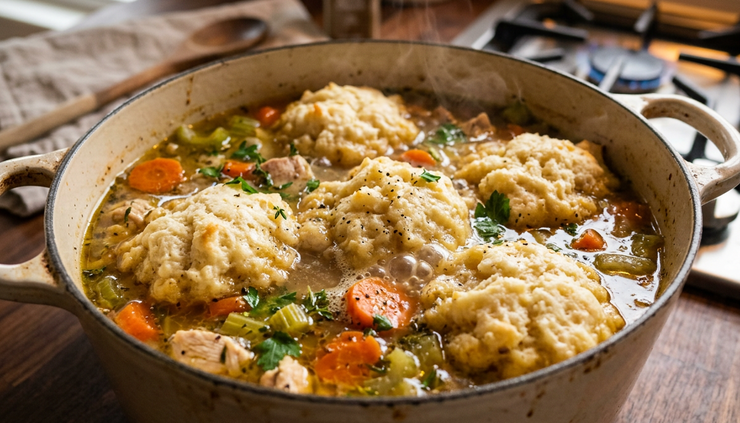
Bring the soup to a gentle simmer, not a hard boil. Drop spoonfuls of dough onto the surface of the soup. Cover the pot and cook for 12 to 15 minutes. Keep the lid on while they cook so the tops steam.
Check one dumpling by cutting it open. It should be fluffy and cooked through, with no wet dough in the center.
Seasoning tips for chicken dumpling soup
Chicken dumpling soup likes classic seasoning. The goal is a broth that tastes warm, savory, and rounded.
Good choices include:
Black pepper Use more than you think, especially if the broth is rich.
Thyme Adds a familiar chicken-soup aroma.
Poultry seasoning Use lightly. It can take over if added with a heavy hand.
Celery seed A tiny pinch can boost the old-fashioned flavor.
Fresh dill Not required, but lovely if you like a brighter herbal finish.
If the soup tastes dull after the dumplings cook, stir in a little more salt and parsley. If it tastes heavy, add a splash of broth or a tiny squeeze of lemon.
Small techniques that make a big difference
Soup is forgiving, but a few habits make the difference between good and memorable.
Start with softened vegetables
Onion, celery, and carrot need time in fat before the broth goes in. This step builds sweetness and depth. If you rush it, the soup can taste watery even when the ingredients are right.
Use low heat after adding dairy
Cream soups should not boil hard. High heat can make dairy separate or taste cooked. Add cream near the end and warm it gently.
Taste at three points
Taste after the vegetables cook, after the broth simmers, and just before serving. This keeps seasoning from being a guessing game.
Let soup rest before serving
Even 10 minutes off the heat helps. Wild rice settles into the broth, herbs relax, and the temperature becomes better for tasting.
Save leftovers wisely
Wild rice soup thickens in the refrigerator. Add broth or milk when reheating. Chicken dumpling soup is best the day it is made, but leftovers still taste good. Reheat gently so the dumplings do not break apart.
How to serve these soups at home
Minnesota-style soup does not need much beside it. A loaf of crusty bread, baking powder biscuits, rye toast, or a simple green salad is enough.
For wild rice soup, try:
Toasted sourdough
Crackers with sharp cheddar
A side of roasted squash
Cranberry relish for a sweet-tart contrast
For chicken dumpling soup, try:
Buttered peas
Pickles on the side
A crisp apple
A simple cabbage slaw
If serving a crowd, keep the soup warm over low heat and stir often. For wild rice soup, hold back a little broth so you can loosen it as it sits. For chicken dumpling soup, add dumplings closer to serving time for the fluffiest texture.
If you enjoy seasoning blends that support comforting soups, try Angel Dust seasoning from Soup Angels as a finishing touch or pantry helper for your next pot.
FAQ
Can I use canned wild rice in wild rice soup?
Yes. Drain it well and add it near the end of cooking. Since it is already cooked, it only needs enough time to warm through.
Can I make wild rice soup without cream?
Yes. Use whole milk for a lighter version, or skip dairy and thicken the soup with blended cooked vegetables or a small amount of flour cooked into the base.
Why are my dumplings dense?
Dense dumplings usually come from overmixing the dough, boiling too hard, or lifting the lid while they steam. Mix gently and keep the pot covered.
Can I freeze these soups?
Wild rice soup freezes fairly well, though dairy can change texture. Freeze before adding cream if possible. Chicken dumpling soup can be frozen, but the dumplings may soften after thawing.
What is the best way to add more flavor without making soup salty?
Use herbs, black pepper, sautéed vegetables, a bay leaf, or a splash of lemon. Salt matters, but it should not do all the work.

Bring the pot to the table
Wild rice soup and chicken dumpling soup both prove that comfort food does not have to be complicated. Start with good broth, give the vegetables time, season in layers, and keep the heat gentle when cream or dumplings enter the pot.
The reward is a kitchen that smells warm, a bowl that fills both hands, and a meal that makes cold weather feel a little more manageable. Pick one soup this week, set the pot on the stove, and let it simmer long enough for everyone nearby to ask when dinner will be ready.


Comments