
_edited.jpg)

Diabetic-Friendly Soups Easy Low-Sodium Recipes with Fresh Herbs and Meal Prep Tips

A good soup can make healthy eating feel calmer. One pot, lots of vegetables, warm broth, and enough leftovers to take pressure off the next meal. For home cooks managing blood sugar, soup can also be a smart way to add fiber, lean protein, and satisfying flavor without relying on heavy cream, excess salt, or refined carbs.
The key is balance. A diabetic-friendly soup is not just “low sugar.” It usually leans on non-starchy vegetables, beans or lentils in sensible portions, lean proteins, herbs, spices, and low-sodium broth. It tastes full and comforting because the ingredients build flavor together.
This post is informational only and is not medical advice. Blood sugar responses vary, so individual meal plans should come from a qualified health professional, especially if medication, insulin, kidney disease, or heart conditions are part of the picture.

What makes a soup diabetic-friendly
Diabetic-friendly soup starts with ingredients that support steady energy. For many meals, that means fiber, protein, moderate carbohydrates, and a lower sodium level.
Soup can be tricky because packaged broths, canned vegetables, cured meats, bouillon cubes, and seasoning blends often carry a lot of sodium. That does not mean soup has to taste flat. It means the flavor should come from a wider group of ingredients.
A strong soup base often includes:
Non-starchy vegetables such as zucchini, spinach, kale, mushrooms, cabbage, celery, bell peppers, green beans, cauliflower, and tomatoes.
Lean protein such as chicken breast, turkey, fish, tofu, eggs, or beans.
Fiber-rich carbohydrates such as lentils, black beans, chickpeas, barley, or small portions of sweet potato.
Healthy fats in small amounts, such as olive oil, avocado, nuts, or seeds.
Fresh herbs and spices that add aroma and depth without extra sodium.
For blood sugar balance, portion size still matters. A soup packed with lentils, beans, corn, pasta, or potatoes may be nutritious, but it may also contain more carbohydrates than expected. That does not make those ingredients off-limits. It means they work best when paired with protein, vegetables, and a clear sense of serving size.
Here is a simple way to think about building a balanced bowl.
Soup component | Helpful choices | Why it works |
Broth | No-salt-added or low-sodium chicken, vegetable, or beef broth | Keeps sodium easier to manage |
Vegetables | Leafy greens, zucchini, cauliflower, mushrooms, peppers, celery | Adds volume, fiber, and flavor |
Protein | Chicken, turkey, tofu, eggs, fish, beans, lentils | Helps soup feel satisfying |
Carbohydrates | Lentils, beans, barley, small pasta portions, sweet potato | Adds energy and texture when portioned |
Seasoning | Garlic, onion, herbs, spices, vinegar, citrus | Builds flavor without relying on salt |
A soup does not need to be perfect to be helpful. It just needs to be built with care.
How to season soup with less sodium
Low-sodium soup tastes best when seasoning starts early. If all the flavor comes from salt added at the end, the soup may still taste thin. Good seasoning begins with aromatics, browning, herbs, spices, acid, and texture.
Learn how to cook and season Diabetic Friendly Soups by thinking in layers instead of reaching for the salt shaker first.
Start with aromatics
Onion, garlic, celery, carrots, leeks, ginger, and bell peppers create a savory base. Cook them in a small amount of olive oil until they soften and smell sweet. This step matters. Raw onion flavor in broth tastes sharp, but slowly cooked onion adds roundness.
For a basic pot of soup, try this base:
1 tablespoon olive oil
1 small onion, chopped
2 celery stalks, chopped
2 carrots, chopped
2 to 4 garlic cloves, minced
Cook for 6 to 8 minutes before adding broth. That short step changes the whole pot.
Use herbs in two ways
Dried herbs need time. Add dried thyme, oregano, rosemary, bay leaf, or Italian seasoning early so they can soften and spread through the broth.
Fresh herbs are more delicate. Add parsley, basil, cilantro, dill, chives, or mint near the end so they stay bright.
A good rule:
Dried herbs go in near the beginning.
Fresh herbs go in near the end.
Woody herbs like rosemary and thyme can handle longer cooking.
Tender herbs like basil and cilantro taste best right before serving.
Add acid before adding more salt
A splash of vinegar or lemon juice can make soup taste more awake. This works especially well in lentil soup, bean soup, chicken soup, cabbage soup, and tomato-based soup.
Try one of these at the end:
Lemon juice
Lime juice
Red wine vinegar
Apple cider vinegar
Sherry vinegar
Rice vinegar
Start with 1 teaspoon, stir, taste, and add more if needed. Acid will not replace salt exactly, but it can make a low-sodium soup taste more complete.
Build savory flavor with vegetables
Mushrooms, tomato paste, roasted garlic, onions, celery, and carrots bring natural savory notes. Tomato paste works best when cooked for 1 to 2 minutes in the pot before liquid goes in. It darkens slightly and adds richness.
Roasted vegetables also make soup taste deeper. If time allows, roast cauliflower, tomatoes, carrots, mushrooms, or squash before simmering them in broth.
Choose low-sodium products carefully
Labels matter. “Reduced sodium” means less sodium than the original version, but it may still be higher than expected. “Low sodium” and “no salt added” are often better starting points, though flavor and sodium levels vary by brand.
Helpful pantry picks include:
No-salt-added diced tomatoes
Low-sodium broth
No-salt-added beans
Salt-free spice blends
Plain frozen vegetables without sauce
Unsalted nuts or seeds for garnish
Rinsing canned beans under running water can also reduce some of the sodium from the packing liquid.

Easy low-sodium soup recipes to keep in rotation
These recipes are flexible, simple, and built around everyday ingredients. Use low-sodium or no-salt-added products whenever possible. Taste at the end, then adjust with herbs, spices, lemon, or vinegar before adding any salt.
Each recipe makes about 4 to 6 servings, depending on bowl size.
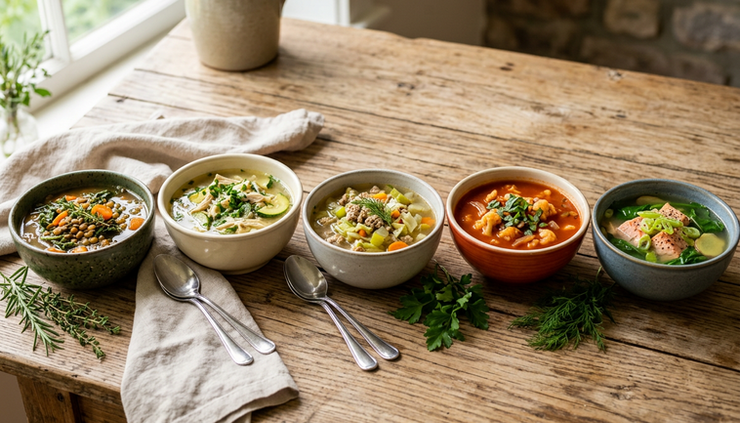
Lentil kale vegetable soup
Lentils are hearty, affordable, and rich in fiber. They also cook faster than most dried beans, which makes them useful for weeknight soup.
Ingredients
1 tablespoon olive oil
1 small onion, chopped
2 carrots, chopped
2 celery stalks, chopped
3 garlic cloves, minced
1 teaspoon dried thyme
1 teaspoon smoked paprika
1 cup dry brown or green lentils, rinsed
1 can no-salt-added diced tomatoes
6 cups low-sodium vegetable broth
3 cups chopped kale
1 tablespoon lemon juice
Black pepper, to taste
Fresh parsley, for serving
Steps
Warm olive oil in a large pot over medium heat.
Add onion, carrots, and celery. Cook for 6 minutes, stirring often.
Add garlic, thyme, and smoked paprika. Cook for 30 seconds.
Stir in lentils, tomatoes, and broth.
Bring to a gentle boil, then reduce heat and simmer for 25 to 35 minutes, until the lentils are tender.
Stir in kale and cook for 5 minutes.
Add lemon juice and black pepper. Top with parsley.
Flavor tip
For a deeper taste, add 1 tablespoon tomato paste with the garlic and spices. Cook it briefly before adding the broth.
Chicken zucchini herb soup
This is a lighter chicken soup with zucchini instead of noodles. It is warm, simple, and easy to adjust.
Ingredients
1 tablespoon olive oil
1 small onion, chopped
2 celery stalks, sliced
2 carrots, sliced
3 garlic cloves, minced
1 teaspoon dried oregano
6 cups low-sodium chicken broth
1 pound boneless, skinless chicken breast or thighs
2 medium zucchini, chopped
2 cups baby spinach
1 tablespoon lemon juice
Fresh dill or parsley
Black pepper, to taste
Steps
Heat olive oil in a soup pot over medium heat.
Add onion, celery, and carrots. Cook until softened.
Add garlic and oregano. Stir for 30 seconds.
Pour in broth and add chicken.
Simmer gently for 18 to 25 minutes, until chicken is cooked through.
Remove chicken, shred it, and return it to the pot.
Add zucchini and cook for 5 to 7 minutes.
Stir in spinach, lemon juice, herbs, and black pepper.
Flavor tip
Add a bay leaf while the chicken simmers. Remove it before serving.
Turkey white bean and cabbage soup
This soup feels filling without needing pasta or rice. Ground turkey adds protein, cabbage adds bulk, and white beans add creaminess and fiber.
Ingredients
1 tablespoon olive oil
1 pound lean ground turkey
1 small onion, chopped
3 garlic cloves, minced
1 teaspoon dried basil
1 teaspoon ground cumin
4 cups shredded cabbage
1 can no-salt-added white beans, drained and rinsed
1 can no-salt-added diced tomatoes
5 cups low-sodium chicken or vegetable broth
1 tablespoon apple cider vinegar
Fresh cilantro or parsley
Black pepper, to taste
Steps
Heat olive oil in a large pot.
Add turkey and cook until no longer pink, breaking it into small pieces.
Add onion and cook for 4 minutes.
Stir in garlic, basil, and cumin.
Add cabbage, beans, tomatoes, and broth.
Simmer for 20 to 25 minutes, until the cabbage is tender.
Stir in vinegar, herbs, and black pepper.
Flavor tip
For a gentle heat, add a pinch of red pepper flakes. For a smoky note, add smoked paprika.
Tomato basil cauliflower soup
This creamy-style soup uses cauliflower for body instead of heavy cream. It pairs well with a side salad, grilled chicken, or a small portion of whole-grain toast if it fits the meal plan.
Ingredients
1 tablespoon olive oil
1 small onion, chopped
3 garlic cloves, minced
2 tablespoons tomato paste
1 large head cauliflower, chopped
1 can no-salt-added crushed tomatoes
4 cups low-sodium vegetable broth
1 teaspoon dried oregano
1 tablespoon balsamic vinegar
1 cup fresh basil leaves
Black pepper, to taste
Steps
Warm olive oil in a large pot.
Add onion and cook until soft.
Add garlic and tomato paste. Cook for 1 to 2 minutes.
Add cauliflower, crushed tomatoes, broth, and oregano.
Simmer for 20 minutes, until cauliflower is very tender.
Blend until smooth with an immersion blender.
Stir in balsamic vinegar, basil, and black pepper.
Flavor tip
Roast the cauliflower first for a richer flavor. Toss florets with a small amount of olive oil and roast at 425°F until browned, then add to the soup.
Salmon spinach ginger soup
This quick soup is light but satisfying. Salmon adds protein and healthy fat, while ginger, garlic, and scallions give the broth a clean, bright taste.
Ingredients
5 cups low-sodium vegetable or chicken broth
1 tablespoon grated fresh ginger
2 garlic cloves, thinly sliced
2 cups sliced mushrooms
1 small zucchini, sliced
12 ounces salmon fillet, skin removed and cut into chunks
3 cups baby spinach
1 tablespoon rice vinegar
1 teaspoon toasted sesame oil
Sliced scallions, for serving
Black pepper, to taste
Steps
Bring broth, ginger, and garlic to a gentle simmer.
Add mushrooms and zucchini. Cook for 5 minutes.
Add salmon chunks and simmer gently for 4 to 6 minutes, until cooked through.
Stir in spinach until wilted.
Add rice vinegar, sesame oil, scallions, and black pepper.
Flavor tip
Keep the simmer gentle after adding salmon. A hard boil can make the fish tough.
Meal prep and storage habits that make soup easier
Soup is one of the friendliest meal prep foods, but a little planning helps keep texture and flavor fresh.
Cool soup safely
Do not leave a large pot sitting out for hours. Divide soup into shallow containers so it cools faster. Once the steam settles, refrigerate it.
Most soups keep well in the refrigerator for 3 to 4 days. Freeze any extra portions if they will not be eaten soon.
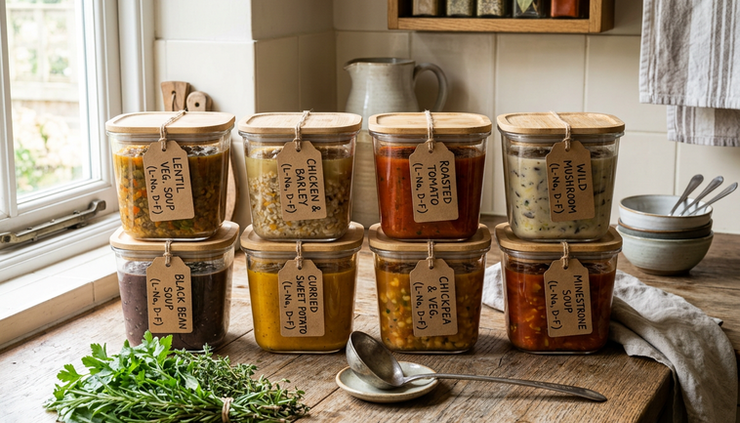
Freeze in useful portions
Freeze soup in single-serving or two-serving containers. This makes lunch easier and cuts down on waste.
Leave a little space at the top of each container because liquid expands as it freezes. Label containers with the soup name and date.
Soups that freeze especially well include:
Lentil soup
Bean soup
Turkey vegetable soup
Tomato-based vegetable soup
Blended cauliflower soup
Soups with delicate greens, fish, or zucchini can still be frozen, but the texture may soften after reheating. If texture matters, add fresh greens or zucchini when reheating instead of freezing them in the soup.
Keep toppings separate
Fresh herbs, lemon wedges, toasted seeds, plain Greek yogurt, avocado, and scallions are best added right before eating. They make leftovers taste fresh.
Good low-sodium toppings include:
Chopped parsley
Fresh basil
Dill
Cilantro
Lemon zest
Toasted unsalted pumpkin seeds
A spoonful of plain Greek yogurt
A drizzle of olive oil
Reheat gently
Reheat soup on the stovetop over medium-low heat, stirring often. Add a splash of water or low-sodium broth if it thickened in the fridge.
For microwave reheating, use a microwave-safe bowl, cover loosely, and stir halfway through heating so the soup warms evenly.
Prep ingredients before cooking day
If cooking a full soup from scratch feels like too much on a busy night, prep the parts.
Try these make-ahead steps:
Chop onions, carrots, and celery.
Wash and chop sturdy greens.
Portion cooked chicken or turkey.
Rinse and drain canned beans.
Mix salt-free spice blends in small jars.
Freeze chopped vegetables in recipe-sized bags.
A few ready ingredients can turn soup into a 20-minute meal.
Simple ways to customize vegetables and herbs
Diabetic Friendly Soups are easier to enjoy when they do not taste the same every week. The basic method can stay the same while the vegetables and herbs change.
Start with a broth, add aromatics, choose a protein, pick a few vegetables, then finish with fresh herbs and acid. Once that pattern feels familiar, soup becomes more flexible.
Match herbs to ingredients
Some herb pairings are especially dependable.
Main ingredient | Herbs that work well | Bright finish |
Chicken | Parsley, dill, thyme, rosemary | Lemon juice |
Turkey | Cilantro, parsley, oregano | Lime juice or vinegar |
Lentils | Thyme, parsley, bay leaf, cilantro | Lemon juice |
Tomato | Basil, oregano, parsley | Balsamic vinegar |
Fish | Dill, parsley, scallions, cilantro | Lemon or rice vinegar |
Mushrooms | Thyme, rosemary, parsley | Sherry vinegar |
Use vegetables in color groups
Color is a helpful reminder to vary nutrients and texture. A pot of soup with green, orange, red, and white vegetables often tastes better and looks more inviting.
Try these combinations:
Zucchini, spinach, celery, and parsley
Carrots, cauliflower, tomatoes, and basil
Mushrooms, cabbage, green beans, and thyme
Bell peppers, kale, onions, and cilantro
Broccoli, leeks, white beans, and dill
Swap starchier ingredients with care
Potatoes, noodles, rice, corn, and large amounts of beans can fit into some eating plans, but they raise the carbohydrate content of soup. If the goal is a lower-carb bowl, use smaller portions or swap in vegetables with a lighter carb load.
Useful swaps include:
Zucchini ribbons instead of noodles
Cauliflower florets instead of potatoes
Shredded cabbage instead of rice
Mushrooms instead of extra beans
Spinach or kale for extra volume
The best soup is one that supports health and still gets eaten. If a small amount of barley or sweet potato makes a vegetable soup satisfying, it may be a helpful choice in the right portion.
FAQ
Can people with diabetes eat soup?
Yes, many soups can fit into a diabetes-conscious meal plan. The best choices usually include vegetables, protein, fiber, and lower-sodium broth. Portion size and carbohydrate sources still matter.
Are canned soups a good option?
Some canned soups are convenient, but many are high in sodium and may contain refined starches. Look for low-sodium options, read the label, and add extra vegetables or protein when possible.
What can I use instead of salt for flavor?
Use garlic, onion, ginger, herbs, spices, lemon juice, vinegar, tomato paste, mushrooms, and roasted vegetables. These ingredients add depth and brightness without depending on salt.
Do beans and lentils have too many carbs?
Beans and lentils contain carbohydrates, but they also provide fiber and protein. Many people include them in balanced meals. Serving size matters, and individual blood sugar responses can vary.
Can I freeze soup with fresh herbs?
You can, but fresh herbs often taste better when added after reheating. For freezer soups, cook with dried herbs and finish with fresh herbs right before serving.
A steady soup habit starts with one good pot
Diabetic-friendly soup does not need to feel restrictive. Start with low-sodium broth, add plenty of vegetables, choose a protein, season in layers, and finish with fresh herbs or citrus. From there, each pot can change with the season, the pantry, and personal taste.
If soup is part of a regular meal prep routine, keep a few flexible recipes on hand and adjust them slowly. Try one new herb. Swap in a different green. Roast the vegetables one week and simmer them the next. Small changes keep healthy cooking interesting.
For another low-sodium way to add flavor to homemade soup, explore Angel Dust seasoning from Soup Angels.


Comments