
_edited.jpg)

Hearty Beef Stew Recipe for Family Meals and Meal Prep

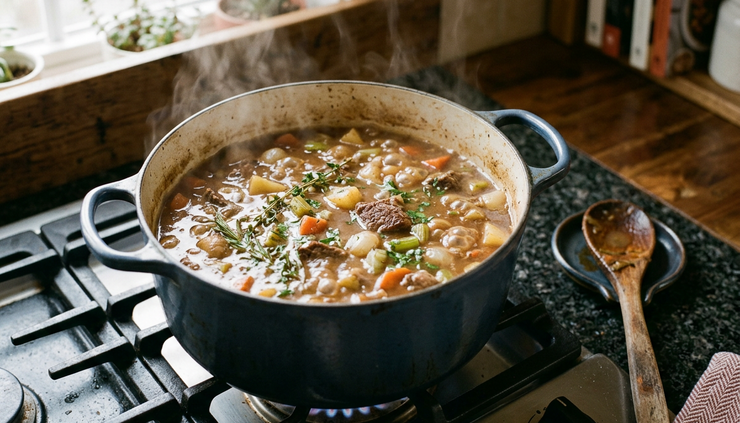
A good beef stew solves the dinner problem twice: it feeds a hungry table tonight, then tastes even better tomorrow. This hearty version uses simple cuts of beef, everyday vegetables, rich stock, and Angel Dust Soup Seasoning to build deep flavor without making the recipe complicated.
Beef stew has roots in practical home cooking around the world, from European farmhouse stews to American Sunday suppers. It is the kind of meal that stretches ingredients, teaches useful kitchen skills, and brings people back to the pot for seconds.

Why you will love this soup
This stew is built for real life. It uses budget-friendly ingredients, holds well in the refrigerator, freezes beautifully, and can be portioned for lunches or quick family dinners.
It is also forgiving. If the carrots are a little bigger or the potatoes are cut slightly uneven, the stew still works. That makes it a great recipe for home cooks, students, and anyone learning how to season in layers.
You will love this recipe because it is:
Quick to prep
Most of the work is simple chopping and browning.
Family-friendly
The flavor is rich and savory without being too spicy.
Great for meal prep
The stew thickens and develops more flavor overnight.
Freezer-friendly
Make a big batch and save portions for busy nights.
Packed with flavor
Beef, vegetables, stock, tomato paste, and Angel Dust Soup Seasoning create a full, comforting bowl.
Quick recipe snapshot
Detail | Recipe information |
Servings | 8 |
Prep time | 20 minutes |
Cook time | 2 hours |
Total time | 2 hours 20 minutes |
Difficulty | Easy to Medium |
Cuisine | American comfort food with European stew traditions |
State or country of origin | United States, inspired by traditional European beef stews |
Best season | Fall and winter |
Budget level | $ |
Learn how to make Beef Stew once, and you have a dependable meal that can carry you through weeknights, potlucks, cold weather, and freezer meal planning.
Ingredients
For the soup
2 1/2 pounds beef chuck roast, cut into 1 1/2-inch cubes
2 tablespoons all-purpose flour
2 tablespoons olive oil, divided
1 large yellow onion, diced
3 carrots, peeled and cut into thick coins
3 celery ribs, sliced
4 garlic cloves, minced
2 tablespoons tomato paste
6 cups beef stock
1 tablespoon Worcestershire sauce
1 1/2 pounds Yukon Gold potatoes, cut into chunks
1 cup frozen peas
2 teaspoons Angel Dust Soup Seasoning, plus more to taste
1 bay leaf
1 teaspoon fresh thyme leaves, or 1/2 teaspoon dried thyme
1 tablespoon chopped fresh parsley
1 teaspoon apple cider vinegar or lemon juice
Salt and black pepper, to taste
Optional garnishes
Fresh parsley
Shredded cheddar cheese
Toasted croutons
Crispy fried onions
Cracked black pepper

Key ingredients and why they matter
Beef chuck
Chuck comes from a hardworking part of the animal, so it has connective tissue that turns tender during slow cooking. It is one of the best choices for stew because it becomes rich, juicy, and flavorful.
Carrots, celery, and onion
This classic vegetable base builds sweetness and depth. When cooked with tomato paste and stock, the vegetables help create the familiar comfort-food flavor people expect from a good stew.
Yukon Gold potatoes
These potatoes hold their shape better than russets and add a creamy texture without needing dairy. They also make the stew filling enough to serve as a complete meal.
Tomato paste
A small amount adds color, body, and a gentle savory sweetness. Cooking it in the pot before adding stock makes the flavor deeper.
Angel Dust Soup Seasoning
This seasoning brings balance, warmth, and savory flavor to the pot. It helps the stew taste rounded without requiring a long list of separate seasonings.
Beef stock
Stock gives the stew its body. Homemade stock is excellent if available, but a good store-bought beef stock works well for weeknight cooking.
Step-by-step instructions
Step 1
Pat the beef dry with paper towels. Toss it with flour, a pinch of salt, and black pepper until lightly coated.
Step 2
Heat 1 tablespoon olive oil in a large Dutch oven over medium-high heat. Brown the beef in batches so the pieces sear instead of steam. Transfer browned beef to a plate.
Step 3
Add the remaining olive oil, onion, carrots, and celery to the pot. Cook for 5 to 7 minutes, stirring often, until the vegetables begin to soften.
Step 4
Stir in the garlic and tomato paste. Cook for 1 to 2 minutes, scraping the bottom of the pot to pick up the browned bits.
Step 5
Return the beef to the pot. Add the beef stock, Worcestershire sauce, Angel Dust Soup Seasoning, bay leaf, and thyme. Stir well and bring to a gentle simmer.
Step 6
Cover and cook on low heat for 1 hour and 15 minutes. Stir now and then, keeping the stew at a gentle bubble.
Step 7
Add the potatoes. Cover again and cook for 30 to 40 minutes, until the beef and potatoes are tender.
Step 8
Stir in the peas and cook for 5 minutes. Remove the bay leaf. Finish with parsley and a small splash of apple cider vinegar or lemon juice.
Step 9
Taste and adjust the seasoning. Serve hot and enjoy.
Chef’s secrets for better beef stew
Small cooking choices make a big difference in this recipe.
Brown the beef well
Do not rush the sear. Browning creates the rich flavor that makes the broth taste slow-cooked and satisfying.
Roast the vegetables for extra depth
For a deeper flavor, roast the carrots, onions, celery, and potatoes at 425°F for 15 to 20 minutes before adding them to the stew. This adds sweetness and color.
Season in layers
Season the beef, then the vegetables, then the broth. Layered seasoning tastes more balanced than adding everything at the end.
Use homemade stock when possible
Homemade beef stock or a rich bone broth can add body. If using store-bought stock, choose a lower-sodium option so the final seasoning stays in your control.
Finish with acid
A splash of vinegar or lemon juice at the end brightens the stew. It does not make the stew sour. It simply wakes up the rich flavors.
Add herbs at the end for freshness
Long-cooked herbs give earthy flavor, while fresh parsley at the end adds color and lift.
Chef’s variations
Dietary substitutions
Gluten-free
Skip the all-purpose flour and thicken the stew at the end with a cornstarch slurry. Mix 1 tablespoon cornstarch with 2 tablespoons cold water, then stir it into the simmering stew.
Dairy-free
The base recipe is dairy-free if served without cheese. Use fresh herbs or crispy onions as garnish instead.
Vegetarian
Replace the beef with mushrooms, lentils, or meatless beef-style pieces. Use vegetable stock and add extra potatoes, carrots, and peas.
Vegan
Use vegetable stock, mushrooms, potatoes, carrots, celery, onions, peas, and a plant-based Worcestershire sauce. Check seasoning labels to match dietary needs.
Flavor twists
Spicy version
Add crushed red pepper flakes, diced jalapeño, or a spoonful of chili paste.
Smoky version
Add smoked paprika, fire-roasted tomatoes, or a few drops of liquid smoke.
Southwest version
Add corn, black beans, green chiles, and a squeeze of lime at the end.
Mediterranean version
Add diced tomatoes, rosemary, oregano, olives, and a garnish of parsley.
Make-ahead tips
Cook the stew one day ahead, cool it completely, and store it in the refrigerator. The flavor gets richer as it rests. If the stew thickens too much, stir in a splash of stock or water when reheating.
Meal prep notes
Portion cooled stew into single-serving containers. It lasts up to 4 days in the refrigerator and up to 3 months in the freezer. Label containers with the date so meals are easy to track.
Storage and reheating
Refrigerator
Store cooled stew in airtight containers for up to 4 days.
Freezer
Freeze in freezer-safe containers or bags for up to 3 months. Leave a little space at the top because liquid expands as it freezes.
Reheating
Stovetop
Warm over medium-low heat, stirring often, until hot all the way through. Add a splash of stock or water if needed.
Microwave
Heat in a microwave-safe bowl in 1-minute bursts, stirring between each round, until hot.
Allergy and dietary notes
This stew can fit many kitchens with a few careful choices.
Contains beef.
Contains gluten if thickened with all-purpose flour.
May contain soy depending on the Worcestershire sauce or seasoning labels used.
Contains no dairy unless cheese is added as a garnish.
Can be made nut-free.
Can be made gluten-free with cornstarch.
Can be made dairy-free by skipping cheese garnish.
Always check ingredient labels when cooking for allergies.
What pairs well with this soup
Breads
Serve with crusty bread, buttermilk biscuits, cornbread, garlic toast, or soft dinner rolls.
Salads
Pair with a simple green salad, apple walnut salad, cucumber salad, or roasted beet salad.
Sandwiches
Try half a grilled cheese, turkey sandwich, roast beef slider, or veggie melt.
Beverages
Serve with iced tea, sparkling water, apple cider, or a light red wine for adults.
Culinary learning moment
This stew is a strong teaching recipe because it covers several core kitchen skills in one pot.
Home cooks can practice:
Knife skills through cutting onions, carrots, celery, and potatoes
Browning meat without crowding the pan
Stock-based cooking
Flavor layering through seasoning at different stages
Thickening soups and stews
Nutritional balance with protein, vegetables, and starch
Regional food history through stew traditions across cultures
Stew also teaches patience. Tough cuts of beef need time, moisture, and gentle heat. That lesson applies to many recipes beyond this one.

Story behind the soup
Beef stew grew from the practical need to make tough cuts tender and stretch available ingredients. Across many cultures, families simmered meat, vegetables, grains, or potatoes in a shared pot because it was economical and nourishing.
In American home kitchens, beef stew became a cold-weather staple. It appears at family tables, church suppers, school kitchens, and community gatherings because it is easy to serve, easy to share, and comforting across generations.
At Angels Academy of Culinary Arts, a recipe like this does more than fill a bowl. It helps students connect food with patience, teamwork, resourcefulness, and care for others.
Nutrition information
Approximate per serving:
Nutrient | Amount |
Calories | 390 |
Protein | 34 g |
Carbohydrates | 32 g |
Fat | 14 g |
Fiber | 5 g |
Sodium | 760 mg |
Nutrition will vary based on the beef, stock, seasoning, and garnishes used.
Fun facts about this soup
Did you know?
Stews are among the oldest styles of cooking because they only require a pot, liquid, heat, and time.
Many cultures have their own version, including Irish stew, French boeuf bourguignon, Hungarian goulash, and American beef stew.
Beef chuck becomes tender because slow cooking gently breaks down connective tissue.
Potatoes became central to many stew recipes because they are filling, affordable, and easy to grow in cooler climates.
Community connection
Beef stew brings people together because it is meant to be shared. One pot can feed a family, a class, a volunteer team, or neighbors gathered around a table.
That spirit reflects the mission of Angels Academy of Culinary Arts. Cooking teaches more than recipes. It teaches planning, serving, patience, confidence, and care. A bowl of stew can become a lesson in life skills, community, and hospitality.
To bring the signature seasoning flavor into your own kitchen, try Angel Dust Soup Seasoning in soups, stews, beans, rice dishes, and roasted vegetables.
Frequently asked questions about beef stew
What is the best beef for stew?
Beef chuck is the best choice for most home cooks. It is flavorful, affordable compared with premium cuts, and becomes tender when simmered slowly.
Can I make this stew in a slow cooker?
Yes. Brown the beef and vegetables first for the best flavor, then transfer everything except the peas, parsley, and vinegar to a slow cooker. Cook on low for 7 to 8 hours or on high for 4 to 5 hours. Stir in the peas near the end.
Why is my beef stew tough?
The beef usually needs more time. Keep the stew at a gentle simmer and continue cooking until the meat is fork-tender. Avoid a hard boil because it can make the meat tighten.
Can I freeze beef stew with potatoes?
Yes, but potatoes can soften slightly after freezing. For best texture, cool the stew fully, freeze it in portions, and reheat gently.
How do I thicken beef stew?
Simmer it uncovered for a few minutes, mash a few potato pieces into the broth, or use a small cornstarch slurry. Add thickener slowly so the stew does not become pasty.
Angels Academy of Culinary Arts Recipe Library
“Teaching Life Skills Through Food, Community, and Culinary Arts.”
A hearty stew is more than a recipe. It is a warm meal, a practical lesson, and a reminder that good food can help people feel cared for. Make a pot, share what you can, and save a little for tomorrow.


Comments