
_edited.jpg)

How to Cook and Season Beef Shanks for Rich Flavorful Soup

Beef shanks can look a little intimidating in the meat case. They are thick, bony, and full of connective tissue, not the kind of cut you toss into a pan for a quick dinner. But that is exactly why they make such incredible soup.
Given enough time, beef shanks turn a pot of water, aromatics, and seasonings into something deep, silky, and satisfying. The meat becomes tender enough to pull apart with a spoon, the marrow enriches the broth, and the collagen gives the soup body without needing cream or flour.
If you want to Learn how to cook and season beef shanks for soups, the key is simple: season in layers, cook gently, and let time do the heavy lifting.

Why beef shanks make such rich soup
Beef shank comes from the leg of the cow, which means the muscle works hard. Hardworking muscles have more connective tissue, and connective tissue needs slow cooking. When handled well, that connective tissue melts into gelatin and gives soup a rounded, almost velvety texture.
Most beef shanks are sold cross-cut, with a round bone in the center. That bone is valuable. It holds marrow, which adds richness and a savory flavor to the broth. This is why Beef Shank Soups often taste more developed than soups made with lean stew meat alone.
Beef shanks bring three important things to the pot:
Meaty flavor
The cut has a strong beef taste that stands up to herbs, garlic, tomatoes, chiles, and root vegetables.
Natural body
Collagen breaks down during long cooking and gives the broth a fuller texture.
Bone marrow richness
The marrow softens as it cooks and can be stirred into the soup or served with the meat.
Look for shanks with a good ratio of meat to bone. Some fat is welcome, but you do not need huge pieces of exterior fat. If the shanks are very large, one or two pieces may be enough for a family-size pot of soup.
How to prepare beef shanks before cooking
Great soup starts before the pot hits the stove. A few simple prep steps make the difference between a flat broth and one with real depth.
Blot and season the meat
Pat the beef shanks dry with paper towels. Dry meat browns better, and browning means flavor.
Season both sides generously with kosher salt and black pepper. If you have time, let the shanks sit in the fridge for 2 to 12 hours after salting. This gives the salt time to move into the meat instead of staying only on the surface.
If you are cooking right away, even 20 minutes at room temperature helps. Do not leave raw meat out for longer than needed.
Brown the shanks well
Heat a heavy soup pot or Dutch oven over medium-high heat. Add a thin layer of oil with a high smoke point, such as avocado, canola, or vegetable oil.
Place the shanks in the pot without crowding them. Let them cook until deeply browned, then turn and brown the other side. This usually takes several minutes per side.
Do not rush this step. Pale browning gives pale flavor. You want a dark golden crust and browned bits on the bottom of the pot.
If your pot is small, brown the shanks in batches. Crowding traps steam and prevents good browning.
Build an aromatic base
After browning, remove the shanks to a plate. Lower the heat to medium and add chopped onion, carrot, and celery. These three ingredients make a classic soup base.
Cook until the vegetables soften and pick up color. Add garlic near the end so it does not burn.
Good aromatic options include:
Yellow onion or leeks
Carrots
Celery
Garlic
Fennel bulb
Mushrooms
Parsnip
Tomato paste
Tomato paste is especially useful. Cook 1 to 2 tablespoons with the aromatics until it darkens slightly. This adds sweetness, acidity, and color.
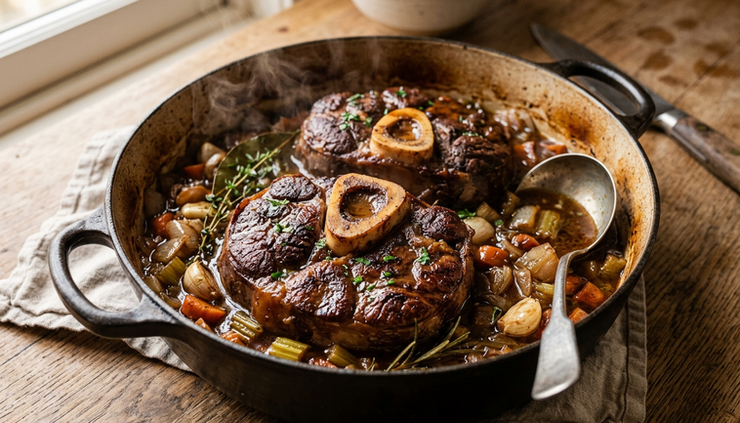
Cooking beef shanks step by step
Once the meat is browned and the aromatics are fragrant, the soup comes together slowly. The method is forgiving, but the order matters.
Step 1. Deglaze the pot
Pour in a splash of liquid and scrape the bottom of the pot with a wooden spoon. Use beef stock, water, red wine, dry sherry, or even a little crushed tomato.
Those browned bits on the bottom are concentrated flavor. Deglazing pulls them into the broth.
Step 2. Add the shanks and liquid
Return the beef shanks to the pot. Add enough liquid to cover them by about 1 inch.
For a balanced broth, use one of these combinations:
Half beef stock and half water
Mostly water with a few bones or extra marrow bones
Beef stock with a small splash of red wine
Water, tomatoes, and aromatics for a lighter soup
If using store-bought broth, choose low-sodium. Long simmering can concentrate salt.
Step 3. Add sturdy seasonings
Add bay leaves, thyme, parsley stems, peppercorns, and any dried herbs or spices you want to infuse into the broth.
Hold back delicate herbs, fresh lemon juice, and tender vegetables until later. They taste better when added near the end.
Step 4. Simmer gently
Bring the pot just to a boil, then immediately reduce the heat to low. The surface should barely bubble.
A hard boil can make the meat tough and the broth cloudy. A quiet simmer gives the collagen time to break down and the flavors time to blend.
Cover the pot partly with a lid and cook until the meat is tender. On the stovetop, this often takes about 2 1/2 to 3 1/2 hours, depending on the thickness of the shanks.
The meat is ready when a fork slides in easily and the fibers begin to separate.
Step 5. Remove, shred, and return the meat
Lift the shanks from the pot and place them on a plate. Let them cool just enough to handle.
Pull the meat from the bone and discard any tough gristle that has not softened. Chop or shred the meat into bite-size pieces. Stir the marrow into the broth if you like a richer soup, or leave it in the bones for serving.
Return the meat to the pot.
Step 6. Add finishing vegetables
Add potatoes, cabbage, greens, beans, barley, noodles, or any quick-cooking vegetables toward the end. This keeps them from turning mushy.
For example:
Potatoes need about 20 to 30 minutes.
Cabbage needs about 15 to 20 minutes.
Kale or spinach needs only a few minutes.
Cooked beans need about 10 to 15 minutes to absorb flavor.
Noodles are best cooked separately and added to bowls.
Taste and adjust the salt before serving.
The best seasonings for beef shank soup
Beef shanks can handle bold seasoning, but the best soups still taste balanced. Think in layers: salt, aromatics, herbs, warmth, acidity, and a fresh finish.
Classic herbs that always work
For a traditional beef soup flavor, use:
Bay leaves
Thyme
Rosemary, used lightly
Parsley stems during cooking
Fresh parsley at the end
Black pepper
Garlic
Thyme is one of the best herbs for beef shank because it supports the meat without taking over. Rosemary is stronger, so one small sprig is usually enough.
Bay leaf adds background savoriness. You may not taste it directly, but the broth tastes flatter without it.
Spices that add warmth and depth
For a richer, more aromatic broth, try one or two of these:
Smoked paprika
Coriander seed
Cumin
Fennel seed
Allspice berries
Cloves, used very sparingly
Star anise, used as a faint background note
Crushed red pepper flakes
A small amount of warm spice can make beef soup taste slow-cooked and complex. Too much can make it taste like a different dish than you intended, so start small.
Ingredients that boost savory flavor
Some ingredients add depth without making the soup taste overly seasoned.
Try adding:
Tomato paste
Mushrooms
Worcestershire sauce
Soy sauce
Fish sauce, just a few drops
Parmesan rind
Miso, stirred in near the end
Roasted garlic
These ingredients bring umami, which is the savory flavor that makes broth taste fuller. Use them carefully and taste as you go, especially if they contain salt.
Fresh finishes that wake up the pot
Long-cooked soups need freshness. Before serving, add one or more of these:
Chopped parsley
Fresh dill
Lemon juice
Red wine vinegar
A spoonful of salsa verde
Grated horseradish
Thinly sliced scallions
Acidity is often the missing piece. If the soup tastes rich but dull, add a small squeeze of lemon or a splash of vinegar. The beef flavor will taste clearer.

How to get tender meat and a rich broth
Beef shank soup is not hard, but a few habits help it turn out better every time.
Keep the heat low
The broth should not roll and splash. Gentle heat gives the meat time to soften. If the pot boils hard, lower the heat or move it to a smaller burner.
You can also cook beef shank soup in the oven. After bringing it to a simmer on the stove, cover the pot and place it in a 300°F oven. The heat surrounds the pot evenly and makes scorching less likely.
Skim only if needed
Foam may rise during the first part of cooking. Skim it off with a spoon if you want a clearer broth.
Do not worry about removing every speck. Some cloudiness is normal in homemade soup, especially with bone-in cuts.
Add vegetables in stages
A common mistake is adding everything at the beginning. After three hours, carrots and potatoes can fall apart.
Use this timing instead:
Ingredient | When to add it |
Onion, celery, garlic, tomato paste | At the beginning |
Bay leaf, thyme, peppercorns | At the beginning |
Potatoes, turnips, cabbage | Last 20 to 30 minutes |
Greens, peas, cooked beans | Last 5 to 15 minutes |
Fresh herbs, lemon, vinegar | Right before serving |
This keeps the soup layered and fresh.
Rest the soup if you can
Beef shank soup often tastes better the next day. Resting gives the broth time to settle and the flavors time to blend.
If making it ahead, cool it safely, refrigerate it, and remove any solid fat from the top before reheating. Leave some fat if you want a richer bowl. Remove most of it if you prefer a cleaner broth.
Salt at the end
Salt early enough to season the meat, but wait to make final adjustments until the soup is done. The liquid reduces as it cooks, and the flavors become more concentrated.
Taste the broth with a spoonful of meat and vegetables. That gives a better sense of how the whole bowl will eat.
Simple variations to try
Once you understand the basic method, beef shank soup becomes easy to change. Keep the slow simmer, then adjust the seasonings, vegetables, grains, and finishes.
Try one of these ideas:
Italian-style beef shank soup
Use tomato paste, crushed tomatoes, garlic, rosemary, thyme, white beans, and kale. Finish with parsley and grated Parmesan.
Mexican-inspired beef shank soup
Add onion, garlic, cumin, coriander, dried chiles, corn, zucchini, and cabbage. Finish with lime, cilantro, and sliced radishes.
Barley and mushroom beef soup
Add mushrooms after the aromatics and pearl barley during the simmer. Finish with parsley and black pepper.
Vegetable-heavy winter soup
Use carrots, celery root, parsnips, potatoes, cabbage, and leeks. Keep the herbs classic with bay, thyme, and parsley.
Ginger garlic beef broth
Add fresh ginger, garlic, scallions, star anise, and a small splash of soy sauce. Serve with noodles and greens.
Use what you have. Beef shanks are flexible enough for pantry cooking, seasonal vegetables, and leftover herbs. A soup that starts with the same cut of meat can become rustic, bright, spicy, brothy, or hearty depending on what goes into the pot.
Common mistakes to avoid
A few small choices can hold the soup back.
Do not skip browning unless you need a very light broth. Browning creates flavor that simmering alone cannot fully replace.
Do not boil the soup hard for hours. This can make the meat stringy and the broth cloudy.
Do not add delicate vegetables too early. Save greens, peas, fresh herbs, and noodles for the end.
Do not overseason at the start. Dried spices grow stronger as the broth reduces.
Do not throw away the bones too soon. Let them simmer long enough to give the broth body and flavor.
If the soup tastes thin, simmer it uncovered for a while to reduce the liquid. If it tastes heavy, add lemon, vinegar, herbs, or a handful of fresh greens.
For an easy flavor boost in your next pot of soup, try Angel Dust seasoning from Soup Angels as a finishing touch or seasoning layer.
FAQ
Should beef shanks be browned before adding to soup?
Yes, browning adds deeper flavor and color. You can skip it for a lighter broth, but the soup will taste less rich.
How long should beef shanks simmer for soup?
Most beef shanks need about 2 1/2 to 3 1/2 hours on the stovetop. They are done when the meat pulls away from the bone and feels tender when pierced.
Can I cook beef shank soup in a slow cooker?
Yes. Brown the shanks and aromatics first if possible, then cook on low for 7 to 9 hours or until tender. Add quick-cooking vegetables near the end.
What herbs go best with beef shanks?
Bay leaf, thyme, parsley, and a small amount of rosemary work very well. For a brighter soup, finish with fresh parsley, dill, or scallions.
Why is my beef shank still tough?
It likely needs more time. Beef shank starts tough and becomes tender only after the connective tissue breaks down. Keep simmering gently and check again later.

A better bowl starts with patience
Beef shanks reward slow cooking. Salt them well, brown them deeply, simmer them gently, and season the broth in layers. The result is a soup with tender meat, rich body, and the kind of flavor that tastes like it took care and time.
Start with the classic version, then make it your own. Add chiles, beans, barley, mushrooms, greens, tomatoes, noodles, or a bright finish of lemon and herbs. Once the basic technique feels natural, beef shank soup becomes less of a recipe and more of a method you can return to all season long.


Comments