
_edited.jpg)

Thai Basil Soup Secrets Three Global Recipes and Flavor Tips

Thai basil changes a pot of soup the moment it hits the heat. One handful can turn broth from pleasant to fragrant, savory, and bright, with a flavor that lands somewhere between anise, mint, clove, and pepper.
It is not the same as sweet basil. Thai basil has sturdier leaves, often with purple stems, and it holds up better in hot soups. Where sweet basil can fade quickly, Thai basil keeps a clear herbal bite. That makes it especially useful in brothy soups, coconut soups, noodle bowls, and tomato-based pots that need a fresh finish.
The trick is timing. Add it too early and the flavor softens into the background. Add it at the end, or use the stems to perfume the broth, and the soup tastes alive.

Thai basil brings fresh heat, sweetness, and structure to soup
Thai basil works so well in soup because it does three jobs at once.
It adds aroma, which is the first thing that rises from the bowl. It adds sweet herbal flavor, especially in soups with lime, ginger, chile, garlic, tomato, coconut milk, or fish sauce. It also adds contrast, cutting through rich broth, noodles, chicken, beans, or creamy coconut.
A few ingredients love Thai basil in particular:
Lime juice and rice vinegar
Ginger, galangal, and lemongrass
Garlic and shallots
Chiles and chile oil
Fish sauce, soy sauce, and miso
Coconut milk
Tomatoes
Chicken, shrimp, tofu, mushrooms, and white beans
I first started using Thai basil in soup because I had too much left after making curry. I tossed the last half bunch into a plain chicken broth with noodles, lime, and a spoonful of chile crisp. The soup tasted intentional, even though it was mostly leftovers. Since then, I treat Thai basil less like garnish and more like a finishing ingredient, the part that ties the pot together.
If you want to Learn how to cook, season, and Finish Soups with Thai Basil from Around the world, start by thinking of the herb in layers: stems for the broth, leaves for the final minutes, and fresh torn leaves for the bowl.
How to prepare Thai basil before it goes into soup
Thai basil is easy to use, but a little care makes a big difference.
Wash and dry it gently
Rinse the basil in cool water, then dry it well. Wet leaves can dilute a finishing garnish and make chopped basil cling together. A salad spinner works well, but a clean towel is enough.
Separate leaves and stems
Do not throw away the stems right away. They carry a lot of aroma.
Use them this way:
Add stems to simmering broth for 5 to 10 minutes.
Tie them with kitchen twine if you want easy removal.
Strain them out before serving, since the stems can be tough.
Save the tender leaves for the end.
Tear or slice right before using
Thai basil bruises less than sweet basil, but it still tastes best when handled close to serving time. Tear leaves by hand for rustic soups. For noodle bowls, stack a few leaves, roll them loosely, and slice them into thin ribbons.
Add leaves late
For most soups, stir Thai basil in during the final 1 to 2 minutes of cooking, then add a few fresh leaves to each bowl. The residual heat wakes up the oils without flattening the flavor.
A good rule for Thai basil soups: simmer the stems, wilt some leaves, then finish with fresh leaves.

Three global soups that make Thai basil shine
These recipes borrow from different cooking traditions while keeping the method friendly for a home kitchen. Each one uses Thai basil in a slightly different way, so the herb never feels like an afterthought.
Thai-inspired coconut chicken soup with lime and Thai basil
This soup nods to the flavors of tom kha gai, with coconut milk, lime, ginger, and a generous basil finish. It is creamy without feeling heavy.
Serves 4
Ingredients
1 tablespoon neutral oil
1 small shallot, thinly sliced
2 garlic cloves, minced
1 tablespoon grated fresh ginger
4 cups chicken broth
1 can full-fat coconut milk, 13.5 ounces
1 pound boneless, skinless chicken thighs, thinly sliced
1 cup sliced mushrooms
1 small jalapeño or Thai chile, sliced
Thai basil stems from 1 bunch
1 tablespoon fish sauce, plus more to taste
1 teaspoon brown sugar
2 tablespoons fresh lime juice
1 packed cup Thai basil leaves
Salt, to taste
Steps
Warm the oil in a soup pot over medium heat. Add the shallot and cook for 2 minutes.
Add the garlic and ginger. Stir for 30 seconds, just until fragrant.
Pour in the chicken broth and coconut milk. Add the chicken, mushrooms, chile, and Thai basil stems.
Simmer gently for 12 to 15 minutes, until the chicken is cooked through. Do not boil hard, since coconut milk can separate.
Remove the basil stems.
Stir in fish sauce, brown sugar, and lime juice.
Turn off the heat. Add the Thai basil leaves and let them wilt for 1 minute.
Taste and adjust with more lime, fish sauce, or salt.
Finishing touch
Serve with extra Thai basil, sliced chile, and a lime wedge. A small spoonful of chile oil also works well if the soup needs more warmth.
Why it works
Coconut milk softens the sharper edges of ginger and chile. Thai basil brings them back into focus with a sweet, peppery lift.
Vietnamese-style chicken noodle soup with Thai basil
Vietnamese pho is often served with fresh herbs on the side, and Thai basil is one of the most loved choices. This home version is not a traditional long-simmered pho broth. It is a weeknight-friendly noodle soup with warm spices, chicken, rice noodles, and plenty of herbs at the table.
Serves 4
Ingredients
6 cups chicken broth
1 small onion, halved
3 slices fresh ginger
1 cinnamon stick
2 star anise pods
1 tablespoon fish sauce
1 teaspoon sugar
8 ounces rice noodles
2 cups shredded cooked chicken
1 cup bean sprouts
1 packed cup Thai basil leaves
2 scallions, thinly sliced
1 lime, cut into wedges
Sliced jalapeño or Fresno chile
Hoisin sauce or sriracha, optional
Steps
Add broth, onion, ginger, cinnamon, and star anise to a pot.
Simmer for 20 minutes. Strain out the solids.
Season the broth with fish sauce and sugar. Taste and adjust with a little salt if needed.
Cook the rice noodles according to the package directions. Drain well.
Divide noodles and chicken among bowls.
Ladle hot broth over the top.
Serve with bean sprouts, Thai basil, scallions, lime, and sliced chile.
Finishing touch
Do not stir all the Thai basil into the pot. Add it at the table. The heat from the broth wilts the leaves just enough, and each bowl keeps its fresh aroma.
Why it works
The spices make the broth warm and rounded. Thai basil adds the cool, herbal snap that keeps every spoonful from tasting too rich.

Italian white bean tomato soup with Thai basil
Thai basil may not be Italian, but it is wonderful with tomatoes. Its anise note echoes fennel seed, and its peppery finish makes a simple tomato and bean soup taste layered.
This is the soup I make when the kitchen is cold, the pantry is doing most of the work, and I want something that feels generous in under an hour.
Serves 4 to 6
Ingredients
2 tablespoons olive oil
1 small yellow onion, diced
2 carrots, diced
2 celery ribs, diced
3 garlic cloves, minced
1 teaspoon fennel seeds, lightly crushed
1/4 teaspoon red pepper flakes
1 can crushed tomatoes, 28 ounces
4 cups vegetable broth
2 cans cannellini beans, drained and rinsed
Thai basil stems from 1 bunch
1 teaspoon kosher salt, plus more to taste
1/2 teaspoon black pepper
2 cups chopped kale or spinach
3/4 cup Thai basil leaves, torn
1 teaspoon balsamic vinegar
Steps
Heat olive oil in a large pot over medium heat.
Add onion, carrots, and celery. Cook for 6 to 8 minutes until softened.
Stir in garlic, fennel seeds, and red pepper flakes. Cook for 1 minute.
Add crushed tomatoes, vegetable broth, beans, Thai basil stems, salt, and pepper.
Simmer for 25 minutes.
Remove the basil stems.
Stir in kale or spinach and cook until wilted.
Turn off the heat. Add torn Thai basil leaves and balsamic vinegar.
Taste and adjust with salt, black pepper, or more vinegar.
Finishing touch
Top each bowl with olive oil, grated Parmesan, toasted breadcrumbs, or a few extra basil leaves. For a dairy-free finish, use lemon zest and toasted pine nuts.
Why it works
Tomato soup needs balance. Beans add body. Vinegar adds brightness. Thai basil adds a fresh top note that keeps the soup from feeling flat.
Seasoning and finishing touches that make Thai basil taste better
Thai basil has a strong personality, but it still needs support. Season the soup underneath it so the herb can stand out.
Balance salt, acid, sweetness, and heat
Most soups improve when these four elements are in balance.
If the soup tastes flat | Try this |
Dull or watery | Add salt, fish sauce, soy sauce, or miso |
Heavy or too rich | Add lime juice, lemon juice, rice vinegar, or balsamic vinegar |
Too sharp | Add a small pinch of sugar or splash of coconut milk |
One-note | Add chile, black pepper, ginger, or garlic |
Herbal but thin | Add broth, beans, mushrooms, chicken, tofu, or noodles for body |
Thai basil is especially good with acid. Lime juice makes it taste brighter. Tomato makes it taste deeper. Vinegar gives bean soups a clean finish.
Use fat to carry the aroma
Herbs taste fuller when paired with a little fat. That can mean coconut milk, olive oil, sesame oil, chile oil, chicken broth, or butter. Add finishing oils sparingly so they do not cover the basil.
Finish in layers
A great bowl of soup often gets three final touches:
A fresh herb, such as Thai basil
A bright ingredient, such as lime or vinegar
A texture, such as toasted nuts, crisp shallots, bean sprouts, or breadcrumbs
That small contrast makes homemade soup feel complete.
FAQ
Can I use sweet basil instead of Thai basil in soup?
Yes, but the flavor will be softer and more floral. Sweet basil also wilts faster, so add it right before serving.
Can Thai basil stems go into soup?
Yes. Thai basil stems are great for flavoring broth. Simmer them briefly, then remove them before serving.
When should I add Thai basil to hot soup?
Add stems during simmering, then add leaves at the end. For the freshest flavor, place extra leaves directly in the bowl before ladling in hot soup.
Can I freeze soup with Thai basil in it?
You can freeze the soup base, but fresh Thai basil tastes best added after reheating. Frozen basil often turns dark and loses its lively aroma.
What proteins go well with Thai basil soups?
Chicken, shrimp, tofu, white beans, mushrooms, and thinly sliced beef all work well. Match the protein to the broth and keep the basil fresh at the finish.
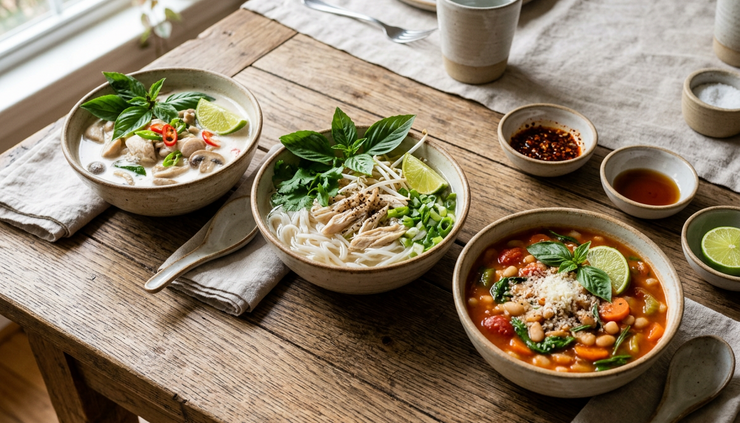
Bring Thai basil to the table with confidence
Thai basil is more than a garnish. It can perfume broth, brighten rich soups, sharpen tomato bases, and make a quick noodle bowl taste fresh and complete. Start with a small bunch, use the stems wisely, save the leaves for the end, and season with enough salt and acid to support the herb.
For an easy way to add a polished finishing touch to your next pot, explore AngelDust soup seasoning.
The next time a soup tastes almost right, reach for Thai basil. A few torn leaves, a squeeze of lime, and one final taste may be all the bowl needs.


Comments