
_edited.jpg)

Global Yuca Soup Recipes and Seasoning Tips for Flavorful Cultural Bowls

Yuca has a quiet way of making soup feel complete. Drop a few chunks into a pot, and the broth turns heartier, the texture becomes silky around the edges, and every spoonful feels more grounded.
Yuca, also called cassava, manioc, or mandioca, is a starchy root used across Latin America, the Caribbean, Africa, and parts of Asia. It has fed families for generations because it is filling, adaptable, and happy to soak up bold seasoning. In soups, yuca behaves a little like a cross between potato and taro. It holds its shape when simmered gently, but it can also soften enough to thicken the broth.
If the goal is to Learn How to cook and season soup from around the world using Yuca Roots, the best place to start is with the root itself, then follow the flavors of each table.

Yuca roots bring body and comfort to soups
Yuca is not the same as yucca, the ornamental desert plant. The edible root is cassava. In many U.S. grocery stores, it appears as fresh waxed yuca in the produce section or frozen peeled yuca in the freezer aisle.
Fresh yuca has thick brown skin and firm white flesh. The easiest option for soup is often frozen yuca because it is already peeled and cut. It also cooks consistently, which helps on busy nights.
A few basics make a big difference:
Peel fresh yuca deeply
Remove the brown skin and the thin pinkish layer underneath. A standard vegetable peeler usually struggles, so use a sharp knife.
Cut out the tough center
Some pieces have a fibrous core running through the middle. Remove it after cutting or after boiling, when it pulls away more easily.
Cook yuca fully
Yuca should never be eaten raw. Simmer it until tender all the way through.
Salt in layers
Yuca is dense and starchy. Season the broth early, then taste again after the yuca softens.
Use acid at the end
Lime juice, sour orange, vinegar, or tomato can brighten a rich yuca soup. Add most acidic ingredients near the end so the root softens properly.
Yuca Root Soups work especially well with garlic, onion, herbs, chiles, smoked meats, coconut milk, tomato, peanuts, and long-simmered broths. The root itself is mild, which makes it a perfect canvas for regional seasoning.
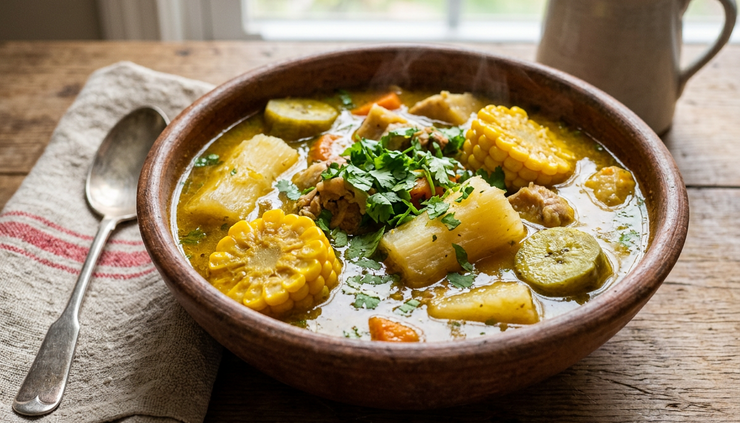
Dominican sancocho with yuca tastes rich, herbal, and festive
Sancocho is a beloved Caribbean stew with many versions across the Dominican Republic, Puerto Rico, Colombia, Panama, and beyond. Dominican-style sancocho often includes several meats and root vegetables. This home-friendly version keeps the spirit of the dish while staying manageable.
Ingredients
Serves 6
1 pound bone-in chicken pieces or boneless chicken thighs
1 pound beef stew meat, cut into 1-inch pieces
1 tablespoon neutral oil
1 medium onion, chopped
1 green bell pepper, chopped
4 garlic cloves, minced
1 tablespoon dried oregano
1 teaspoon ground cumin
1 teaspoon smoked paprika
1 1/2 teaspoons kosher salt, plus more to taste
1/2 teaspoon black pepper
8 cups chicken or beef broth
1 pound yuca, peeled and cut into chunks
1 green plantain, peeled and sliced
1 cup winter squash or pumpkin, cubed
1 ear corn, cut into rounds
1/2 cup chopped cilantro
Juice of 1 lime or 2 tablespoons sour orange juice
How to cook it
Heat the oil in a large pot over medium-high heat. Brown the beef in batches, then set it aside.
Add the chicken and brown lightly. Set it aside with the beef.
Lower the heat to medium. Add onion and bell pepper. Cook until softened.
Stir in garlic, oregano, cumin, smoked paprika, salt, and black pepper.
Return the meats to the pot. Add broth and bring to a simmer.
Cover and cook for about 45 minutes, until the beef starts to soften.
Add yuca, plantain, squash, and corn. Simmer for 30 to 40 minutes, until the yuca is tender.
Stir in cilantro and lime juice. Taste and adjust salt.
Seasoning tips for Dominican flavor
Dominican sancocho should taste savory, herbal, and slightly bright. Oregano is key. If possible, use Dominican oregano, which has a more intense flavor than common Mediterranean oregano.
For deeper flavor, marinate the meat for 30 minutes with garlic, oregano, lime juice, salt, and black pepper before browning. If the soup tastes flat at the end, it probably needs salt and acid, not more spices.
Serve sancocho with white rice, avocado slices, extra lime, and hot sauce. Tostones also make a great side because their crisp edges contrast with the soft yuca and rich broth.
Brazilian vaca atolada turns yuca and beef into a silky stew
In Brazil, yuca is known as mandioca or aipim, depending on the region. Vaca atolada, often translated as “mired cow,” is a beef and yuca stew with a thick, rustic texture. The yuca partially breaks down and gives the broth a creamy body without dairy.
This version uses beef chuck because it is easy to find in U.S. grocery stores. Beef ribs are also traditional in many homes and bring excellent flavor.
Ingredients
Serves 5 to 6
2 pounds beef chuck, cut into large cubes
1 tablespoon neutral oil
1 large onion, chopped
5 garlic cloves, minced
1 large tomato, chopped
2 tablespoons tomato paste
1 bay leaf
1 teaspoon kosher salt, plus more to taste
1/2 teaspoon black pepper
1 small fresh chile or 1/4 teaspoon crushed red pepper
7 cups beef broth or water
1 1/2 pounds yuca, peeled and cut into chunks
1/2 cup chopped parsley
1/2 cup sliced scallions
Lime wedges for serving
How to cook it
Pat the beef dry and season lightly with salt and pepper.
Heat oil in a heavy pot. Brown the beef well on all sides, then transfer it to a plate.
Add onion to the pot and cook until golden at the edges.
Stir in garlic, tomato, tomato paste, bay leaf, chile, salt, and black pepper.
Return beef to the pot. Add broth and bring to a simmer.
Cover and cook for 1 1/2 to 2 hours, until the beef is tender.
Add yuca and simmer uncovered for 25 to 35 minutes.
Mash a few pieces of yuca against the side of the pot to thicken the broth.
Stir in parsley and scallions. Serve with lime.
Seasoning tips for Brazilian flavor
The magic of this stew comes from browning the beef deeply before adding liquid. That browned layer at the bottom of the pot gives the broth its savory base.
Keep the seasoning earthy rather than busy. Garlic, onion, tomato, bay, parsley, and scallions do most of the work. A little chile adds warmth, but the stew should not be all heat. Lime at the table wakes up the beef and yuca without taking over.
Pair vaca atolada with white rice, garlicky collard greens, and farofa, the toasted cassava flour side found on many Brazilian tables. If farofa is new, think of it as a crunchy, buttery topping that makes each spoonful more interesting.
West African peanut and cassava soup is nutty, spicy, and deeply satisfying
Cassava is widely used across West and Central Africa, where it appears as boiled roots, fufu, gari, and in many soups and stews. This peanut and cassava soup takes inspiration from West African groundnut soups. It combines yuca with peanut, tomato, ginger, chile, and greens.
Use chicken for a more traditional stew-like bowl, or chickpeas for a meatless version.

Ingredients
Serves 6
1 tablespoon palm oil or neutral oil
1 onion, finely chopped
4 garlic cloves, minced
1 tablespoon grated fresh ginger
1 small habanero or Scotch bonnet chile, left whole for mild heat or minced for more heat
2 tablespoons tomato paste
1 cup crushed tomatoes
6 cups chicken broth or vegetable broth
3/4 cup natural peanut butter, unsweetened
1 pound yuca, peeled and cut into chunks
1 pound chicken thighs or 2 cans chickpeas, drained
1 teaspoon kosher salt, plus more to taste
4 cups chopped collard greens, kale, or spinach
Juice of 1 lime
How to cook it
Heat oil in a large pot over medium heat.
Add onion and cook until soft and lightly golden.
Stir in garlic, ginger, chile, and tomato paste. Cook for 1 to 2 minutes.
Add crushed tomatoes and cook until slightly darker.
Whisk peanut butter with 1 cup warm broth until smooth.
Add the peanut mixture, remaining broth, yuca, chicken or chickpeas, and salt.
Simmer gently for 30 to 40 minutes, until the yuca is tender and the chicken is cooked through.
Add greens and cook until wilted.
Finish with lime juice and adjust salt.
Seasoning tips for West African-inspired flavor
Peanut soups need balance. Peanut butter adds richness, tomato adds tang, ginger adds sharpness, and chile adds heat. If the soup tastes too heavy, add lime. If it tastes too sharp, simmer a little longer or add a spoonful more peanut butter.
For a more layered flavor, keep the chile whole while the soup simmers, then remove it before serving. This gives gentle heat. For a fiery pot, mince the chile and cook it with the aromatics.
Serve with rice, rice balls, boiled plantains, or fufu if available. A small spoonful of chile oil or crushed roasted peanuts on top makes the bowl feel finished.
Filipino-style nilaga with yuca keeps the broth clean and comforting
Nilaga is a simple Filipino boiled soup, often made with beef, cabbage, potatoes, saba bananas, and clear broth. Yuca is not the only starch used in this type of soup, but it fits beautifully because it turns tender while keeping the broth gentle and nourishing.
This version keeps the seasoning light so the beef, vegetables, and yuca stand out.
Ingredients
Serves 6
2 pounds beef shank, short ribs, or stew meat
8 cups water
1 onion, quartered
1 teaspoon whole black peppercorns
1 tablespoon fish sauce, plus more to taste
1 pound yuca, peeled and cut into chunks
2 small potatoes, quartered
2 cups green beans, trimmed
1/2 head green cabbage, cut into wedges
Salt to taste
Calamansi or lemon wedges for serving
How to cook it
Place beef in a large pot and cover with water.
Bring to a boil, then skim off foam from the surface.
Add onion and peppercorns. Lower heat and simmer until beef is tender.
Stir in fish sauce.
Add yuca and potatoes. Cook until both are tender.
Add green beans and cabbage. Simmer just until the vegetables are cooked.
Taste and add salt or more fish sauce as needed.
Serve with calamansi or lemon.
Seasoning tips for Filipino flavor
Nilaga should taste clean, beefy, and lightly savory. Fish sauce gives depth, but it should not dominate. Add it in small amounts and taste as the broth develops.
The peppercorns matter. They give warmth without clouding the soup. If using lemon instead of calamansi, squeeze it into the bowl right before eating, not into the whole pot.
Pair nilaga with steamed jasmine rice and a small dipping dish of fish sauce with calamansi or lemon. That side dip lets each bite of beef and yuca carry extra brightness.
Make yuca soups taste better every time
Once the recipes feel familiar, the same cooking habits can help with almost any yuca soup.
Build flavor before adding broth.
Brown meat, sauté aromatics, toast tomato paste, or bloom spices in oil. Yuca absorbs what surrounds it, so a flavorful broth matters.
Cut yuca into similar sizes.
Even pieces cook at the same pace. For most soups, 1 1/2 to 2-inch chunks work well.
Simmer instead of boil hard.
A rolling boil can break yuca apart before the rest of the soup is ready. A steady simmer gives better texture.
Use herbs at the right time.
Sturdy herbs and spices can cook early. Fresh cilantro, parsley, scallions, and lime taste best near the end.
Know when to mash.
For creamy Brazilian-style or peanut soups, mash a few pieces of yuca into the broth. For clear soups like nilaga, leave the pieces whole.
FAQ
Can I use frozen yuca for soup?
Yes. Frozen yuca is one of the easiest options for soup. Add it straight to the pot or thaw it first if you want to cut the pieces smaller.
How long does yuca take to cook in soup?
Most yuca chunks take 25 to 40 minutes once simmering in broth. Larger pieces can take longer. It is ready when a fork slides through easily.
Why is my yuca still tough?
It may need more time, or the pieces may be too large. Very old fresh yuca can also stay woody. Frozen yuca is usually more reliable.
Can I make these soups ahead?
Yes. Yuca soups often taste better the next day. Reheat gently and add a splash of broth or water if the soup thickens in the fridge.
What does yuca taste like?
Yuca tastes mild, starchy, and slightly nutty. It has a firmer bite than potato but becomes creamy when simmered long enough.

Bring a new yuca soup to the table
Yuca rewards patient simmering and bold seasoning. It can thicken a Brazilian beef stew, soften into a Caribbean sancocho, balance peanuts and chile, or sit quietly in a clear Filipino broth. The same root takes on a new personality depending on the pot.
For even more seasoning inspiration, try adding a finishing blend that complements soups, stews, and broths. You can explore Angel Dust seasoning from Soup Angels as a simple way to add extra depth to your next pot.
Start with one recipe, taste as you go, and let the yuca tell you when it is ready: tender, comforting, and full of the flavors around it.


Comments